
TOGAF Architecture Building Blocks (ABB): A Practical Definition Guide
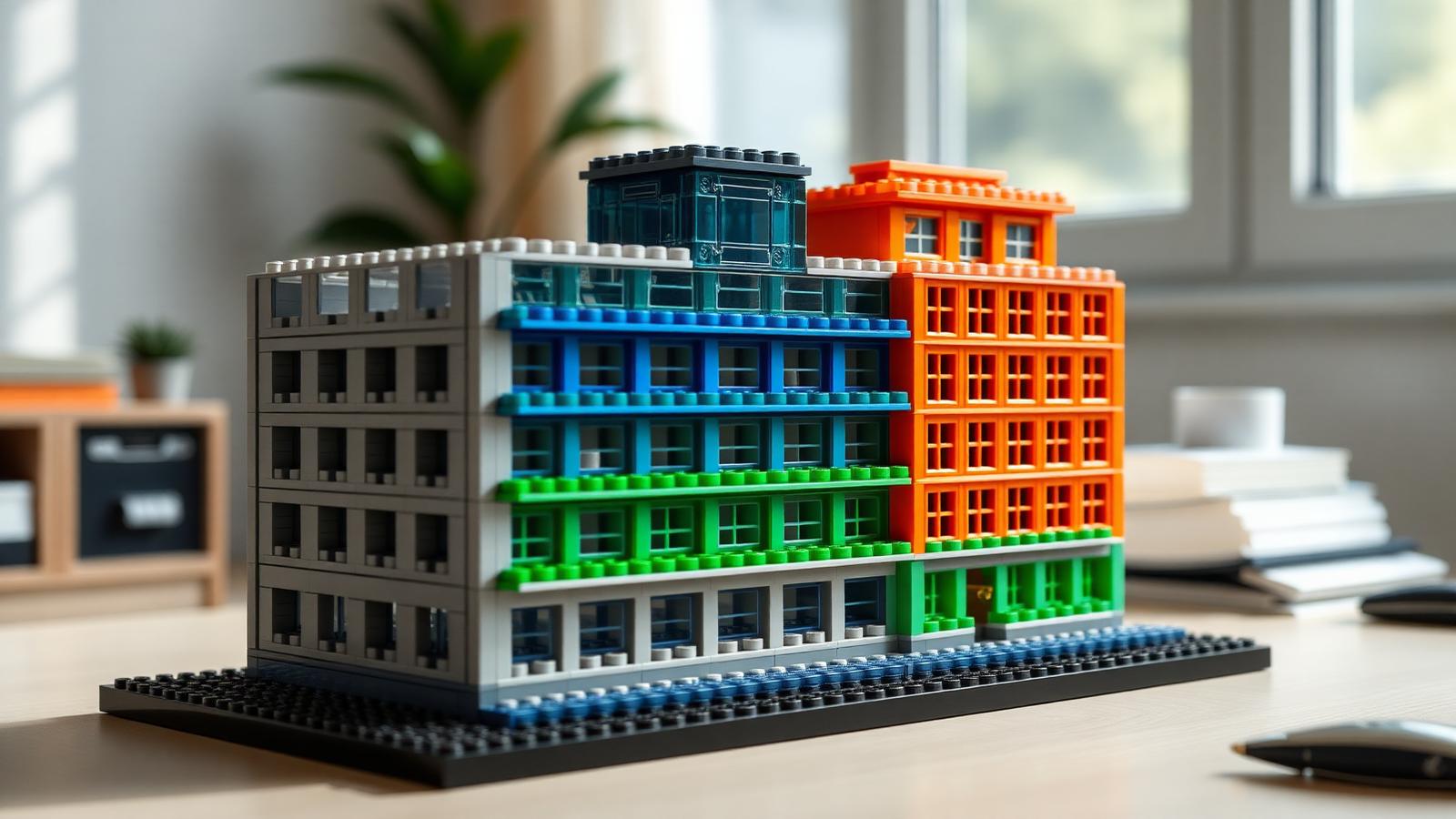
TL;DR: TOGAF Architecture Building Blocks (ABBs) are reusable, technology-agnostic components that define the capabilities an enterprise architecture must deliver. They form the foundational layer of the TOGAF framework, guiding architects from abstract requirements to concrete solutions — before any specific technology or product is chosen.
Enterprise architects spend a lot of time talking about complexity. Systems are complex. Integrations are complex. Stakeholder expectations are complex. But the frameworks meant to manage that complexity? They can be just as hard to navigate.
TOGAF — The Open Group Architecture Framework — is one of the most widely adopted enterprise architecture frameworks in the world. According to The Open Group, TOGAF is used by over 80% of the world's leading enterprises. Yet despite its widespread adoption, many practitioners still struggle to clearly articulate what a building block actually is, let alone how to apply one in practice.
This guide focuses specifically on the TOGAF architecture building blocks ABB definition — what ABBs are, how they differ from Solution Building Blocks (SBBs), and how to identify and apply them across real enterprise architecture projects. Along the way, we draw on a surprisingly useful parallel: the physical building block. Sometimes the clearest way to understand an abstract concept is to hold something concrete in your hands.
What Are TOGAF Architecture Building Blocks (ABBs)?
The TOGAF architecture building blocks ABB definition, as established by The Open Group, describes an ABB as a constituent of the architecture model that describes a single aspect of the overall model. More plainly: an ABB is a named, reusable unit of capability or behavior that your architecture needs to deliver — without yet specifying how it will be delivered.
ABBs live at the architecture level. They describe what the system must do, not which product or technology will do it. When you define an ABB for "Identity and Access Management," you're not selecting a vendor like Okta or Microsoft Entra ID. You're specifying that this capability must exist, what it must do, and how it must interface with other components.
This abstraction is intentional. ABBs are designed to be:
- Technology-agnostic: No product dependency at definition time
- Reusable: The same ABB can appear across multiple architecture domains or projects
- Capability-focused: Defined by what they deliver, not how they work internally
- Interoperable: Specified with clear interfaces so they connect cleanly with other building blocks
Think of it this way. A physical brick has defined dimensions, connection points (studs), and material properties. It does not care whether it ends up in a castle, a bridge, or a skyline model. The ABB works the same way — defined by its functional profile, ready to slot into any architecture that needs it. For a hands-on parallel, see our enterprise architecture building blocks guide.
Understanding the TOGAF ABB Definition in Depth
The formal TOGAF ABB definition appears in TOGAF Standard, Version 9.2 (and is carried forward in TOGAF Fundamental Content). According to The Open Group, a building block has three defining characteristics:
- It is a package of functionality defined to meet business needs
- It has a defined boundary and is generally recognizable as a meaningful thing by domain experts
- It may interlock or depend on other building blocks
ABBs specifically sit within the Architecture Definition phase of the ADM (Architecture Development Method). They are produced during Phases B (Business Architecture), C (Information Systems Architecture), and D (Technology Architecture). Each phase generates ABBs relevant to its domain — people and process in Phase B, data and applications in Phase C, infrastructure and platforms in Phase D.

What Does a Well-Formed ABB Look Like?
A good ABB specification typically includes:
- Name: A clear, domain-relevant label (e.g., "Notification Service," "Data Governance Engine")
- Description: A concise explanation of the capability it provides
- Functional requirements: What it must do
- Non-functional requirements: Performance, security, availability constraints
- Interfaces: How it connects to other building blocks
- Constraints: Any limitations on how or where it can be used
Notice what's absent: vendor names, product versions, implementation languages. Those belong to the SBB layer, discussed later. If you want a plain-English walkthrough with visuals, our reference architecture brick modeling guide covers similar ground.
How to Identify and Define ABBs in Your Enterprise Architecture
Identifying ABBs is not a purely technical exercise. It requires architectural judgment, business context, and a clear view of what the organization is trying to achieve.
Start With Capability Mapping
Before writing a single ABB, map your enterprise capabilities. A capability is a high-level expression of what the organization can do — "manage customer relationships," "process payments," "report on regulatory compliance." Each capability may decompose into multiple ABBs.
For example, "manage customer relationships" might decompose into:
- Customer Profile Management (ABB)
- Interaction History Tracking (ABB)
- Segmentation and Targeting (ABB)
- Customer Communication Gateway (ABB)
Apply the Boundary Test
For each candidate ABB, ask: does this have a clearly recognizable boundary? Can a domain expert look at it and say, "yes, that is a meaningful, discrete thing"? If the answer is no, the ABB is either too broad (split it) or too narrow (merge it with a related component).
Document Interfaces First
ABBs derive much of their value from interoperability. Define the inputs and outputs of each ABB before defining its internal behavior. This interface-first approach ensures that your building blocks connect cleanly and that no critical data flows fall through the gaps between components — the same discipline outlined in our software architecture building blocks piece.
Validate Across Architecture Domains
An ABB identified in the Business Architecture domain should trace through to Information Systems and Technology domains. If an ABB has no corresponding presence in your data or technology layers, it may be an orphaned capability — something the business needs but the architecture does not yet support.
Step-by-Step: Applying ABBs to Real-World Architecture Projects
Step 1 — Establish the Architecture Vision (Phase A). Confirm scope, stakeholders, and high-level requirements. This sets the context within which ABBs will be defined.
Step 2 — Decompose Business Capabilities (Phase B). Identify the Business Architecture ABBs. These represent organizational functions, roles, and processes. Example: "Regulatory Reporting Function," "HR Onboarding Process."
Step 3 — Define Data and Application ABBs (Phase C). Map information flows and application services. Each ABB at this level supports the business capabilities identified in Phase B. Example: "Employee Data Repository," "Payroll Calculation Engine."
Step 4 — Specify Technology ABBs (Phase D). Translate application and data ABBs into technology capability requirements. Example: "Container Orchestration Platform," "Encrypted Data Store." Our cloud architecture building blocks guide illustrates this layer well.
Step 5 — Populate the Architecture Repository. Store all ABBs in the Architecture Repository for reuse across future projects. This is where ABBs deliver their most significant long-term value — each well-defined block saves future architecture cycles.
Step 6 — Map ABBs to SBBs (Phase E/F). During Opportunities and Solutions, match each ABB to candidate Solution Building Blocks — specific products, platforms, or custom-built components that fulfill the capability the ABB defines.
How ABBs Differ From Solution Building Blocks (SBBs)
The ABB/SBB distinction is one of the most frequently misunderstood aspects of TOGAF. Getting it wrong leads to architecture documents that conflate strategy with implementation.
| Dimension | ABB | SBB |
|---|---|---|
| Level of abstraction | Architecture (what) | Solution (how) |
| Technology specificity | None | Named product or component |
| Reusability | Across architectures | Within a solution context |
| Defined in | ADM Phases B, C, D | ADM Phases E, F |
| Example | "Authentication Service" | "Okta Identity Cloud" |
An ABB describes the requirement. An SBB fulfills it. Think of ABBs as the blueprint specification for a structural element — and SBBs as the specific material chosen to build it.
This separation protects architectural integrity. When technology changes (and it always does), ABBs remain stable. Only the SBB mappings need updating, rather than the entire architecture model.
Tips for Getting the Most Out of TOGAF ABBs
Keep ABBs technology-agnostic for as long as possible. The moment you name a vendor in an ABB, you've collapsed the abstraction and limited your architectural options. Hold the technology decision for the SBB layer.
Reuse before you create. Before defining a new ABB, check your Architecture Repository. Enterprise architecture is full of duplicated effort — teams reinventing components that already exist because no one searched first.
Name ABBs from a business perspective. "Customer Notification Gateway" communicates more than "Message Broker Abstraction Layer." Business stakeholders should be able to understand ABB names without a glossary.
Version your ABBs. As requirements evolve, ABBs evolve too. A versioning discipline in your Architecture Repository prevents confusion and supports traceability across architecture iterations.
Trace every ABB to a business requirement. If you cannot connect an ABB to a stated business need, question whether it belongs in the architecture. Orphaned building blocks inflate complexity without delivering value.
How BrickHobby's Philosophy Mirrors the Building Block Approach
There is something clarifying about working with physical building blocks — not as a metaphor, but as a practice.
At BrickHobby, the approach to building is remarkably close to how good enterprise architects think about ABBs. Each brick in a BrickHobby landmark set has defined dimensions, consistent connection points, and a predictable behavior when combined with other pieces. No single brick assumes it knows what the final structure will look like. It simply does its job — reliably, repeatedly, in any configuration the builder chooses.
That is exactly what a well-formed ABB does. It defines its boundary, exposes its interfaces, and remains agnostic about the broader architecture until a solution context is established. Curious readers can also compare our LEGO Architecture Studio walkthrough or the master of architecture toy guide for the physical parallel.
ABBs as the Foundation of Scalable Enterprise Architecture
The TOGAF architecture building blocks ABB definition is not administrative overhead. It is the mechanism by which enterprise architecture becomes repeatable, scalable, and genuinely useful to the organization.
When ABBs are defined well — with clear boundaries, explicit interfaces, and honest capability descriptions — they compress future architecture cycles. Teams inherit building blocks rather than reinventing them. Decisions made at the solution layer remain traceable to architecture intentions. Technology changes without architectural chaos.
Frequently Asked Questions
What is the TOGAF ABB definition in simple terms?
An ABB, as defined by The Open Group's TOGAF framework, is a reusable, technology-agnostic unit of architectural capability. It describes what a system component must do — its function, behavior, and interfaces — without specifying which product or technology will deliver it. ABBs are defined during ADM Phases B, C, and D.
What is the difference between an ABB and an SBB in TOGAF?
An Architecture Building Block (ABB) defines a required capability in abstract, technology-neutral terms. A Solution Building Block (SBB) is a specific product, platform, or custom component that fulfills that capability. For example, "Authentication Service" is an ABB; "Microsoft Entra ID" is a potential SBB for that ABB.
How many ABBs should an enterprise architecture typically have?
There is no prescribed number. A focused domain architecture might produce 10–20 ABBs. A full enterprise-scale engagement across multiple business units could yield hundreds. The guiding principle is that each ABB should represent a discrete, meaningful, and reusable unit of capability.
Can the same ABB appear in multiple architecture domains?
Yes. Cross-cutting capabilities — such as security, logging, or identity management — often appear as ABBs across Business, Information Systems, and Technology Architecture domains.
How does TOGAF's ABB concept support digital transformation programs?
ABBs provide a stable, reusable architectural vocabulary that persists across technology cycles. During a digital transformation, where technology choices change rapidly, ABBs anchor the architecture to business needs rather than product availability.
---
Bring the Building Blocks Home
We offer LEGO-compatible alternative building block sets that let you translate these architectural principles into hands-on models — from landmark towers to modular skylines. If you'd like to place an order or need help choosing the right set, contact our customer service team and we'll walk you through availability, pricing, and shipping. Browse the full range in the BrickHobby Architecture & Landmarks collection to get started.
Ready to build this yourself?
BrickHobby sells high-quality LEGO-alternative building block sets — the same brick standard, a fraction of the price. Browse our in-stock sets and simply contact our customer service team to place your order; we will confirm availability, pricing and worldwide shipping for you.
Keep reading

Architecture & Landmarks
Build Impressive Landmarks with Building Blocks Landmark 5 Sets
A hobbyist and family guide to building blocks landmark 5 sets — how to choose, sort, and build display-quality Eiffel Tower, Colosseum, and Taj Mahal models with BrickHobby as a LEGO alternative.

Architecture & Landmarks
How to Build Impressive Structures with Architecture Wooden Building Blocks
A step-by-step guide for hobbyists and families: how to choose a set, plan, sort, and build display-quality architecture models with wooden-style building blocks.

Architecture & Landmarks
How to Build Stunning Architectural Models with ABB Architecture Building Blocks
ABB architecture building blocks let hobbyists turn a love of buildings into display-worthy models. A complete builder's guide — planning, execution, choosing quality bricks, and showcasing the finished piece.