
How to Teach Real Architecture with Building Block Toys
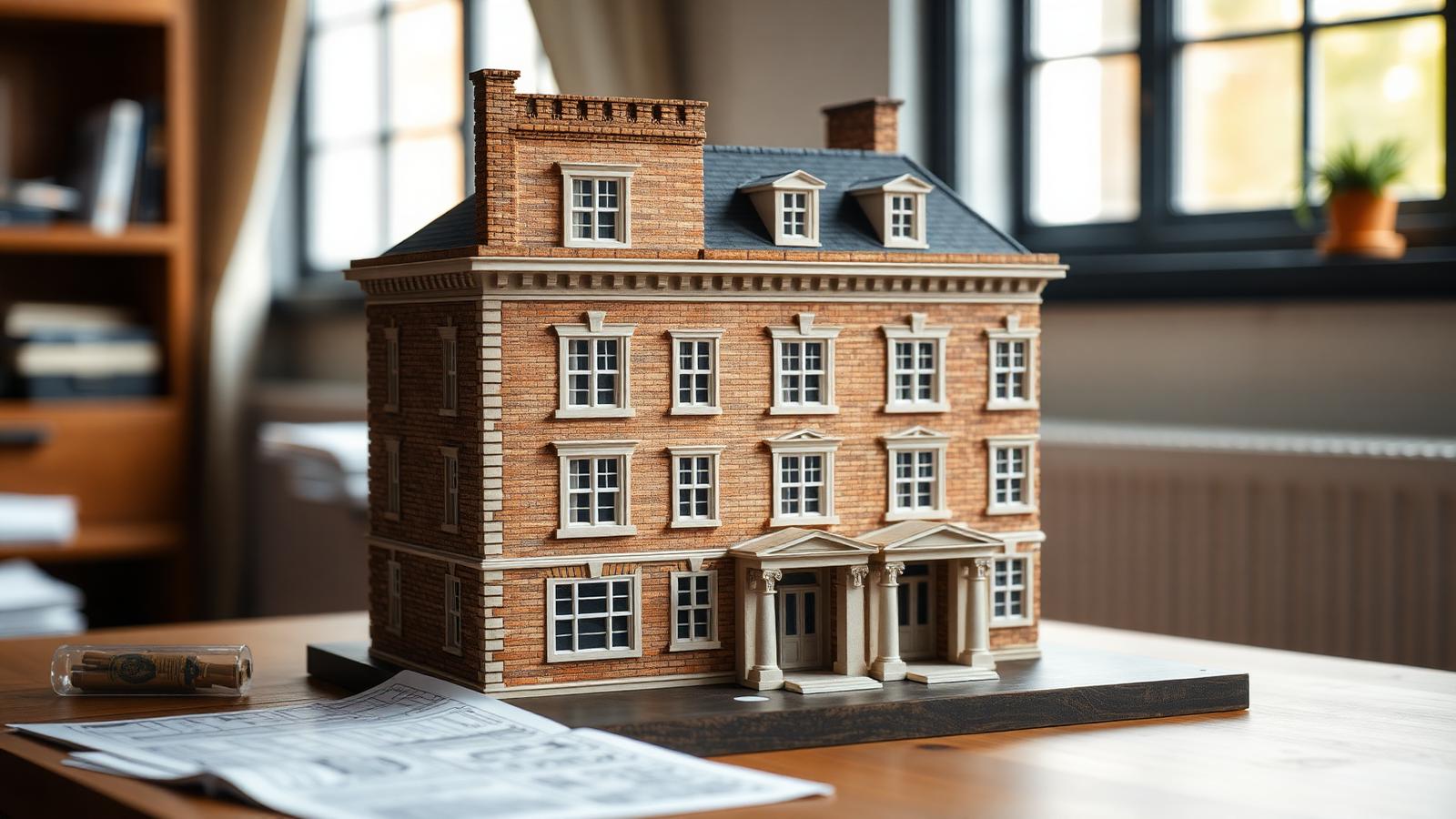
Blueprints feel abstract. Scale, proportion, load, and symmetry are hard to grasp on paper. Hand someone a pile of bricks, though, and those ideas turn physical. You feel a cantilever pull. You see why a column grid works. You watch a facade fall apart when the rhythm breaks.
An architecture building blocks toy is more than a display piece. It's a teaching tool. It builds spatial thinking, teaches design logic, and produces models worth showing off — at home or in a classroom.
This guide shows you how. You'll learn the core principles to teach, how to pick the right sets, techniques for architectural accuracy, and project ideas that turn concepts into finished builds.
Here's what you'll cover:
- The architectural principles bricks teach best
- How to choose sets for learning, not just playing
- Techniques for scale, proportion, and structural realism
- Creative projects for home and classroom
- Common mistakes and how to fix them
Let's start with the principles.
The Design Principles Bricks Teach Best
Great architecture follows rules. Bricks make those rules tangible. Learn these five first — they underpin every good build.
Proportion and Scale
Proportion is the relationship between parts. Scale is the relationship to the real world. Both decide whether a model reads as convincing.
Bricks force honest proportion. A studs-and-plates grid gives you fixed units. Count them. A door should be roughly 2.5 times its width in height. A window band should align across floors. When the counts are consistent, the building feels right.
Quick recap: Use the stud grid as a ruler. Count units to lock proportion.
Symmetry and Balance
Classical architecture leans on symmetry. Modern design often breaks it for balance instead. Both are teachable with bricks.
Build a symmetrical facade first. Center a doorway. Mirror the windows. Then challenge the learner to break it — shift a wing, add a tower — while keeping visual weight balanced. That contrast teaches balance faster than any lecture.
Rhythm and Repetition
Windows, columns, and arches repeat across a facade. That repetition creates rhythm. Break it and the eye notices instantly.
Bricks are built for rhythm. Repeat a 1x2 window module across a wall. Skip one and watch the pattern fail. This single exercise teaches rhythm better than a textbook page.
Structure and Load
Buildings stand because forces balance. Bricks teach this the hard way — badly stacked walls topple.
Show how overlapping bricks (like real masonry bond) create strength. Show how a single-stud connection fails under weight. The lesson sticks because gravity enforces it.
Form and Function
Every space serves a purpose. A staircase needs headroom. A window needs a sightline. Building a floor plan in brick reveals these needs immediately.
Quick recap: Teach proportion, symmetry, rhythm, structure, and function. Bricks make all five physical.
How to Choose the Right Sets for Learning
Not every set teaches well. For education and spatial development, choose deliberately. The right architecture building blocks toy balances challenge, accuracy, and reusability.
Match the Set to the Skill Level
Pick difficulty by builder, not by box art:
- Beginners (age 5–10): Larger pieces, simple structures, clear steps
- Intermediate (age 10+ and adults): Detailed facades, moderate piece counts, some technique
- Advanced (teens and adult hobbyists): High piece counts, complex geometry, MOC potential
A frustrated beginner quits. A bored expert loses interest. Match the challenge to the person.
Prioritize Reusable, Standard Parts
Themed sets look great once built. But loose, standard bricks teach more. They let learners rebuild, redesign, and experiment.
Look for sets with:
- High counts of basic bricks, plates, and tiles
- Consistent color ranges for facade work
- Compatible pieces you can pool across sets
Browse landmark and modular sets built for repeat builds at BrickHobby to start a reusable parts core.
Check for Real Architectural Reference
Sets modeled on real landmarks teach history and style. A learner building a famous tower absorbs its proportions without being told.
Look for sets tied to recognizable styles — classical columns, Gothic arches, modernist glass, or Art Deco setbacks. Each teaches a different design language.
Consider Piece Count Honestly
More pieces mean more detail and more time. For a classroom session, a 300–800 piece set fits one class. For a home weekend project, 1,000–2,000 pieces rewards patience.
Quick recap: Match difficulty to the builder, favor reusable parts, and pick real architectural references.
Techniques for Architectural Accuracy
A convincing model comes down to technique. These methods turn a rough stack into a design-worthy build.
Master the Stud Grid as a Ruler
Every stud is a unit. Use it to measure.
- Set a module: decide how many studs equal one "floor" or one "bay"
- Repeat that module across the build
- Keep window and door counts consistent per floor
Consistency reads as intentional. Random sizing reads as amateur.
Use SNOT for Real Detail
SNOT — Studs Not On Top — turns bricks sideways to add facade detail. It's a core technique for architectural accuracy.
- Build sideways panels for smooth walls
- Add horizontal banding and cornices
- Create window frames and recessed details
SNOT is what separates a blocky model from a sharp one. Teach it early to intermediate builders.
Layer Plates for Depth
Flat walls look fake. Real facades have depth.
- Recess windows one plate deep
- Push out cornices and sills
- Step back upper floors for setback towers
Even one plate of depth changes how a facade reads. Shadows do the rest.
Build a Solid Base
Tall builds need a stable foundation. Use overlapping brick bond in the base. Add plate layers to lock the structure. Never build a tower on single-stud connections.
Match Color to Material
Color signals material. Choose with intent:
- Light gray and tan for stone and concrete
- Dark tan and brown for brick and wood
- Trans-clear and trans-blue for glass curtain walls
- White for modern render and trim
Find specialty parts, tiles, and trans elements for facade work at BrickHobby to sharpen your material palette.
Quick recap: Use the grid as a ruler, apply SNOT, layer plates for depth, and match color to material.
Step-by-Step: Build a Teaching Model
Here's a repeatable process for a learning-focused build. Use it at home or in a classroom.
Step 1: Pick a Reference Building
Start with a real structure. A row house. A town hall. A modern office. Study a photo. Note the floors, window rhythm, and roofline.
Step 2: Set Your Scale
Decide the stud module. Example: 8 studs wide per bay, 6 bricks tall per floor. Write it down. This is your rulebook.
Step 3: Lay the Footprint
Build the ground plate. Mark the entrance, the corners, and the bay divisions. Get the base right before you go vertical.
Step 4: Raise the First Floor
Build one floor to your module. Add windows and a door. Check proportion against your reference before continuing.
Step 5: Repeat and Vary
Stack upper floors using the same module. Vary detail for interest — a balcony, a cornice line, a setback. Keep the rhythm consistent.
Step 6: Add the Roof and Details
Cap with a roof that matches the style — flat for modern, pitched for classical. Add chimneys, parapets, or signage.
Step 7: Detail and Finish
Add SNOT facade detail, recessed windows, and material color. Base it on a tile plate for a clean display finish.
Quick recap: Reference, scale, footprint, floors, rhythm, roof, finish. Follow the order every time.
Creative Projects for Home and Classroom
Turn principles into projects. Each one teaches something specific.
The Style Challenge
Give builders the same footprint. Ask each to build in a different style — Gothic, modernist, Art Deco. Compare results. This teaches how style changes form.
The Skyline Collaboration
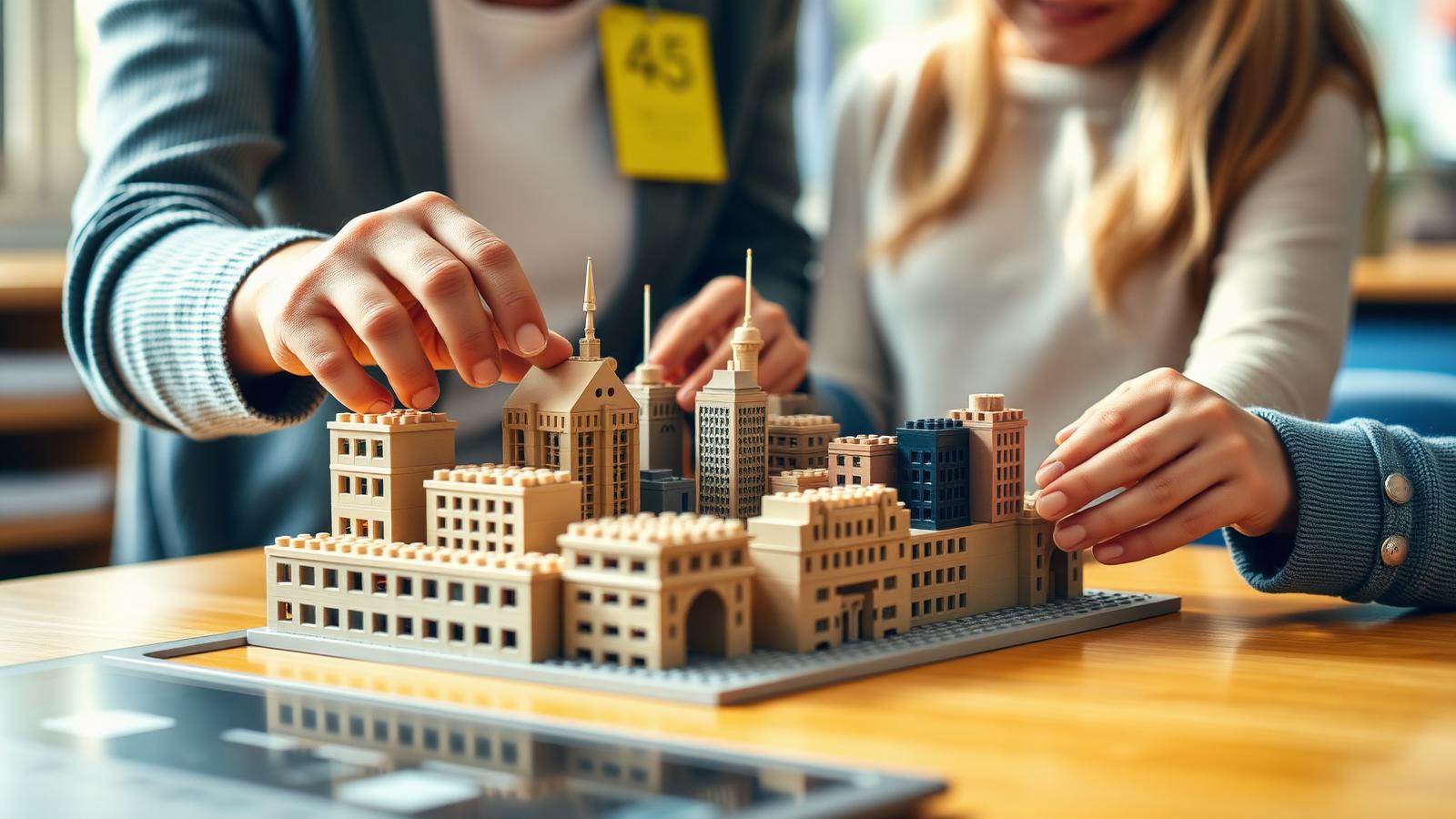
Each builder makes one tower to a shared scale. Line them up into a city skyline. This teaches scale consistency and teamwork. Great for classrooms.
The Cross-Section Build
Build a house with one wall open. Show floors, stairs, and rooms inside. This teaches how form serves function.
The Landmark Recreation
Pick a famous building. Recreate it at micro scale. This teaches observation and proportion under constraint.
The Redesign Exercise
Build a plain box. Then redesign it three ways — add rhythm, add depth, add material variety. This shows how design choices transform a structure.
Explore modular sets you can combine into a full display street at BrickHobby to grow these projects into a collection.
Quick recap: Use style challenges, skylines, cross-sections, and redesigns to teach through building.
Common Mistakes and How to Fix Them
Even keen builders trip on these. Here's how to stay sharp.
Ignoring the Grid
Random sizing breaks proportion. Fix: set a stud module and stick to it across every floor.
Flat, Depthless Walls
A flat facade looks like a toy. Fix: recess windows and push out cornices by at least one plate.
Breaking Window Rhythm
Misaligned windows ruin realism. Fix: count studs and keep window spacing identical per floor.
Weak Foundations
Tall builds topple on single-stud bases. Fix: use overlapping brick bond and plate layers in the base.
Color Chaos
Mixed random colors kill the material read. Fix: assign each color a material and stay disciplined.
Skipping the Reference
Building from imagination alone loses accuracy. Fix: always start from a real photo or plan.
Quick recap: Respect the grid, add depth, keep rhythm, build solid bases, discipline color, and use references.
Why This Works for Every Kind of Builder
An architecture building blocks toy teaches through the hands, not the page. That reaches learners a textbook can't.
- Kids (5–14): Build spatial reasoning and STEM skills through play
- Parents: Turn screen time into hands-on family projects
- Teachers: Deliver design principles with a physical, repeatable tool
- Adult hobbyists: Sharpen technique and build display-worthy MOCs
- Collectors: Recreate landmarks with accuracy and detail
The same box serves a classroom lesson and a collector's shelf. That range is the strength of the medium.
Share your finished builds with other hobbyists online. Feedback sharpens the next project, and the community is full of technique tips and reference ideas.
Quick recap: Bricks teach through the hands. One tool works for kids, parents, teachers, and pros.
Related reads: modular building blocks architecture, mini building blocks architecture models, TOGAF-inspired architecture building blocks, and the cloud data center brick build guide. Browse the full Architecture & Landmarks collection.
Conclusion
Architecture is easier to feel than to read. Bricks make the principles physical — proportion, symmetry, rhythm, structure, and function all become something you can hold.
Start by teaching the five principles. Choose reusable sets matched to the builder's level. Use the stud grid as a ruler, apply SNOT for detail, and layer plates for depth. Follow a clear build order, then push into creative projects like style challenges and skyline collaborations.
Avoid the common traps — flat walls, broken rhythm, weak bases, and color chaos. Always start from a real reference.
Your next step: pick one real building you admire. Set a stud module. Build the first floor and check your proportions. You've just started teaching architecture with your hands — one brick at a time.
Frequently Asked Questions
What is an architecture building blocks toy, and how is it different from a regular building set?
An architecture building blocks toy is a set designed to model real buildings and teach design principles — proportion, symmetry, rhythm, and structure. Regular sets focus on play or theme. Architecture-focused sets emphasize accurate scale, facade detail, and display quality. Many use neutral colors and landmark references, making them ideal for learning spatial thinking and creating models worth showing off.
What age is best to start teaching architecture with building blocks?
Start as early as age 5 with large pieces and simple structures. Kids 5–10 build spatial reasoning through basic stacking and symmetry. Ages 10 and up can handle facade detail, window rhythm, and structural technique. Adults and teens tackle advanced geometry and MOC design. Match the set's difficulty to the builder's skill, not just their age, to keep them engaged.
How do I make my brick buildings look more realistic?
Focus on four techniques. Use the stud grid as a ruler to lock consistent proportion. Apply SNOT — Studs Not On Top — for smooth facade detail. Layer plates to recess windows and push out cornices for depth. Match color to material, using gray for stone and trans-clear for glass. Always build from a real reference photo to guide your proportions and details.
Are architecture building block toys good for classroom STEM lessons?
Yes. They teach geometry, structural engineering, and design in a hands-on way. A single class session fits a 300–800 piece set. Projects like skyline collaborations teach scale and teamwork, while cross-section builds show how form serves function. The physical, repeatable nature of bricks makes abstract principles concrete — students learn by building rather than memorizing.
How many pieces do I need for a good architectural model?
It depends on scale and detail. A micro-scale landmark needs 300–800 pieces and fits a classroom session. A detailed home-display model rewards 1,000–2,000 pieces. Start smaller if you're new, then pool reusable standard bricks across sets to build larger, more detailed structures. Reusable parts matter more than a single high count — they let you rebuild and experiment freely.
Ready to build this yourself?
BrickHobby sells high-quality LEGO-alternative building block sets — the same brick standard, a fraction of the price. Browse our in-stock sets and simply contact our customer service team to place your order; we will confirm availability, pricing and worldwide shipping for you.
Keep reading

Architecture & Landmarks
Build Impressive Landmarks with Building Blocks Landmark 5 Sets
A hobbyist and family guide to building blocks landmark 5 sets — how to choose, sort, and build display-quality Eiffel Tower, Colosseum, and Taj Mahal models with BrickHobby as a LEGO alternative.
Architecture & Landmarks
How to Build Impressive Structures with Architecture Wooden Building Blocks
A step-by-step guide for hobbyists and families: how to choose a set, plan, sort, and build display-quality architecture models with wooden-style building blocks.
Architecture & Landmarks
How to Build Stunning Architectural Models with ABB Architecture Building Blocks
ABB architecture building blocks let hobbyists turn a love of buildings into display-worthy models. A complete builder's guide — planning, execution, choosing quality bricks, and showcasing the finished piece.