What Are the Best Building Block Toys for Kids? A Parent's Buying Guide
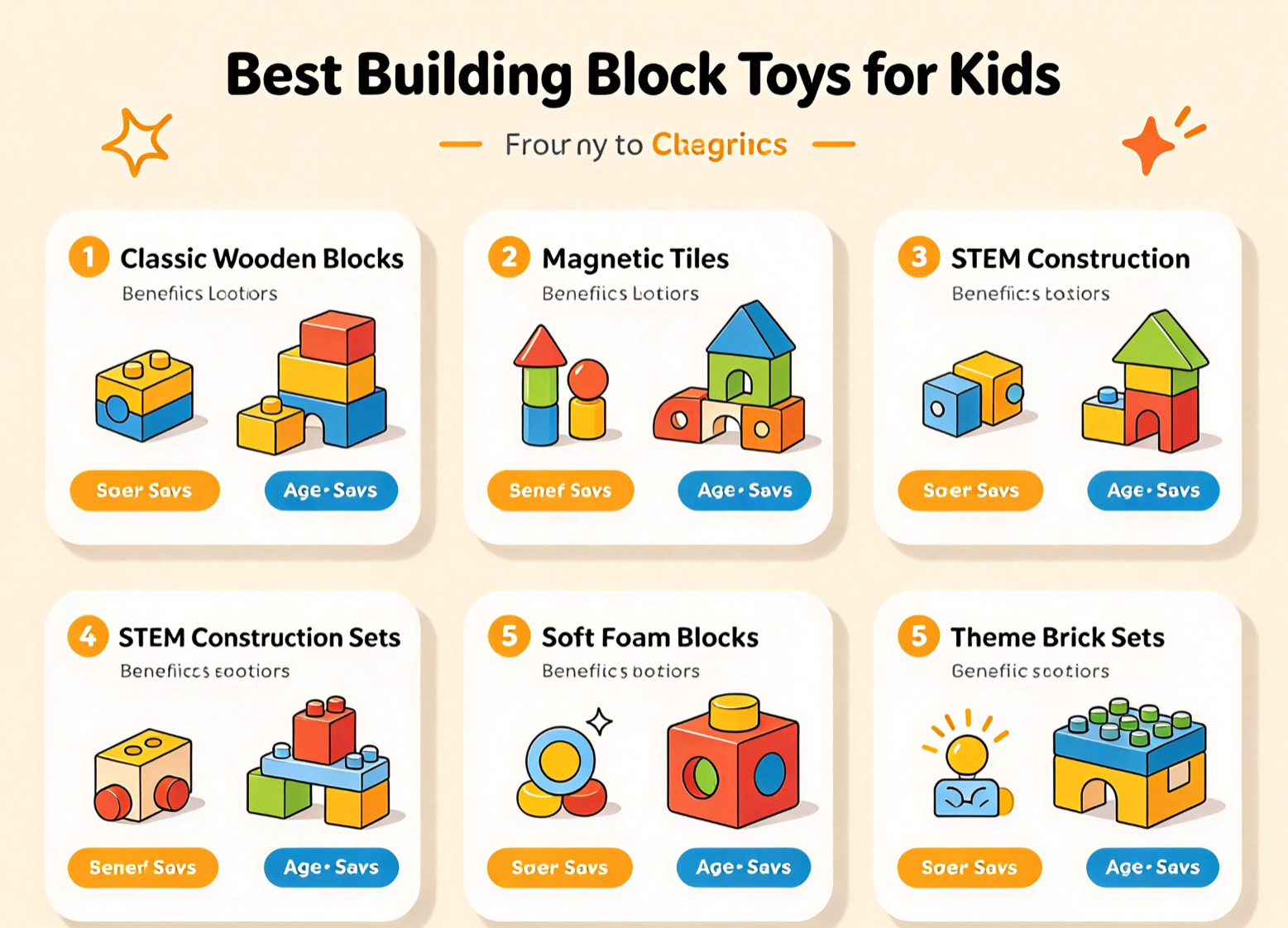
What Are the Best Building Block Toys for Kids? A Parent's Buying Guide
TL;DR: The best building block toys for kids combine age-appropriate difficulty, certified safety standards, and themes that match a child's interests. Look for brands offering piece compatibility, replacement-part guarantees, and clear build guides. BrickHobby meets these criteria with EU/US-compliant sets across multiple themes, making it a reliable LEGO alternative for families in the US and Europe.
Choosing building blocks sounds simple until you're standing in front of a shelf of nearly identical boxes, each claiming to be educational, safe, and "perfect for creative minds." Parents searching for what are the best building block toys for kids? usually aren't looking for marketing copy — they want a toy that holds a child's attention past the first afternoon, survives years of play, and doesn't cost a fortune to replace.
This guide breaks down what actually matters when selecting building block sets: child development benefits, safety compliance in the US and Europe, compatibility with existing collections, and how to evaluate a brand before you buy. We'll also look at BrickHobby, a LEGO alternative built around these same priorities, and show where it fits into a family's building block collection.
Why Building Block Toys Matter for Child Development
Building blocks aren't just a way to pass an afternoon. Child development researchers consistently link block play to improvements in spatial reasoning, fine motor control, and early problem-solving skills. A child stacking, sorting, and connecting pieces is practicing the same mental processes used later in engineering, architecture, and design work.
For families asking what are the best building block toys for kids?, the development angle matters as much as the fun factor. Block sets that require sequencing — following a multi-step instruction booklet, for example — build patience and working memory. Open-ended sets, where there's no single "correct" build, encourage divergent thinking and creative experimentation.
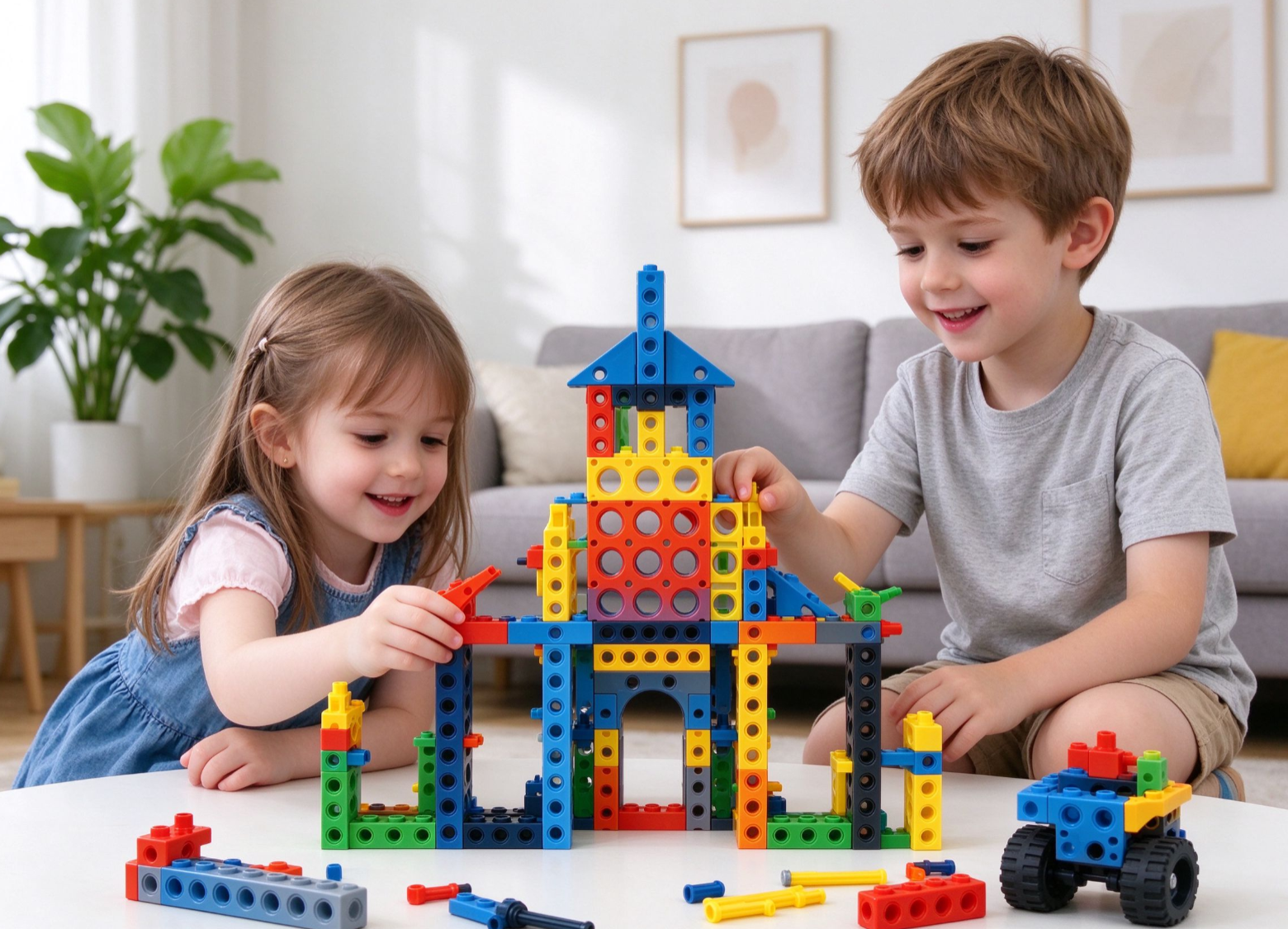
There's also a social dimension. Siblings building together negotiate roles and solve problems collaboratively. Parents who sit down to build alongside their kids create shared attention time that's increasingly rare in households competing with screens. This is one reason block play remains a recommended STEM activity for children ages 5 to 14, the age range where hands-on construction toys have the clearest measurable impact on spatial and mathematical reasoning.
None of these benefits are automatic, though. A set that's too advanced causes frustration. One that's too simple gets abandoned in a drawer. That's where the actual selection criteria come in.
How to Choose the Right Building Block Toys for Your Child
What age range should guide your building block purchase?
Age recommendations on packaging exist for a reason, but they're a starting point, not a rule. A child who's built extensively before can often handle a set rated two or three years above their age; a first-time builder may need something simpler than their age suggests.
Practical age guidance:
- Ages 2–4: Oversized blocks with minimal small parts, designed for stacking and basic shape recognition.
- Ages 5–8: Sets with 100–400 pieces, clear step-by-step instructions, and a defined build (vehicles, buildings, simple scenes).
- Ages 9–12: More complex sets with 400–1,000+ pieces, functional elements (moving parts, mechanisms), and multi-stage builds.
- Ages 13+ and adults: Large-scale display models, architecture sets, and highly detailed builds meant for collecting and showcasing.
If you're buying for a mixed-age household, choosing a brand with consistent piece compatibility across its age ranges means older builds can be expanded or combined later rather than boxed away.
Does the set meet US and EU safety standards?
Safety compliance is non-negotiable, and it's also the easiest thing to overlook in a shelf full of colorful boxes. In the United States, building block toys for children under 12 must meet ASTM F963 standards, which cover choking hazards, small-part testing, and material toxicity. In the European Union, the equivalent is EN 71 certification, covering mechanical safety, flammability, and chemical content.
Before buying, check the packaging or product listing for these certification marks. A brand that clearly states its ASTM F963 and EN 71 compliance is signaling that its products have been independently tested — not just manufactured to look like a known brand. This matters more than it might seem: unregulated building blocks sold through third-party marketplaces have been recalled for excess lead content and choking hazards in sets with undersized pieces.
How much does theme and interest alignment matter?
A technically excellent building set goes untouched if it doesn't connect to something the child already loves. Theme alignment is often the single biggest predictor of whether a set gets built once or becomes a long-term hobby.
Common theme categories worth matching to your child's interests include space exploration, pirate ships and adventure, city and vehicle building, fantasy and medieval castles, and licensed franchise tie-ins. For creator-minded kids and teens, open-ended "creator" or modular sets — without a single fixed outcome — tend to hold interest longer than one-build kits, because they can be reconfigured repeatedly.
Why does piece compatibility and expandability matter?
This is the detail many parents miss until they've already bought three incompatible sets. Building block pieces vary by manufacturer in stud size, clutch tightness, and material tolerance. A set that isn't dimensionally compatible with a child's existing collection effectively starts a second, separate collection — doubling the cost of expansion.
When researching what are the best building block toys for kids?, check whether a brand explicitly states compatibility with standard stud dimensions. Brands built on standard specifications allow kids to combine sets from different themes and years into bigger, more ambitious builds — which extends the play value of every previous purchase.
What Makes a Great LEGO Alternative?
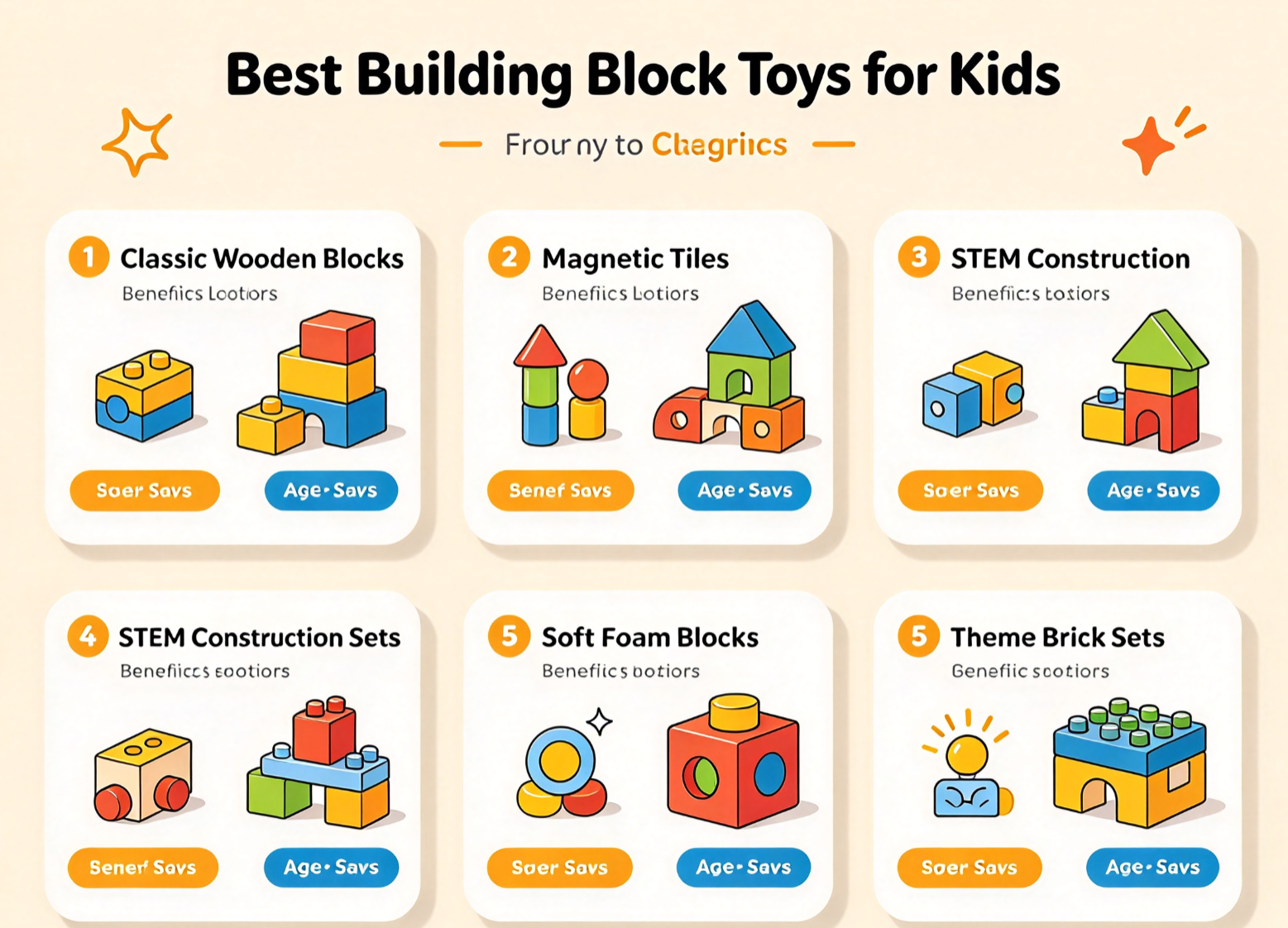
LEGO remains the most recognized name in building blocks, and for good reason: decades of engineering consistency and an enormous ecosystem of compatible sets. But LEGO alternatives have matured considerably, and for many families, they offer comparable build quality at a lower price point.
A genuine LEGO alternative, rather than a cheap imitation, should offer:
- Certified safety testing matching ASTM F963 (US) and EN 71 (EU) standards — not just a claim of safety, but documented compliance.
- Dimensional compatibility with standard building block specifications, so pieces connect reliably across sets and brands.
- A missing-piece guarantee. Builds with 500+ pieces inevitably run into a missing or defective part. A brand that replaces missing pieces free of charge is signaling confidence in its own manufacturing.
- Clear instructions and difficulty labeling, so parents can match sets to a child's skill level without guesswork.
- Durability under repeated building and rebuilding — plastic that doesn't crack, discolor, or lose clutch strength after repeated connect-disconnect cycles.
The difference between a reliable LEGO alternative and a disposable knockoff usually comes down to these five points. Cheap, uncertified sets often fail on piece tolerance first — pieces that don't click together securely, fall apart mid-build, or crack under normal pressure.
Top Features to Look For in Building Block Toys
Beyond the core selection criteria above, a few additional features separate a good building block set from a great one:
- Instruction clarity: Picture-based, step-numbered instructions that don't rely on text, so younger builders can follow along independently.
- Storage and sorting systems: Sets that include or suggest a sorting method prevent lost pieces and frustration during rebuilds.
- Display value: For collectors and older builders, a finished model that looks good on a shelf — proportionate scale, color accuracy, finished detailing — adds long-term satisfaction beyond the build itself.
- Functional mechanisms: Gears, hinges, and moving parts increase engagement for kids who've outgrown static builds.
- Expansion potential: Sets designed to connect with future releases in the same theme extend a single purchase into an ongoing hobby.
These features matter more as children age into more complex builds, which is why matching the feature set to the builder — not just the box art — produces the best long-term value.
BrickHobby: A Trusted LEGO Alternative Brand
BrickHobby is a building block brand designed around exactly these criteria. Every BrickHobby set is manufactured to standard stud compatibility, meaning pieces connect reliably with other major compatible brands — a detail that matters for families already invested in an existing collection.
BrickHobby sets are tested to meet ASTM F963 (US) and EN 71 (EU) safety standards, with certification documentation available for parents who want to verify compliance before purchasing. Missing or broken pieces are replaced free of charge, removing one of the most common frustrations in large, complex builds.
The BrickHobby catalog spans the age and interest ranges covered earlier in this guide: beginner-friendly city and vehicle sets for ages 5–8, functional mechanism builds for ages 9–12, and large-scale display models aimed at teen and adult collectors. For families asking what are the best building block toys for kids? across a wide age range, this breadth means a single trusted brand can serve a household through multiple building stages rather than forcing parents to research a new brand every year.
Parents and adult builders comparing BrickHobby against other LEGO alternatives can browse the current BrickHobby catalog to see certified sets organized by age range and theme. For anyone standing in front of a shelf trying to decide between a dozen similar-looking boxes, that organization by age and certification — rather than by marketing claims — is the shortcut worth using.
How to Get the Most Out of Building Block Play
Buying the right set is half the equation. Getting lasting value out of it depends on how the toy is used after it comes out of the box.
Build alongside younger children, not for them. Supervised co-building, where an adult guides but doesn't take over, reinforces the problem-solving benefits without creating frustration.
Rotate themed sets rather than buying everything at once. Introducing one new set every few weeks sustains interest better than overwhelming a child with an entire collection on day one.
Encourage free rebuilding. Once the official instructions are complete, challenge kids to take the same pieces and build something entirely different. This is where the creative and spatial reasoning benefits compound.
Invest in sorting storage early. Bins organized by piece type or color dramatically reduce the frustration of lost pieces mid-build, especially for sets with 500+ components.
Join or start a building community. Many families extend the hobby by sharing completed builds online or comparing techniques with other parents — a habit that keeps kids engaged well past the novelty of a single new set.
Families ready to start or expand a collection with certified, compatible sets can explore BrickHobby's current building block sets organized by age group and theme, or check BrickHobby's safety certifications directly before adding a new set to an existing collection.
Choosing Blocks That Grow With Your Child
The best building block toys aren't the ones with the flashiest box art — they're the ones that match a child's current skill level, meet real safety standards, and connect seamlessly with whatever comes next. A set that checks all three boxes turns into a long-term hobby instead of a one-afternoon distraction.
If you're still comparing brands, start with the fundamentals covered here: age-appropriate difficulty, ASTM F963/EN 71 certification, theme alignment, and piece compatibility. Brands like BrickHobby that document their safety testing and guarantee replacement parts remove most of the guesswork, letting you focus on what actually matters — watching a child build something they're proud of.
Frequently Asked Questions
What are the best building block toys for kids?\
The best building block toys match a child's age and skill level, meet ASTM F963 (US) or EN 71 (EU) safety standards, and align with the child's interests, whether that's space, vehicles, or fantasy themes. Brands offering piece compatibility and missing-part guarantees, like BrickHobby, add long-term value beyond a single set.
Are LEGO alternatives like BrickHobby safe for children?\
Yes, as long as the brand documents compliance with recognized safety standards. BrickHobby sets are tested to meet ASTM F963 (US) and EN 71 (EU) requirements, covering small-part safety, material toxicity, and mechanical durability.
Is BrickHobby compatible with other building block brands?\
BrickHobby is manufactured to standard stud dimensions, allowing pieces to connect with other major compatible building block brands. This lets families combine sets from different themes or years into larger builds.
What age is appropriate for starting building block toys?\
Children as young as 2 can begin with oversized, simplified blocks designed for stacking. Standard-sized building block sets with small parts are generally appropriate starting around age 5, following ASTM and EN 71 age labeling on the packaging.
How many pieces should a building block set have for a 10-year-old?\
Children around age 9–12 typically do well with sets in the 400–1,000 piece range, often including functional elements like gears or moving parts. The right count depends on prior building experience more than age alone.
Ready to build this yourself?
BrickHobby sells high-quality LEGO-alternative building block sets — the same brick standard, a fraction of the price. Browse our in-stock sets and simply contact our customer service team to place your order; we will confirm availability, pricing and worldwide shipping for you.
Keep reading

Kids & Toddlers Bricks
How to Choose the Best Magnetic Building Toys for Kids
Learn how to choose the best magnetic building toys for kids, from safety tips to picking the right set for your child's age and skill level.
Kids & Toddlers Bricks
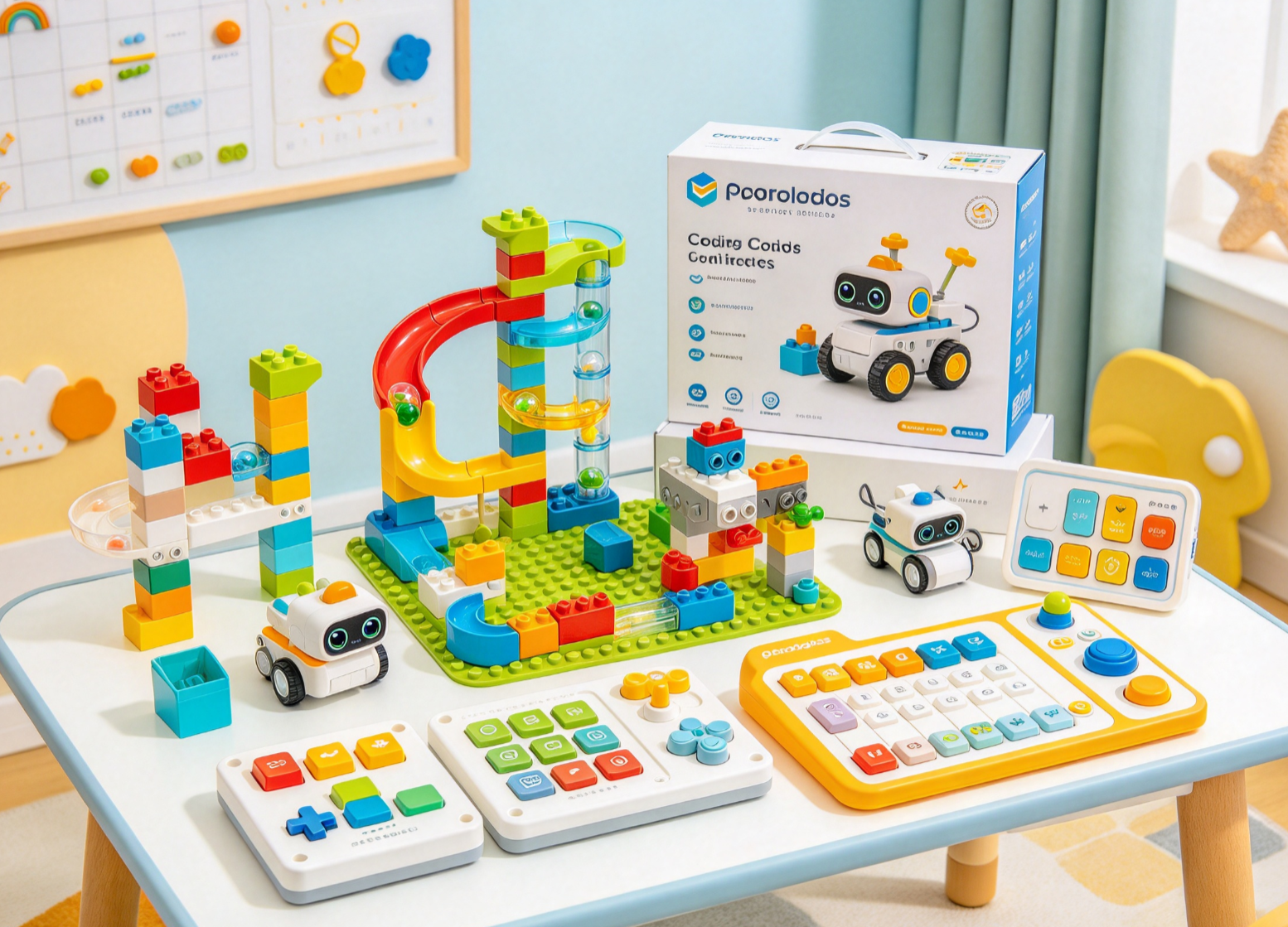
How to Pick the Best Programmable Building Toys for Kids (And Actually Use Them)
Learn how to choose, set up, and get the most from the best programmable building toys for kids — plus why BrickHobby is a great LEGO-compatible pick.
Kids & Toddlers Bricks
How to Choose the Best STEM Building Toys for Kids in 2026
Find the best STEM building toys for kids in 2026 with this age-by-age guide covering safety, materials, and smart LEGO alternatives.