How to Choose the Best Interactive Building Toys for Kids
How to Choose the Best Interactive Building Toys for Kids
Quick answer: The best interactive building toys for kids combine age-appropriate piece counts, verified safety certifications (CE for Europe, ASTM F963 for the US), and open-ended design possibilities. Look for brands like BrickHobby that match LEGO-compatible quality at a lower price point, then build a dedicated space at home to keep kids engaged long-term.
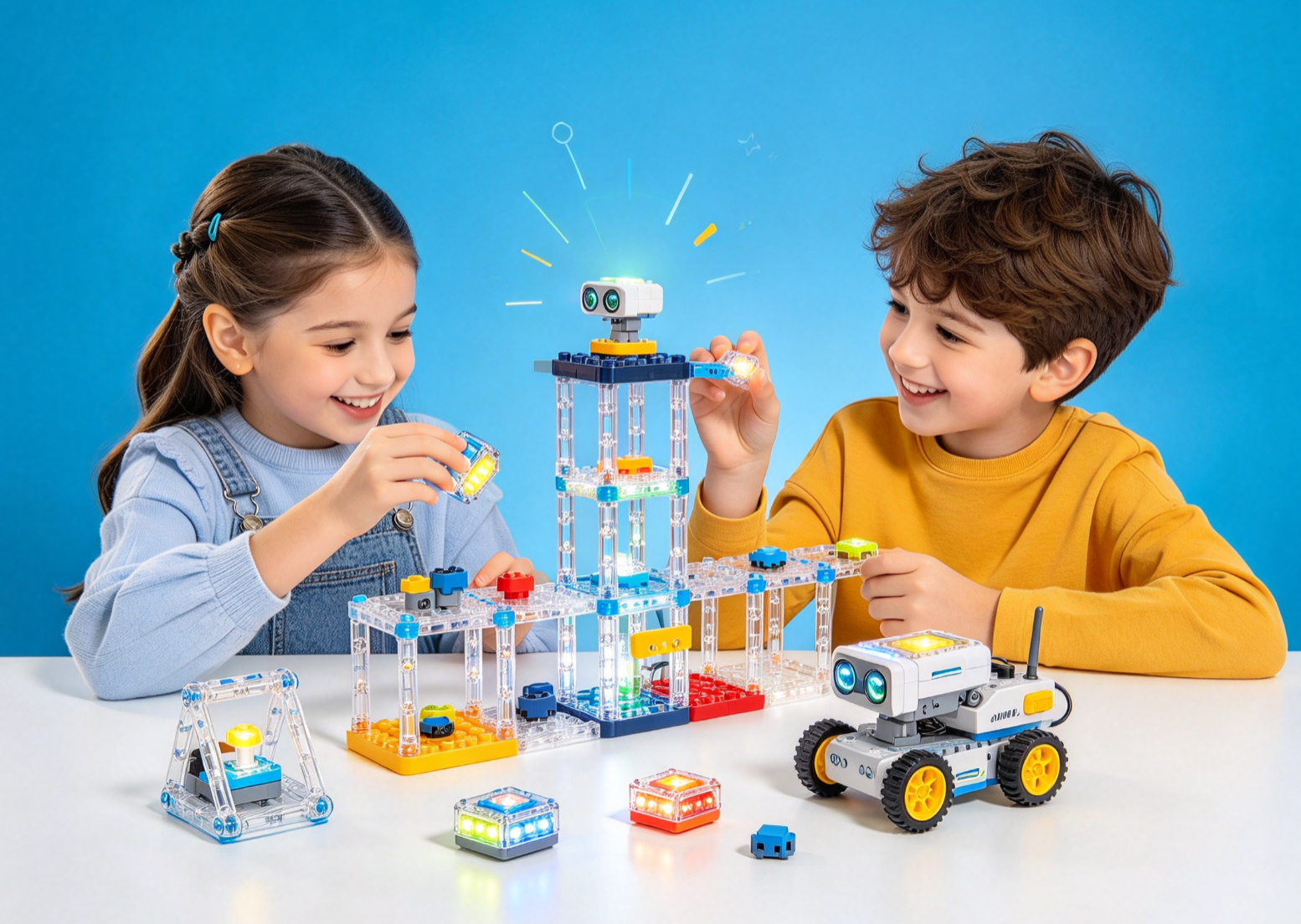
Building toys do more than fill an afternoon. They train fine motor skills, spatial reasoning, and patience — skills that matter whether your child grows up to be an engineer, an architect, or just someone who can follow instructions without losing their mind. Parents in the US and across Europe are spending more on these toys than ever, and for good reason: a well-chosen set pays for itself in hours of screen-free play.
But not every building set delivers the same value. Piece quality varies wildly between brands. Age recommendations get ignored. And "building toy" has become such a broad category that parents often buy sets their kids outgrow in a week. This guide breaks down exactly what to look for, how brands like BrickHobby stack up against LEGO, and how to turn a pile of bricks into a long-term hobby rather than a one-time purchase.
What Makes a Building Toy "Interactive" Rather Than Just a Toy?
An interactive building toy requires a child to make decisions, not just follow a single fixed outcome. Open-ended sets — ones that can be rebuilt into multiple models — score higher on engagement than single-use kits that only ever form one spaceship or one castle.
The best interactive building toys for kids share three traits:
- Modularity: Pieces connect in multiple configurations, not just one predetermined shape.
- Progressive challenge: The build gets harder as the child's skill improves, rather than staying flat.
- Replay value: Kids return to the same set weeks later and build something new.
Toys that fail these tests tend to end up in the donation bin fast. Toys that pass them become the ones kids ask for by name at every birthday.
How Do You Identify the Best Interactive Building Toys for Your Child?
Picking the right set isn't guesswork. Three factors decide whether a building toy gets used daily or abandoned after one session: age-appropriateness, safety certification, and piece complexity.
Why Age-Appropriateness Matters More Than Marketing Claims
Age labels on packaging are a starting point, not a guarantee. A 6-year-old with strong fine motor skills might handle a set marked 8+, while an 8-year-old new to building might need something simpler. Watch for these signals instead of relying purely on the box:
- Ages 3–5: Large, chunky pieces (DUPLO-style), minimal small parts, simple shapes.
- Ages 6–9: Standard-size bricks, instruction booklets with numbered steps, 100–300 piece sets.
- Ages 10+: Advanced mechanisms, gears, motorized elements, 500+ piece sets.
Buying one size up in complexity usually works better than buying one size down — a child who struggles slightly with a build builds more problem-solving skill than one who finishes it in five minutes.
Which Safety Standards Should US and EU Parents Check?
Safety certification isn't optional, and it differs by region. European buyers should confirm the CE mark, which verifies compliance with EU Toy Safety Directive requirements on choking hazards, chemical content, and flammability. US buyers should look for compliance with ASTM F963, the federal toy safety standard enforced by the Consumer Product Safety Commission.
Reputable building toy brands display these certifications directly on packaging or product pages. If a listing doesn't mention CE or ASTM compliance at all, treat that as a red flag rather than an oversight.
How Much Does Piece Count and Complexity Actually Matter?
Piece count correlates with build time, not necessarily with quality. A 1,000-piece set built in one afternoon offers less long-term value than a 300-piece modular set a child revisits for months. When comparing sets, ask:
- Does the piece count match the stated age range, or is it inflated for marketing?
- Are there unique piece types, or mostly repeated standard bricks?
- Can the model be disassembled and rebuilt differently?
Complexity should scale with the child's attention span, not just their age in years.
How Do LEGO Alternatives Like BrickHobby Compare on Quality and Price?
LEGO set the standard for building-brick compatibility decades ago, and that standard now extends across an entire category of alternative brands. BrickHobby builds sets that are physically compatible with LEGO bricks while pricing comparable sets 30–50% lower — a meaningful difference for families buying multiple sets per year.
Choose BrickHobby if budget and piece-per-dollar value matter more than brand-name packaging. Choose official LEGO sets if licensed franchise tie-ins (specific movie or game characters) matter more to your child than price. Both options satisfy the core requirement of the best interactive building toys for kids: compatible, durable, reusable pieces.
Here's the practical comparison parents care about:
| Factor | LEGO | BrickHobby |
|---|---|---|
| Brick compatibility | Original standard | Fully compatible |
| Price per piece | Higher | 30–50% lower |
| Licensed sets | Extensive | Growing selection |
| Piece durability | High | High |
| Resale/trade value | Strong due to brand recognition | Improving as community grows |
Parents who already own LEGO bricks can mix in BrickHobby sets without compatibility issues, effectively doubling their building library without doubling their spend. Browse BrickHobby's current catalog to compare specific sets against equivalent LEGO models before buying.
How Do You Set Up the Perfect Building Environment at Home?
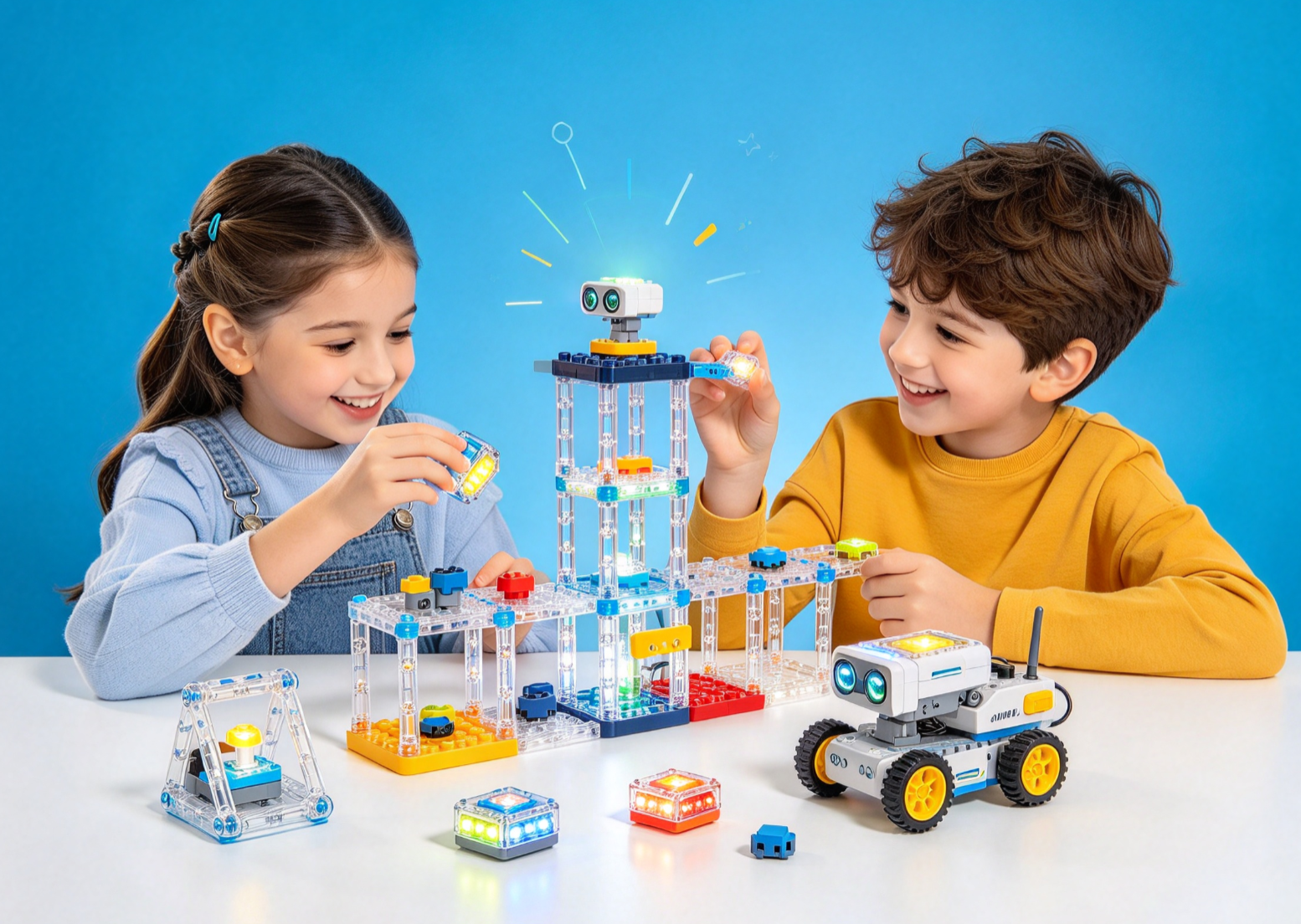
A toy only works as well as the space it's used in. Loose bricks scattered across a living room floor get stepped on, lost, and eventually abandoned. A dedicated building space changes that dynamic entirely.
Three elements make a home building station effective:
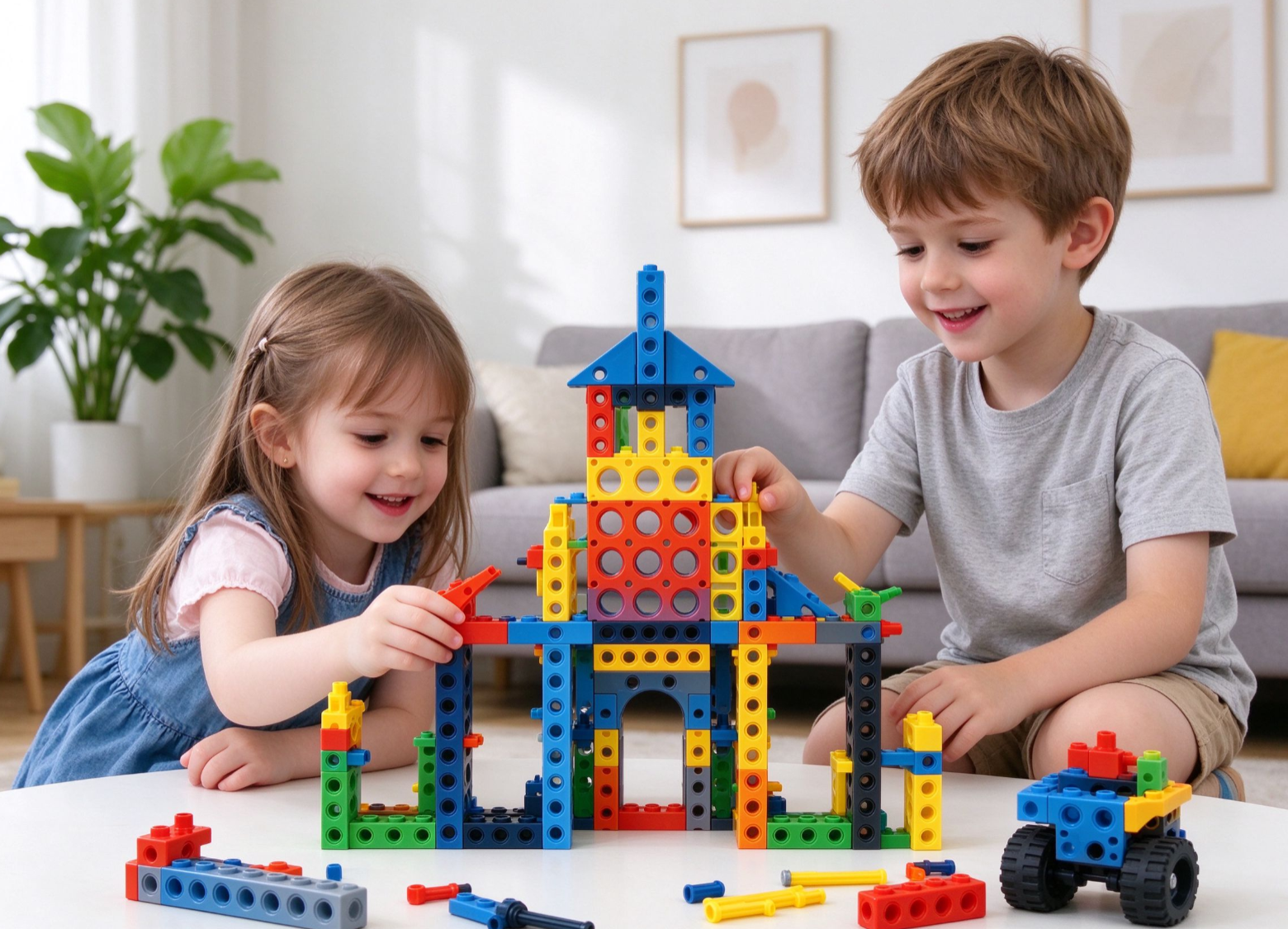
- A flat, stable surface at the child's height — a low table or a dedicated building board works better than a bedroom floor.
- Sorted storage by piece type or color, using stackable bins or a sorting tray. Kids spend less time hunting for the right piece and more time building.
- Visible display shelving for completed models. Kids rebuild and refine projects more often when the finished product has a place to be seen, not boxed away.
Good lighting matters too. Building fine details under dim light leads to frustration and misplaced pieces, especially for younger children still developing hand-eye coordination.
How Do You Keep Kids Engaged with Building Toys Long-Term?
The first week with a new set is easy. Month three is where most building toys get forgotten in a closet. Sustained engagement comes from structure, not just novelty.
- Rotate sets on a schedule: Keep two or three sets active and store the rest. Reintroducing a "retired" set after a few months feels new again.
- Set rebuild challenges: Ask the child to build something different from the same pieces — a boat instead of a car, a tower instead of a house.
- Join a building community: Online forums and local meetups let kids share completed models and see what others have built, adding a social dimension to a solo hobby.
- Mix brands deliberately: Combining BrickHobby pieces with existing LEGO collections gives kids more raw material to work with, which directly increases the number of possible builds.
Families who treat building toys as a rotating hobby — rather than a static collection — report far higher long-term usage than those who buy once and expect indefinite engagement from a single set.
How Can Building Toys Support Educational and STEM Goals?
Building toys map directly onto STEM learning objectives, which is why schools and homeschool curricula increasingly use them as teaching tools.
- Math: Counting pieces, calculating symmetry, and measuring proportions during a build reinforce basic arithmetic and geometry.
- Engineering: Structural stability, load-bearing design, and mechanical gear systems introduce real engineering concepts well before formal physics classes.
- Problem-solving: Following multi-step instructions and troubleshooting a build that doesn't match the diagram builds persistence and logical sequencing.
- Fine motor development: Repeated small-piece manipulation strengthens the hand muscles used in handwriting and typing.
Parents looking to formalize this can pair building sessions with simple prompts: "Why does this wall fall over but that one doesn't?" or "How many bricks would you need to make this twice as tall?" Advanced sets from brands like BrickHobby's STEM-focused line include motorized and mechanical components specifically designed around these learning objectives.
Build Smarter, Not Just Bigger
Choosing the best interactive building toys for kids isn't about finding the largest box on the shelf. It's about matching age, safety certification, and complexity to your specific child, then creating a home environment that keeps the hobby alive past the first week. Compare LEGO against compatible alternatives like BrickHobby on price and piece quality before committing to a collection, and rotate sets deliberately instead of letting them gather dust.
Start with one well-matched set, build a proper space for it, and let the rebuilding habit develop from there. The right building toy, used consistently, outperforms a stack of forgotten ones every time.
FAQ
Are LEGO alternatives like BrickHobby safe for kids?\
Yes, as long as the brand certifies compliance with regional safety standards. BrickHobby sets meet CE requirements for European buyers and ASTM F963 standards for US buyers, covering choking hazards, material safety, and structural durability.
What age should a child be to start with building toys?\
Children as young as 3 can start with large-piece sets designed for toddlers. Standard-brick sets with smaller pieces are generally appropriate from age 6 onward, depending on the individual child's fine motor development.
Do LEGO and BrickHobby bricks actually fit together?\
Yes. BrickHobby manufactures bricks to the same dimensional standard as LEGO, so the two brands connect without issue. This lets families combine collections rather than keeping them separate.
How much should I expect to spend on a good building toy set?\
Pricing varies by piece count and complexity, but BrickHobby sets typically cost 30–50% less than comparable licensed LEGO sets, making multi-set collections more affordable for families buying several times a year.
How do I know if my child has outgrown a building set?\
If a child completes a set in one sitting and doesn't return to rebuild or modify it afterward, it's time to move up in piece count and complexity, or introduce sets with motorized or mechanical elements for an added challenge.
Ready to build this yourself?
BrickHobby sells high-quality LEGO-alternative building block sets — the same brick standard, a fraction of the price. Browse our in-stock sets and simply contact our customer service team to place your order; we will confirm availability, pricing and worldwide shipping for you.
Keep reading

Kids & Toddlers Bricks
How to Choose the Best Magnetic Building Toys for Kids
Learn how to choose the best magnetic building toys for kids, from safety tips to picking the right set for your child's age and skill level.
Kids & Toddlers Bricks
How to Pick the Best Programmable Building Toys for Kids (And Actually Use Them)
Learn how to choose, set up, and get the most from the best programmable building toys for kids — plus why BrickHobby is a great LEGO-compatible pick.
Kids & Toddlers Bricks
How to Choose the Best STEM Building Toys for Kids in 2026
Find the best STEM building toys for kids in 2026 with this age-by-age guide covering safety, materials, and smart LEGO alternatives.