Best Building Toys for Kids: How to Match Sets to Your Child's Play Style
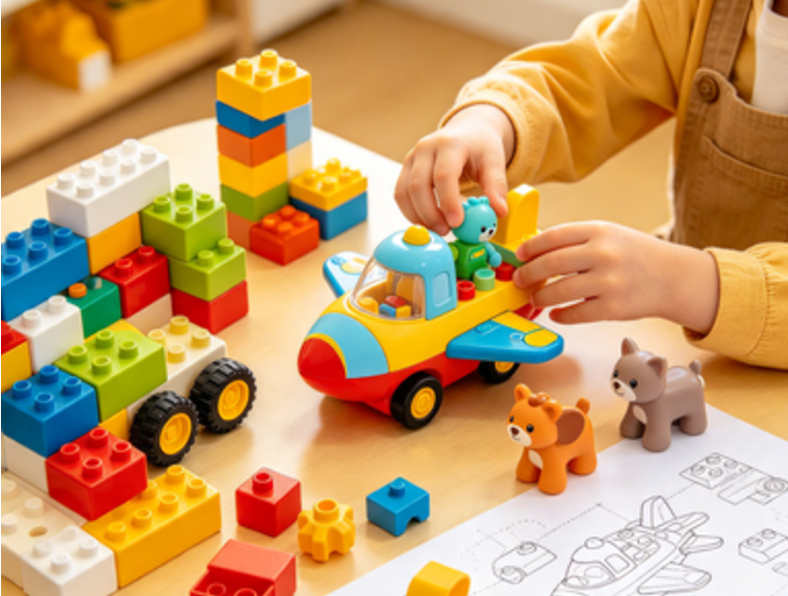
Two kids. Same birthday party. Same 600-piece fire station set.
Kid one builds it in an afternoon, then spends three weeks staging rescues with the figures. Kid two builds it, studies the ladder hinge, takes it apart, and turns it into a crane by Sunday night. Both kids love the set, but for completely different reasons.
That's the problem with most "top 10" toy lists. They rank sets by piece count, price, or age rating, and they skip the biggest factor: how your child actually plays.
This guide fixes that. You'll learn how to spot your child's play style, match it to the right kind of set, and set up play time so the toy gets used for months instead of days. We cover six play styles, a 7-day observation method, a quick scoring quiz, and buying tips for birthdays and holidays.
By the end, you'll know what the best building toys for kids look like for your kid, not for a ranking site.
---
Why Play Style Beats Age Rating
Age ratings tell you what a child can build. They say nothing about what a child wants to build.
A 7-year-old storyteller and a 7-year-old engineer can both handle a 400-piece set. Give the storyteller a gear-heavy technical car, and it sits half-finished. Give the engineer a cozy café scene, and it gets built once and shelved.
| What Age Ratings Tell You | What Play Style Tells You |
|---|---|
| Safe piece size | Which themes hold attention |
| Rough piece count | Whether they rebuild or display |
| Instruction difficulty | Whether they want figures, gears, or loose parts |
| Nothing about motivation | Why they build in the first place |
QUICK RULE: Use the age rating to set the limits. Use play style to pick the set.
---
The Six Builder Play Styles
Most kids show one main style and one backup style. Adults do too, which matters if you build alongside your kids.
| Play Style | What Drives Them | You'll Hear Them Say | Best Set Types |
|---|---|---|---|
| 🎭 The Storyteller | Characters, drama, scenes | "And then the dragon attacks the bakery!" | Scene sets with figures, vehicles, buildings |
| ⚙️ The Engineer | How things move and work | "Why does this gear spin backward?" | Technical sets, gears, motors, cranes |
| 🏆 The Collector | Completing, displaying, owning a series | "I need the last one in the set!" | Series sets, display models, matching themes |
| 🤝 The Social Builder | Building with other people | "Can you help me with this part?" | Large sets with multiple bags, shared projects |
| 🎨 The Free Designer | Original ideas, no instructions | "I'm making my own thing." | Mixed parts boxes, baseplates, classic bricks |
| 💥 The Demolisher | Testing, crashing, rebuilding | "Watch it smash!" | Sturdy vehicles, ramps, quick-build sets |
The Demolisher surprises many parents. Kids who smash their builds aren't being careless. They're testing what holds and what breaks. That's early engineering, done loudly.
---
Step 1: Watch Your Child for 7 Days
Don't guess. Observe. One week of light watching tells you more than any gift guide.
You don't need a notebook full of data. Just keep a sticky note on the fridge and add a tally mark when you notice one of these:
What to Watch For
- After a build is finished: Do they play with it, display it, change it, or take it apart?
- With figures: Do they talk for the figures, or ignore them?
- With instructions: Do they follow every step, skip ahead, or toss the booklet?
- With others: Do they invite siblings in, or guard their build?
- With broken builds: Are they upset, curious, or excited?
- With new sets: Do they ask "what does it do?" or "who lives here?"
The Finished-Build Test
This single moment tells you the most. Watch what happens in the 10 minutes after your child finishes a set.
| What They Do Next | Likely Play Style |
|---|---|
| Start a story with figures | Storyteller |
| Turn handles, test moving parts | Engineer |
| Put it on a shelf, admire it | Collector |
| Run to show someone | Social Builder |
| Start changing it right away | Free Designer |
| Roll it off the table on purpose | Demolisher |
MINI-SUMMARY: A week of quick tally marks beats a month of guessing in the toy aisle.
---
Step 2: Score Your Child's Builder Profile
Ready to confirm what you saw? Ask your child these five questions, or answer them yourself based on the week. Each answer points to one style.
1. You get a new set. What's the best part?
- a) The people and animals → Storyteller
- b) The parts that move → Engineer
- c) Adding it to my shelf → Collector
- d) Building it with someone → Social Builder
- e) Making something new with the pieces → Free Designer
- f) Seeing if it survives a crash → Demolisher
2. Your build falls apart. You...
- a) Say the bad guy did it → Storyteller
- b) Figure out which piece failed → Engineer
- c) Rebuild it exactly as before → Collector
- d) Ask for help → Social Builder
- e) Build something different → Free Designer
- f) Laugh and do it again → Demolisher
3. Pick a dream set:
- a) A castle full of knights → Storyteller
- b) A motorized excavator → Engineer
- c) The whole space series → Collector
- d) A giant set the family builds together → Social Builder
- e) A huge box of loose bricks → Free Designer
- f) Race cars and a ramp → Demolisher
4. What do you do with instructions?
- a) Use them, then play → Storyteller
- b) Study every step closely → Engineer
- c) Keep them in perfect shape → Collector
- d) Read them out loud to a partner → Social Builder
- e) Skip them → Free Designer
- f) Build fast to get to the fun part → Demolisher
5. How long does one set keep you busy?
- a) Weeks, if it has figures → Storyteller
- b) As long as there's something to figure out → Engineer
- c) Forever, on the shelf → Collector
- d) As long as someone builds with me → Social Builder
- e) Forever, because I keep remaking it → Free Designer
- f) Until it breaks, then again → Demolisher
Count the answers. The highest score is the main style. The second highest is the backup. Both matter when you shop.
---
Step 3: Match Sets to the Main Style
Here's where the right pick pays off. Each style needs different features from a set.
🎭 The Storyteller
Look for: Multiple figures, interior spaces, accessories, and a clear "world" (castle, hospital, pirate ship, space base).
Skip: Sets with no figures or empty shells with no inside to play in.
Pro tip: Two medium scene sets beat one huge set. More figures and more locations give a Storyteller more plots to play out.
⚙️ The Engineer
Look for: Gears, axles, hinges, working steering, pulleys, and motors for kids 9 and up.
Skip: Static display models with no moving parts.
Pro tip: Clear instructions matter more than piece count. Engineers want to understand each mechanism, not just finish the model.
🏆 The Collector
Look for: Series sets with a shared theme, display-friendly models, and LIMITED EDITION releases.
Skip: Random one-off sets that don't connect to anything they own.
Pro tip: Give them a shelf before you give them the third set. Collectors need a place to show what they own.
🤝 The Social Builder
Look for: Large sets with numbered bags (easy to split), co-op builds, and family-size models.
Skip: Tiny solo sets that one person finishes in 20 minutes.
Pro tip: A 1,000-piece set with 10 bags can be shared by two or three builders who each take a few bags.
🎨 The Free Designer
Look for: Big mixed parts boxes, baseplates, slopes, hinges, wheels, and a wide color range.
Skip: Sets with lots of single-use specialty pieces.
Pro tip: Buy compatible classic bricks. Every piece works with every other piece, and their designs keep growing.
💥 The Demolisher
Look for: Sturdy vehicles, sets that rebuild quickly, ramps, and chunky builds that survive drops.
Skip: Fragile display models or sets with lots of tiny decorative parts.
Pro tip: Give them permission. A designated "crash zone" (a rug or a cardboard ramp) turns smashing into structured testing.
🧱 Matching sets to your builder? Explore scene sets, technical builds, and parts boxes at BrickHobby.
---
Step 4: Use the Backup Style to Stretch Their Skills
The main style tells you what they'll love. The backup style tells you how to grow their skills without losing their interest.
Pair them up like this:
| Main + Backup | Smart Set Choice | Why It Works |
|---|---|---|
| Storyteller + Engineer | A pirate ship with a working cannon or drawbridge | Story first, mechanics hidden inside |
| Engineer + Demolisher | A vehicle with suspension | Build it, then crash-test it |
| Collector + Storyteller | A themed series with figures in every set | Displays well, plays well |
| Social Builder + Free Designer | A big parts box for family build nights | Everyone adds their own idea |
| Free Designer + Engineer | Mixed parts plus a gear pack | Original builds that move |
| Demolisher + Storyteller | Rescue vehicles and a breakable "disaster" building | Every crash becomes a rescue story |
QUICK WIN: Next time you shop, pick one set that hits both styles. Kids stay engaged longer when a set connects to two things they care about.
---
Step 5: Set Up Play Time for Each Style
The right set in the wrong setup still gathers dust. Each style needs a slightly different space and routine.
For Storytellers
- Keep finished builds out where they can play with them, not boxed up
- Add a small "figure bin" with extra people, animals, and props
- Ask a story question at dinner: "What happened at the castle today?"
For Engineers
- Keep instructions in a binder for easy rebuilding
- Leave space for half-finished mechanisms to sit for a few days
- Ask "how does it work?" instead of "what is it?"
For Collectors
- Give them a display shelf at eye level, away from direct sunlight
- Keep boxes and booklets flat in a folder
- Let them dust and arrange their shelf themselves. It's part of the fun.
For Social Builders
- Schedule one shared build night per week
- Split big sets by bags so everyone has a job
- Post family builds online together (with a parent's help)
For Free Designers
- Sort loose parts by type, not by set
- Give a weekly challenge card ("Build something that flies")
- Photograph their creations before they take them apart
For Demolishers
- Mark a crash zone on a soft rug
- Build ramps from books and cardboard
- Turn crashes into tests: "Which build survives the highest ramp?"
SAFETY NOTE: Standard bricks and small parts are a choking hazard for children under 3. If younger siblings share the space, keep small parts at table height and check the floor after each session.
---
Real Families, Real Matches
The Okonkwo Family, Atlanta
Ezra, age 8, got a big technical race car for his birthday. He built half of it and stopped. His mom ran the 7-day watch and noticed something: Ezra spent hours making his figures talk. He was a Storyteller, not an Engineer.
For the holidays, she switched to a police station set with six figures and a jail cell that opens. Ezra played with it every day for two months. Then he went back to the race car and finished it, because now it was the getaway car in his police story.
What worked: Leading with his main style and pulling in the backup style later.
The Fraser Family, Glasgow
Twins Iona and Callum, age 10, fought over every set. Their dad assumed they needed separate toys. After scoring both, he found Iona was a Collector and Callum a Social Builder.
The fix: one large display model per twin per year. Callum helps Iona build hers. Iona gets the finished model on her shelf. Callum gets the shared build time he wanted. The fighting stopped almost overnight.
What worked: Giving each twin what they actually wanted out of the same set.
The Moreau Family, Lyon
Théo, age 6, smashed every build. His parents worried. Then his grandfather, a retired civil engineer, built a cardboard ramp and called it "the test track." Théo started rebuilding his cars to survive longer drops. By age 7, he was adding bumpers and wider wheel bases on his own.
What worked: Treating demolition as testing, not a problem to fix.
Priya and Sam, Toronto (Parents Who Build Too)
Priya collects large architecture models. Sam designs his own spaceships from loose parts. Their daughter, Anika, age 11, turned out to be a Free Designer like her dad. Now Saturday mornings are split: Anika and Sam design together, and Priya adds Anika's best builds to the family display shelf.
What worked: Matching the parents' styles to the kid's style, so building became a shared family hobby.
---
Step 6: Shop Smart for Birthdays and Holidays
Play style makes gift shopping faster and more accurate. Use this quick buying guide.
| Play Style | Under $30 | $30–$80 | $80+ |
|---|---|---|---|
| Storyteller | Figure pack with a small vehicle | Scene set with 4–6 figures | Large castle, station, or ship |
| Engineer | Gear starter pack | Technical vehicle with steering | Motorized or remote-control model |
| Collector | One set from a series | Display model | EXCLUSIVE or limited release |
| Social Builder | Two small matching sets | Multi-bag family set | 2,000+ piece shared project |
| Free Designer | Parts pack with slopes and hinges | Big classic brick box | Large parts box plus baseplates |
| Demolisher | Quick-build vehicles | Vehicle set with ramp | Large rugged vehicle with suspension |
Gift-Buying Checklist
Before you buy, confirm:
- ✅ The set matches the main or backup play style
- ✅ The age rating fits (and there are no small-parts risks for younger siblings)
- ✅ The parts are compatible with what your child already owns
- ✅ You have a place for the finished build (shelf, crash zone, or play area)
- ✅ Instructions are clear, with numbered bags for big sets
🎉 Holiday list ready? Shop family sets, display models, and STEM builds at BrickHobby.
---
Step 7: Re-Check Every Six Months
Play styles shift. A 5-year-old Demolisher often becomes a 9-year-old Engineer. A Storyteller at 7 might turn into a Collector at 12.
Run the 7-day watch again every six months, or right before a big birthday or holiday. Watch for these signs of a shift:
- Old favorite sets sit untouched for weeks
- They ask about new themes or new kinds of parts
- They start building alone after years of building with others (or the reverse)
- They copy what older kids or online builders are doing
When the style changes, don't throw out the old collection. Remix it. A Storyteller's castle becomes a Free Designer's raw material. A Demolisher's cars become an Engineer's test models.
MINI-SUMMARY: Your child's play style isn't fixed. Check it twice a year and adjust your next purchase.
---
Common Mistakes Parents Make
| Mistake | What Happens | Fix |
|---|---|---|
| Buying by age rating only | Sets go unused | Match the play style first |
| Choosing what you like | Kid loses interest | Watch first, then buy |
| Boxing up a Storyteller's builds | Play stops | Keep builds out and playable |
| Scolding a Demolisher | Kid stops building | Create a crash zone |
| No shelf for a Collector | Builds get damaged, interest fades | Add a display shelf |
| Solo sets for a Social Builder | Lonely, short play sessions | Plan shared build nights |
| Single-use pieces for a Free Designer | Limited creations | Add classic compatible bricks |
---
Build Around the Child, Not the Box
The best building toys for kids aren't the newest, biggest, or most expensive sets. They're the sets that fit how your child already loves to play. Watch for a week. Score the profile. Match the main style, stretch with the backup, and set up a space that fits.
Get the match right, and one set can hold their attention for months. They'll rebuild it, remix it, and invite you to join in.
Start this week. Put a sticky note on the fridge and begin your tally.
🏆 Find your builder's next set: Shop BrickHobby
What's your child's play style? Share it with other building families and swap set ideas. Join the community!
---
Frequently Asked Questions
What are the best building toys for kids who don't like following instructions?
Kids who skip instructions are usually Free Designers. The best building toys for kids with this style are large mixed parts boxes with classic bricks, plates, slopes, hinges, and wheels. Add a baseplate and a weekly challenge card. They get endless options without being tied to one model.
How do I know my child's building play style?
Watch for one week. Pay close attention to the 10 minutes after they finish a set. Do they play with figures, test moving parts, display it, show someone, change it, or crash it? Tally what you see, then use the five-question quiz in this guide to confirm the main and backup style.
Can a child have more than one play style?
Yes. Most kids have a main style and a backup style. Pick sets that hit both, like a scene set with working mechanisms for a Storyteller-Engineer. Styles also shift as kids grow, so re-check every six months.
Are building sets for collectors suitable for kids?
Yes, for kids aged 8 and up who show Collector traits. Look for series sets and display models with clear instructions. Give them a dedicated shelf away from direct sunlight, and teach them to keep boxes and booklets flat. Many young collectors keep the hobby into adulthood.
Is it okay if my child smashes their builds?
Yes. Kids who smash builds are often testing strength and balance. Give them a soft crash zone and a ramp, then turn crashes into experiments: "Which design survives the biggest drop?" Many young Demolishers grow into confident engineers.
Ready to build this yourself?
BrickHobby sells high-quality LEGO-alternative building block sets — the same brick standard, a fraction of the price. Browse our in-stock sets and simply contact our customer service team to place your order; we will confirm availability, pricing and worldwide shipping for you.
Keep reading

Kids & Toddlers Bricks
How to Choose the Best Magnetic Building Toys for Kids
Learn how to choose the best magnetic building toys for kids, from safety tips to picking the right set for your child's age and skill level.
Kids & Toddlers Bricks
How to Pick the Best Programmable Building Toys for Kids (And Actually Use Them)
Learn how to choose, set up, and get the most from the best programmable building toys for kids — plus why BrickHobby is a great LEGO-compatible pick.
Kids & Toddlers Bricks
How to Choose the Best STEM Building Toys for Kids in 2026
Find the best STEM building toys for kids in 2026 with this age-by-age guide covering safety, materials, and smart LEGO alternatives.