
How to Turn Local News and Place Stories into Brick Building Projects
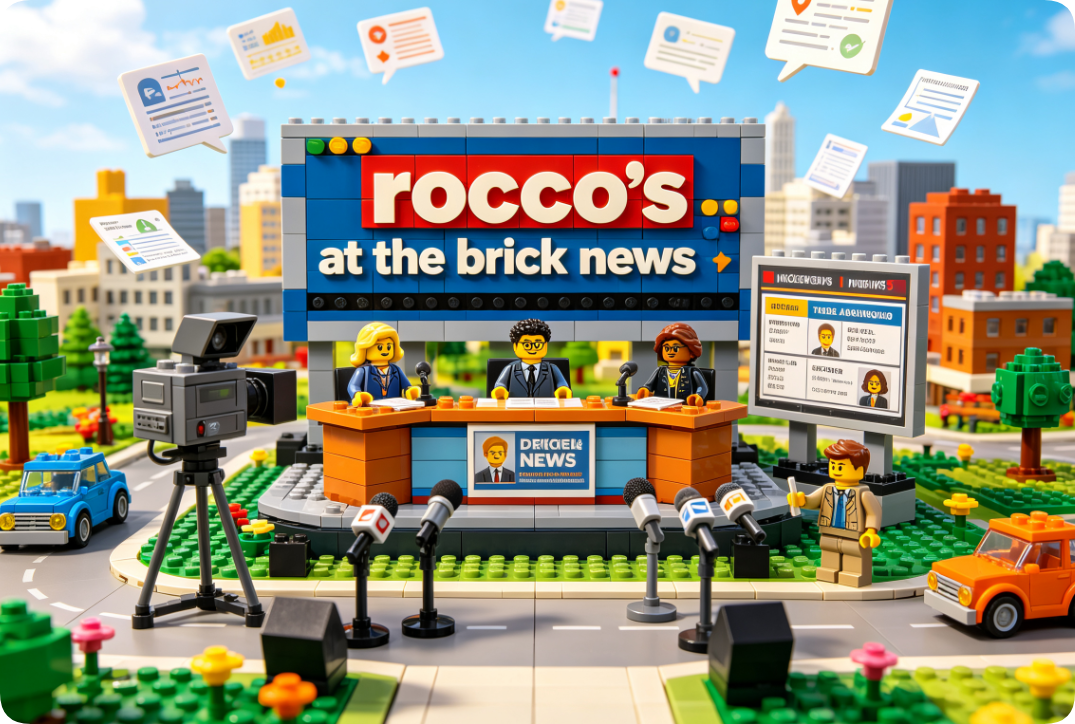
A restaurant closes. A landmark gets renovated. A neighborhood building changes hands. These stories flash across your local news feed and disappear by the next scroll. But for a builder with an eye for detail, each one is a blueprint waiting to happen.
Consider a headline like rocco's at the brick news—coverage of a well-known Newtown, Pennsylvania fine dining spot that closed suddenly in late 2025 after disputes over its building and liquor license. To most readers, it's a sad local story. To a brick builder, it's an invitation. That building, its facade, its history, and the community memories attached to it can all live on as a detailed model on your shelf.
This guide shows you how to mine real-world places, local headlines, and community stories for building projects. By the end, you'll have a repeatable six-step process for turning any local landmark into a themed brick build—plus tips on scale, sourcing, and sharing your work with fellow creators.
Here's what you'll learn:
- How to spot buildable stories in local news
- How to research and reference a real building
- How to plan scale and source the right pieces
- How to build a recognizable facade in modular sections
- How to add narrative detail and share your finished model
Let's build.
Why Local Stories Make the Best Building Prompts
Official sets follow trends. Local stories don't. When you build a place from your own town—or one you read about in the news—you create something no one else has, tied to a real moment in time.
For adult builders in engineering, design, and creative fields, this is where the hobby gets personal. A recreated restaurant facade isn't just a model; it's a record. It captures a building at a specific point in its life, the way a photograph does. That emotional hook is what separates a memorable build from another box-set clone.
Local stories also solve the "what next?" problem. Instead of waiting for a new release, you generate an endless supply of prompts from the world around you. Every renovation, closure, grand opening, or historic anniversary becomes a candidate.
Key takeaway: Real places give your builds meaning and originality that no catalog can match.
Step 1: Learn to Read the News Like a Builder
Most people skim local headlines for gossip. Builders read them for architecture and story.
Train yourself to spot buildable moments. When a story like rocco's at the brick news breaks, don't stop at the drama of the closure. Look at the accompanying photos. Notice the brick exterior, the signage, the window layout, the roofline. That's your reference material.
Watch for these story types in your local coverage:
- Closures and demolitions — capture a building before it's gone
- Renovations and restorations — document a before-and-after
- Grand openings — celebrate a new neighborhood fixture
- Historic anniversaries — honor a landmark's milestone
- Community disputes — like the building and license conflict behind Rocco's
Each of these carries visual and emotional weight. A closure especially gives your build a preservation angle—you're keeping a piece of local history alive in brick.
Pro tip: Start a running "build ideas" folder. Every time a local story catches your eye, drop the link and a few photos in. Your idea pipeline will never run dry.
Step 2: Research the Building Thoroughly
A convincing model starts with strong reference. Once you've picked a subject, gather everything you can find.
Collect Reference Images
Pull photos from multiple angles. News articles, review sites, social media pages, and mapping tools all offer street-level and aerial views. You want the front facade, side walls, roofline, and any signature details.
For a story like rocco's at the brick news, news outlets and local social pages often published exterior shots—perfect for capturing the building's brick texture, entrance, and signage before any redevelopment changes it.
Note the Architectural Style
Is it a colonial storefront, a Victorian house converted to a restaurant, an industrial brick warehouse? Identifying the style helps you choose the right techniques and colors later.
Capture the Story
Write down two or three sentences about the building's history and why it mattered to the community. This anchors your creative choices and gives you something to share when you post the finished model.
Key takeaway: The more reference you gather now, the fewer guesses you'll make at the table later.
Step 3: Choose Your Scale and Set Your Goal
Scale determines everything—piece count, footprint, detail level, and build time. Pick it based on what you want the finished model to do.
Micro Scale
Suggest the building with a small footprint and minimal pieces. Ideal for capturing a silhouette or building a whole streetscape of local landmarks. Fast and budget-friendly.
Standard Scale
Room for real architectural detail—individual windows, textured brick walls, a recognizable entrance and sign. This is the sweet spot for a single landmark facade.
Minifigure Scale
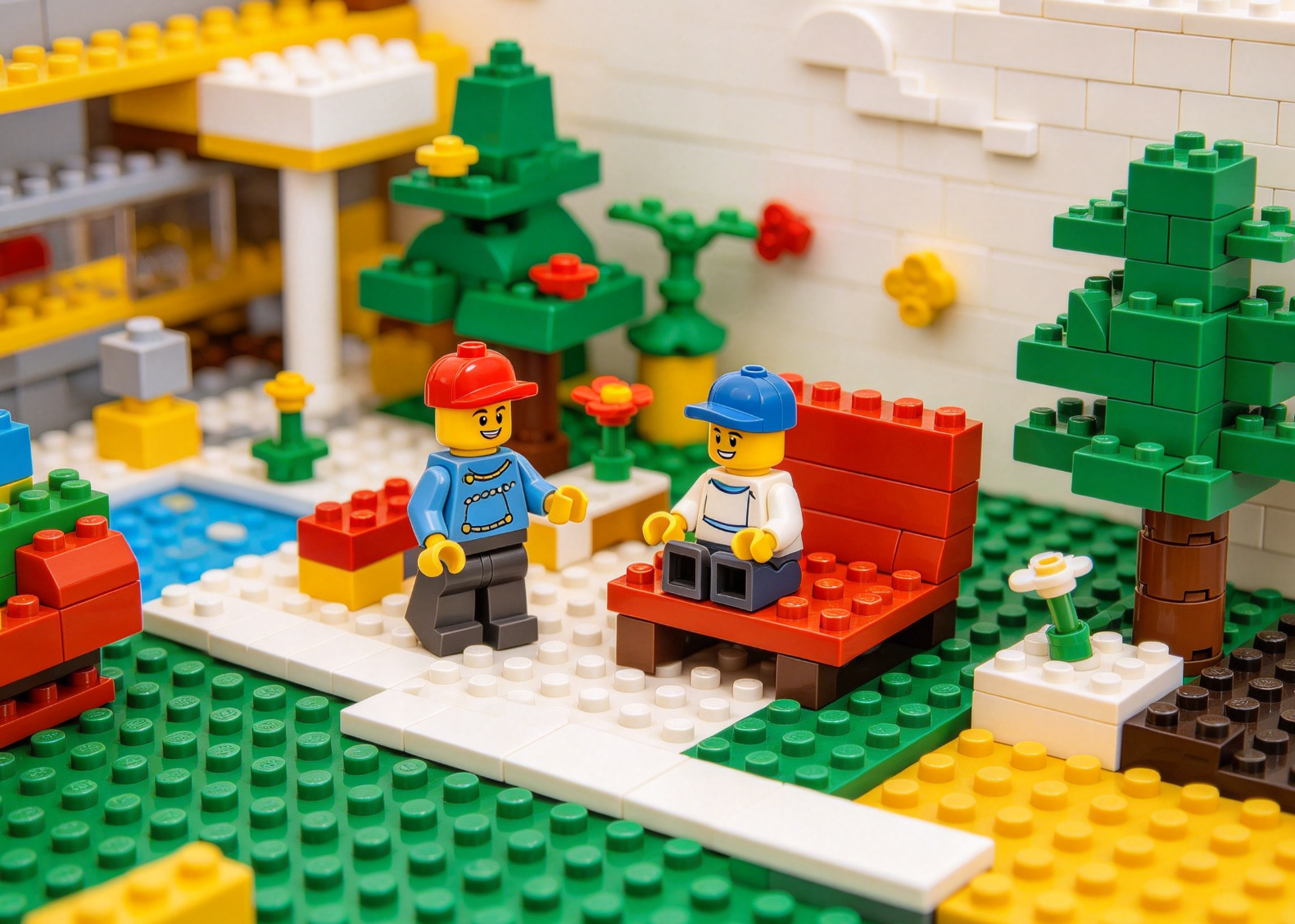
The most ambitious route. Add an interior, seating, patrons, and street-level life. Best for display pieces and community showcases where storytelling matters.
Match the scale to your intent. Building a quick tribute? Go micro. Creating a detailed shelf centerpiece that honors a closed local institution? Go standard or minifigure scale.
Pro tip: Sketch your footprint on graph paper first, letting each square equal one stud. You'll catch sizing problems before you commit a single piece.
Step 4: Source the Right Pieces
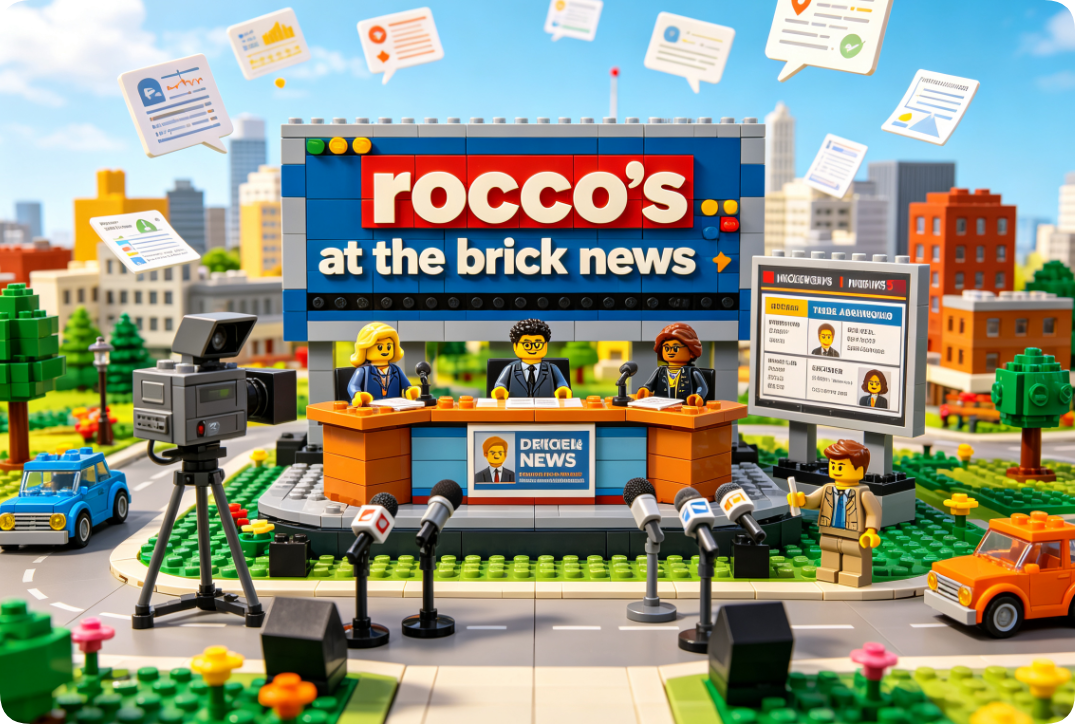
A believable building lives or dies on the right parts. Brick facades need the correct color mix and texture. Windows need transparent panels. Signage needs printed or custom tiles.
Start by listing what your reference building requires, then check it against what you own. Make a shopping list for the gaps. Browse the range at the BrickHobby shop to find masonry-style bricks, transparent window elements, slopes, and detail pieces suited to architectural builds.
Match Materials to Realism
Real restaurants and storefronts rarely use one flat color. Mix a few shades of red, brown, and tan to recreate weathered brickwork. Look for these when sourcing:
- Strong clutch power for load-bearing walls that hold shape over time
- Consistent color batches so your facade reads as one surface
- Specialty parts — arches, printed tiles, transparent panels, and slopes for signature details
Keep a Detail Reserve
Architectural builds always need "just one more" of a small piece. Keep a bin of spare tiles, plates, and slopes so you never stall mid-build.
Common mistake: Starting a large facade without enough of one key brick color. Count your critical pieces before you begin, not halfway through.
Step 5: Build the Facade in Modular Sections
Large building models overwhelm anyone who tries to build them all at once. Break the work into modules—the same approach real architects and set designers use.
Split the Build
Divide your model into independent sections:
- The base and sidewalk
- The ground-floor facade with entrance and windows
- Upper floors, built as separate panels
- The roof and signage as their own units
Build each module on its own, test the fit, then join them. This lets you fix problems in isolation and rearrange without dismantling everything.
Recreate the Brick Texture
Facades come alive through texture. Offset your bricks in a running-bond pattern rather than stacking them in perfect columns. Mix profile brick and masonry pieces to suggest mortar lines and weathering. This detail is what makes viewers say "that's a real building."
Nail the Signature Features
Every landmark has a defining element—a distinctive entrance canopy, a bold sign, a particular window arrangement. Prioritize that feature. It's what makes your model instantly recognizable as the specific place, not a generic storefront.
Key takeaway: Modular building turns one intimidating project into several small, satisfying wins—and mirrors how real structures are engineered.
Step 6: Add Narrative Detail and Bring the Scene to Life
Details separate a good model from an unforgettable one. This is where your research pays off.
Recreate the Signage
A restaurant's name and logo are its identity. Use printed tiles, custom stickers, or carefully placed pieces to spell out the sign. For a build inspired by a story like rocco's at the brick news, an accurate sign instantly connects the model to the real place and the moment it captured.
Populate the Scene
Add the life the building held. Outdoor seating, a chalkboard menu, a delivery van, patrons at the door. If you're building at minifigure scale, an interior dining room adds depth and invites closer viewing.
Use Color to Set the Mood
Warm interior lighting suggests a lively evening service. A darkened, empty version can tell the closure story—a quieter, more reflective build. Your creative choice here turns architecture into narrative.
Pro tip: Photograph your finished model at eye level with any figures you've added. Low angles make buildings look massive and cinematic, perfect for sharing.
Step 7: Share Your Build and Keep the Cycle Going
A finished model deserves an audience. The building community thrives on original architectural projects, and place-based builds spark especially rich conversation—people love recognizing a spot they know.
When you post your work:
- Share progress shots and the finished model
- Explain the story and news that inspired it
- Credit your reference sources
- Ask for feedback on structure and detail
- Invite others to build their own local landmarks
Sharing does more than earn likes. Community feedback sharpens your technique, and seeing others' builds refills your own inspiration well. Want to see how other builders approach real-world subjects? The BrickHobby blog is packed with project breakdowns and technique guides to fuel your next build.
Key takeaway: Sharing turns a solo hobby into a community practice. Your build inspires the next creator, and their response inspires yours.
Turning Headlines into an Endless Idea Pipeline
The real power of this method is that it never runs out. Towns change constantly, local news documents those changes, and every update is a fresh prompt.
Set up a simple loop:
- Follow a few local news sources and community pages.
- Save interesting buildings and stories to a reference folder.
- Sketch rough build plans when inspiration strikes.
- Build the projects that move you most.
- Share the results and gather new ideas from the community.
Run this loop and you'll never face a blank parts bin again. A single story—say, coverage of a beloved restaurant's sudden closure—becomes a preservation project, a technical challenge, and a community talking point all at once. That's the difference between reading the news and building from it.
Common Mistakes to Avoid
Even experienced builders slip up on place-based projects. Watch for these:
- Skipping research and building from memory. Gather reference photos first.
- Choosing the wrong scale for your goal, leaving too little detail or too big a footprint.
- Underestimating piece needs, especially for repeating brick walls.
- Building all at once instead of in modules, making mistakes hard to fix.
- Ignoring the signature feature that makes the place recognizable.
Avoid these five and your builds will come together with far less friction.
Start Your First Place-Based Build Today
Local news is the most reliable inspiration source a builder can have. Towns change, headlines document those changes, and each story hands you a ready-made project with built-in meaning. Read the news like a builder, research the structure, plan your scale, source the right pieces, build in modules, and add the narrative details that tie it to the real place.
Do that, and creative dry spells become a thing of the past. Your hobby stops depending on new releases and starts feeding itself from the world around you. Pick one local story this week—a closure, a renovation, an anniversary—and start sketching.
Ready to gather your pieces and begin? Explore the full range of building sets and elements at BrickHobby and turn your next local headline into a finished model.
Frequently Asked Questions
How do I use a story like Rocco's at the Brick news for a building project?
Start with the photos. Coverage such as rocco's at the brick news typically includes exterior shots of the building's brick facade, entrance, and signage. Save those images to a reference folder, note the architectural style, and use them as a blueprint for scale, structure, and signature details. A closure story is a great preservation angle—you're keeping a piece of local history alive in brick.
What scale should I use to build a restaurant or storefront facade?
It depends on your goal. Micro scale captures the silhouette quickly with few pieces and a small footprint—ideal for a whole streetscape of local landmarks. Standard scale gives you room for architectural detail like windows, textured brickwork, and signage. Minifigure scale lets you add an interior, seating, and patrons, making it perfect for display and community showcases. Sketch your footprint on graph paper first to confirm the size works.
How do I recreate realistic brick texture in a facade?
Offset your bricks in a running-bond pattern instead of stacking them in perfect columns, and mix a few shades of red, brown, and tan to suggest weathering. Combine profile brick and masonry-style pieces to imply mortar lines. This texture work is what makes viewers recognize your model as a real building rather than a generic block.
Are these building blocks compatible with other major brands?
Yes. Quality building blocks use the standard 8mm stud grid, so they clutch onto mainstream bricks and let you combine sets freely. This is especially useful for large architectural projects, where you'll often need extra masonry bricks, transparent window panels, and slopes from multiple sources to complete a detailed facade.
How can I share my place-based build with other builders?
Post your finished model and progress shots to online building communities and social platforms. Explain the story that inspired it, credit your reference sources, and describe any structural challenges you solved. Photographing at eye level makes your build look larger and more dramatic. Place-based builds tend to spark strong engagement, since people love recognizing a spot they know.
Ready to build this yourself?
BrickHobby sells high-quality LEGO-alternative building block sets — the same brick standard, a fraction of the price. Browse our in-stock sets and simply contact our customer service team to place your order; we will confirm availability, pricing and worldwide shipping for you.
Keep reading
Brick News
Track Brick and LEGO Company News Like a Pro Builder
Learn how to track brick and lego company news, spot trends early, and choose better Lego alternatives like BrickHobby for your next build.
Brick News
How to Follow JT the Brick Lego News and Find Better Alternatives
Learn how to track JT the Brick Lego news, spot building trends, and choose the best Lego alternatives for your next build with this practical guide.
Brick News
How to Follow Lego Brick Manufacturer News and Find the Best Alternatives
Learn how to track lego brick manufacturer news and evaluate alternative brands like BrickHobby before your next build. A practical guide for collectors.