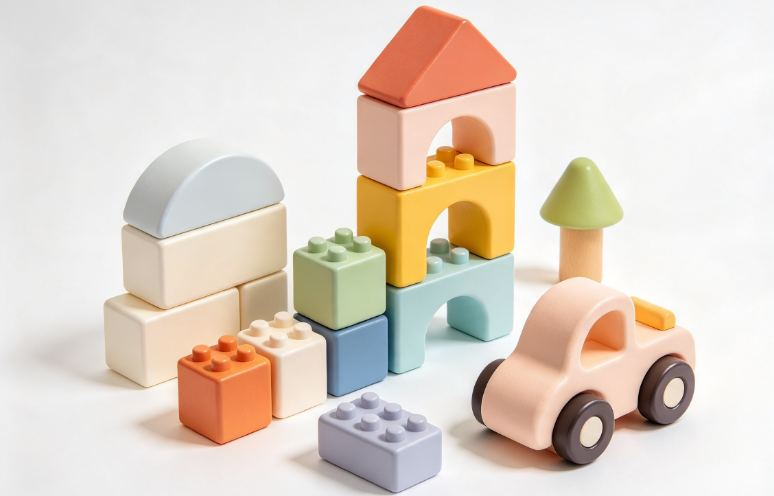
How to Choose and Use the Best Giant Foam Building Blocks for Toddlers
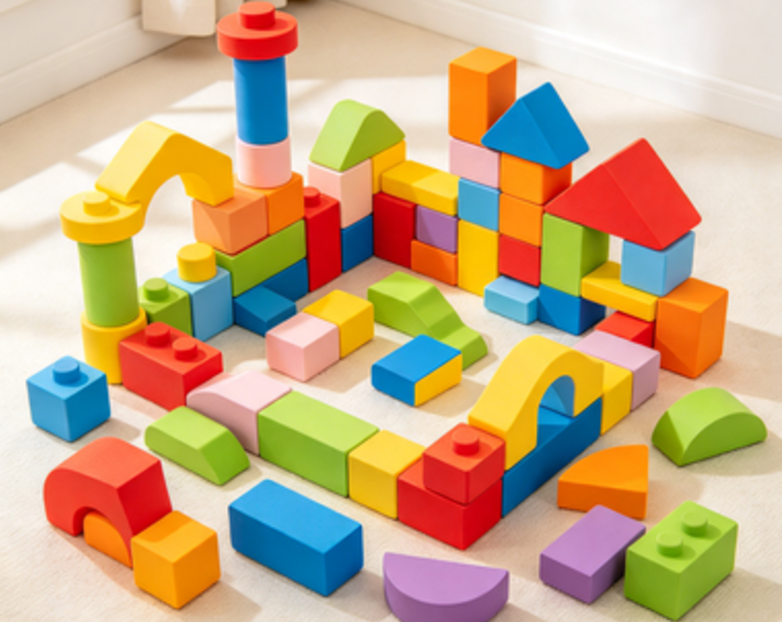
Toddlers learn by stacking, knocking down, and starting over. Giant foam building blocks turn that instinct into real skill-building — hand-eye coordination, spatial reasoning, and early problem-solving — without a single screen in sight. If you're shopping for the best giant foam building blocks for toddlers, this guide walks you through exactly what to look for, how to set up a safe play space, and how to turn a pile of foam into hours of hands-on learning.
Foam blocks matter because they meet toddlers where they are. At 12 to 36 months, kids are still developing grip strength and balance. Giant foam blocks are light enough for small arms to lift, soft enough to survive a toppled tower landing on bare feet, and large enough to build something a toddler can actually stand inside. That combination makes them one of the most practical first building toys a family can buy — and one of the easiest ways to replace tablet time with real, physical play.
What to Look for When Buying Giant Foam Building Blocks for Toddlers
Not every foam block set is built the same. Before you add one to your cart, check these three things.
Safety Certifications and Materials
Start here, not with color or shape. Look for blocks made from non-toxic, BPA-free EVA foam with certifications like CPSIA (US) or EN71 (EU) printed clearly on the packaging. These standards confirm the foam has been tested for toxic chemicals, flammability, and choking hazards.
Toddlers mouth everything, so the foam should be phthalate-free and free of strong chemical odors right out of the box. If a set smells heavily of plastic or rubber when you open it, air it out for 24–48 hours before handing it to your child — and consider it a warning sign for future purchases.
Block Size and Weight Considerations
Giant foam blocks typically range from 4 inches to over 12 inches per side. For toddlers under 2, choose the larger end of that range. Bigger blocks are harder for a toddler to lift overhead or throw with force, which means fewer bumps and fewer broken lamps.
Weight matters just as much as size. The best sets use high-density foam that holds its shape under a toddler's full body weight (useful for climbing and sitting) but still weighs just a few ounces per block. If a single block feels heavy in your hand as an adult, it's too heavy for a two-year-old to safely stack overhead.
Durability and Ease of Cleaning
Foam blocks get stepped on, chewed on, and occasionally thrown outside. Look for a closed-cell foam structure, which resists water absorption and won't soak up spilled juice or crumbs. Closed-cell foam can be wiped down with a damp cloth and mild soap, while open-cell foam tends to trap moisture and bacteria over time.
Check seams and edges too. Blocks with reinforced stitching or molded (rather than glued) seams last through years of toddler use, while cheaper glued seams tend to peel within a few months of regular play.
How to Set Up a Safe Play Space with Giant Foam Blocks
Giant foam blocks need room to become towers, forts, and obstacle courses. Clear a space at least 6 feet by 6 feet, away from stairs, hard furniture corners, and glass surfaces. A carpeted room or a thick play mat adds an extra layer of cushioning for the inevitable tumble.
Keep the space low-clutter. Toddlers build best when there's nothing else competing for attention — no toy bins overflowing nearby, no breakable décor within arm's reach. If you're building with multiple children, add a visual boundary like a rug or tape line so younger siblings understand where the "building zone" starts and stops.
Store the blocks at toddler height when not in use. A low basket or open bin invites independent play, letting your toddler pull out blocks and start building without needing an adult to lift anything down.
Step-by-Step: How to Introduce Foam Building Blocks to Your Toddler
Step 1: Start with a demonstration. Stack three or four blocks yourself while your toddler watches. Narrate what you're doing — "big block on the bottom, small block on top" — to connect the action with language.
Step 2: Let them knock it down. Before asking a toddler to build, let them destroy. Knocking over a tower teaches cause and effect and builds the confidence to try stacking themselves.
Step 3: Hand over one block at a time. Avoid dumping the whole set in front of a toddler at once — it can overwhelm rather than inspire. Pass blocks one by one and let your child decide where each one goes.
Step 4: Introduce simple challenges. Once your toddler can stack three or more blocks independently, add a goal: "Can you build a tower taller than your teddy bear?" Small challenges keep engagement high without adding pressure.
Step 5: Celebrate the attempt, not just the result. A toppled tower is still a successful building session. Praise the effort to keep your toddler motivated to try again.
Creative Play Ideas and Building Activities for Toddlers
Once the basics click, foam blocks open up dozens of play scenarios:
- Block forts: Stack blocks into walls and drape a lightweight sheet over the top for an instant hideout.
- Color sorting towers: Ask your toddler to stack blocks by color, turning a building activity into an early sorting lesson.
- Obstacle courses: Line blocks up as stepping stones or low hurdles for crawling and balance practice.
- Pretend town: Group blocks into "buildings" and use small toy cars or figures to act out a mini city.
- Counting towers: Count each block aloud as it's added to the stack, reinforcing number recognition during play.
Rotate these activities weekly to keep the same set of blocks feeling new. Toddlers don't need more toys — they need more ways to use the ones they already have.
How Giant Foam Blocks Support STEM Learning and Development
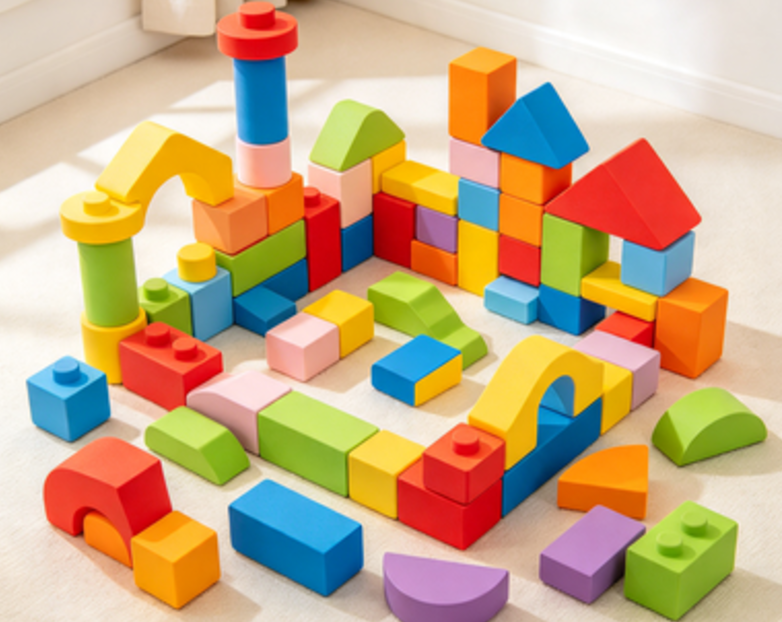
STEM learning doesn't start with equations — it starts with stacking. Every time a toddler balances a block or figures out why a top-heavy tower falls, they're testing basic physics: gravity, balance, and weight distribution. That trial-and-error process is the earliest form of engineering thinking.
Foam blocks also build spatial reasoning, a skill linked to later success in math and geometry. Deciding how blocks fit together, rotating a piece to make it balance, or planning a structure before building it all strengthen the mental skills kids will use years later in classroom STEM lessons.
For families looking to extend that foundation as children grow, BrickHobby's toddler and kids' starter sets use the same safety-first, chunky-block design philosophy — just scaled toward the next stage of hands-on building. It's a natural next step once giant foam blocks become part of the regular play rotation.
Parents don't need a STEM curriculum to make this work. Open-ended play — no instructions, no "right" way to build — is proven to build more creative problem-solving skills than structured activities alone. The goal isn't a perfect tower. It's a toddler who keeps trying.
Making Foam Blocks Part of a Screen-Free Routine
One of the biggest draws of giant foam building blocks is what they replace. A 20-minute building session before dinner, a fort-building afternoon on a rainy day, or a quiet stacking game before bed all fill time that might otherwise go to a tablet. Foam blocks require active hands and active attention, which makes them one of the easiest screen-time swaps for families with toddlers.
Keep a small set of blocks accessible in common living spaces — not packed away in a closet. The easier it is to reach for blocks instead of a device, the more naturally that habit forms. Many families find that pairing block time with a specific daily moment, like right after naps or before dinner prep, helps make it a routine rather than a one-off activity.
As your toddler grows out of giant foam basics, exploring BrickHobby's wider collection gives families a built-in path to more advanced building activities without starting the research process over. The transition from foam to small-format building sets works best when it happens gradually, around ages 3 to 4, once fine motor skills catch up.
Bringing It All Together
Choosing the best giant foam building blocks for toddlers comes down to three checks: safety-certified materials, toddler-appropriate size and weight, and foam that holds up to real daily use. Pair the right set with a dedicated, low-clutter play space, and you've got a toy that grows with your child's skills for years, not weeks.
If you're ready to build beyond foam once your toddler's skills develop, BrickHobby's starter collection is designed for exactly that next stage — chunky, safety-tested pieces sized for small hands, built for the same kind of hands-on learning families already love about foam blocks.
Frequently Asked Questions
What age are giant foam building blocks appropriate for?\
Most giant foam block sets are designed for ages 12 months and up. Always check the manufacturer's age recommendation on the packaging, since block size and foam density vary between brands.
How do I clean giant foam building blocks?\
Wipe blocks down with a damp cloth and mild, non-toxic soap. Avoid soaking foam blocks fully in water, since open-cell foam can absorb moisture and take days to dry out.
Are foam blocks safe for toddlers who still put toys in their mouths?\
Yes, as long as the blocks are made from certified non-toxic, BPA-free, phthalate-free foam. Check for CPSIA or EN71 certification before purchasing, and supervise play with younger toddlers regardless of material safety.
How many blocks do I need to start?\
A starter set of 10 to 20 blocks is enough for most toddlers to build simple towers, forts, and sorting activities. You can always add more blocks later as your toddler's building skills grow.
Can giant foam blocks really help with STEM skills this early?\
Yes. Early exposure to stacking, balancing, and spatial problem-solving builds the foundational thinking skills that later support math, engineering, and geometry concepts in school.
Ready to build this yourself?
BrickHobby sells high-quality LEGO-alternative building block sets — the same brick standard, a fraction of the price. Browse our in-stock sets and simply contact our customer service team to place your order; we will confirm availability, pricing and worldwide shipping for you.