
Chimney Brick Repair in Newport News: A Builder's Guide
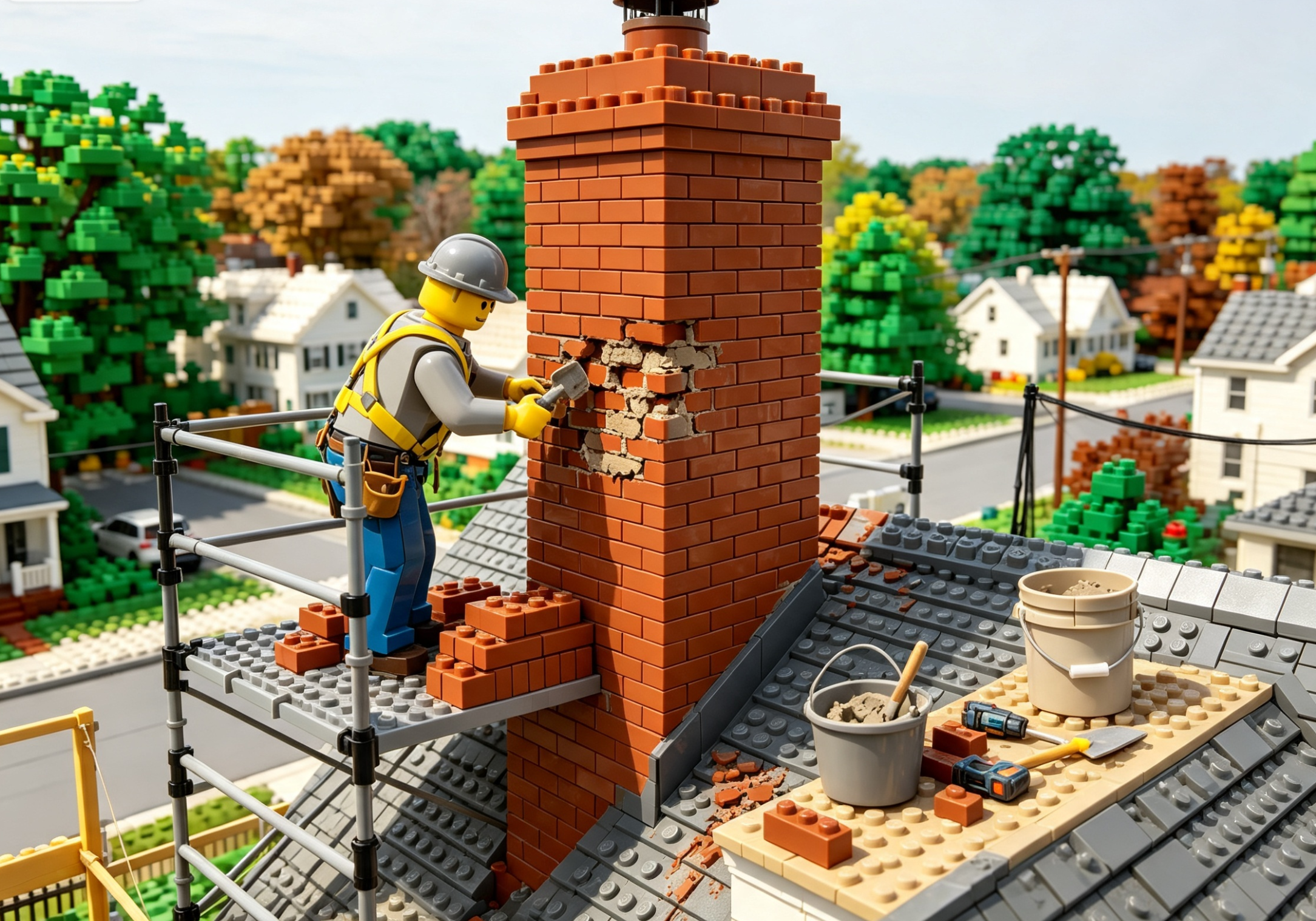
Chimney Brick Repair in Newport News: A Builder's Guide
Quick answer: Chimney brick repair in Newport News involves inspecting masonry for cracks, spalling, and mortar deterioration, then repointing or replacing damaged bricks using the right tools and materials. For hobbyists, real-world brickwork offers surprising inspiration for precision brick-building — and BrickHobby sets bring that same craft to your shelf.
There's something quietly satisfying about a well-built chimney. The way each brick sits flush with the next. The mortar lines running clean and level. The whole structure rising solid and purposeful from the roofline. For anyone who builds with bricks — whether on a scaffold or at a tabletop — that satisfaction is deeply familiar.
This guide is for two kinds of readers. The first is a Newport News homeowner who needs practical, honest advice on repairing chimney brickwork before small problems become expensive ones. The second is a brick enthusiast — someone who builds models, collects architectural sets, and finds genuine joy in the logic of interlocking pieces — who sees real masonry and immediately thinks: I'd love to build that.
Both of you are welcome here. We hope you find something useful in the pages ahead\~
Chimney brick repair in Newport News is a common seasonal task. The region's humid summers, cold snaps, and occasional coastal storms put masonry under real stress year after year. By understanding how chimneys fail and how they're fixed, you'll protect your home — and, if you're a builder at heart, you'll develop a sharper eye for the craft behind every brick structure you admire.
Let's start from the beginning.
---
Step 1: Understanding the Basics of Chimney Brick Repair
What causes chimney brickwork to deteriorate?
Chimneys take more punishment than almost any other part of a home. They're fully exposed to the elements, subject to freeze-thaw cycles, and regularly subjected to heat stress from the flue inside. Over time, these forces work on both the bricks and the mortar that binds them.
The most common cause of deterioration is water. Rain enters through cracks in the crown, gaps in the flashing, or directly through porous bricks. When that water freezes, it expands — and over many winters, this expansion breaks down mortar joints and causes bricks to crack, flake, or shift.
Mortar is almost always the first thing to go. It's softer than brick by design — mortar is meant to be the sacrificial layer, absorbing movement so the bricks themselves don't crack. A chimney with crumbling mortar joints but intact bricks is in much better shape than one where the bricks themselves have begun to spall.
Understanding this distinction matters. It changes what you do next.
Why does this matter for brick hobbyists?
For anyone who builds scale models of real architecture, this is genuinely useful knowledge. Mortar lines aren't just decorative — they're structural, functional, and expressive. The way a real mason handles mortar joints directly informs how brick-building designers replicate that texture in miniature. The next time you're building a castle wall or a city landmark with BrickHobby's architectural sets, notice how the stud rows mimic coursed brickwork. That's not accidental. It's craft.
---
Step 2: Tools and Materials You Need
What tools are required for DIY chimney brick repair?
Before you climb up to inspect or repair a chimney, gather the right equipment. Working with damaged masonry requires specific tools — using substitutes usually leads to a poor result or a safety issue.
For inspection and preparation:
- Stiff wire brush (for clearing loose mortar and debris)
- Cold chisel and hammer (for removing deteriorated mortar)
- Angle grinder with a mortar-raking disc (for deeper joint removal)
- Safety glasses and dust mask
For repair:
- Pre-mixed mortar or type S mortar (appropriate for above-grade masonry)
- Replacement bricks matching the existing size, color, and texture
- Pointing trowel and margin trowel
- Jointing tool or rounded rod (to finish mortar joints)
- Stiff bristle brush (for cleaning up excess mortar)
For safety:
- Roof ladder or chimney scaffold
- Non-slip footwear
- Harness if working on a steep pitch
One note on mortar type: type S mortar is generally recommended for chimneys because it balances strength and flexibility. Type N is softer and works well for interior or low-load applications. Avoid type M — it's too rigid for chimney use and can actually cause brick cracking as the structure moves.
---
Step 3: How to Inspect Your Chimney for Damage
How do you identify chimney brick damage before starting repairs?
A thorough inspection comes before any repair work. Skipping this step is how homeowners end up fixing the wrong problem — repointing mortar joints while missing a cracked flue liner or failed flashing.
Start from the ground. Use binoculars to scan the chimney from several angles. Look for:
- White staining (efflorescence), which signals water migration through the masonry
- Dark staining, which may indicate water intrusion or smoke backdraft
- Visibly cracked or missing bricks
- Mortar joints that appear recessed, crumbled, or absent
Move to the roof. If you're comfortable working at height and have the right safety equipment, a closer inspection reveals problems that aren't visible from below. Check the chimney crown (the concrete cap at the top) for cracks. Inspect the flashing where the chimney meets the roof — this is one of the most common points of water entry.
Check inside. Shine a flashlight down the flue and look for cracked or displaced tiles in the liner. If you see structural damage inside the flue, this is no longer a DIY job.
For Newport News homeowners specifically: the mid-Atlantic climate means chimneys here often show accelerated mortar erosion compared to drier regions. Annual inspections are a reasonable habit, not an overcautious one.
---
Step 4: Step-by-Step Chimney Brick Repair Process
How do you repair chimney bricks and repoint mortar joints?
Once you've assessed the damage, the repair process follows a clear sequence. Take your time — rushing masonry work almost always results in a weaker finish.
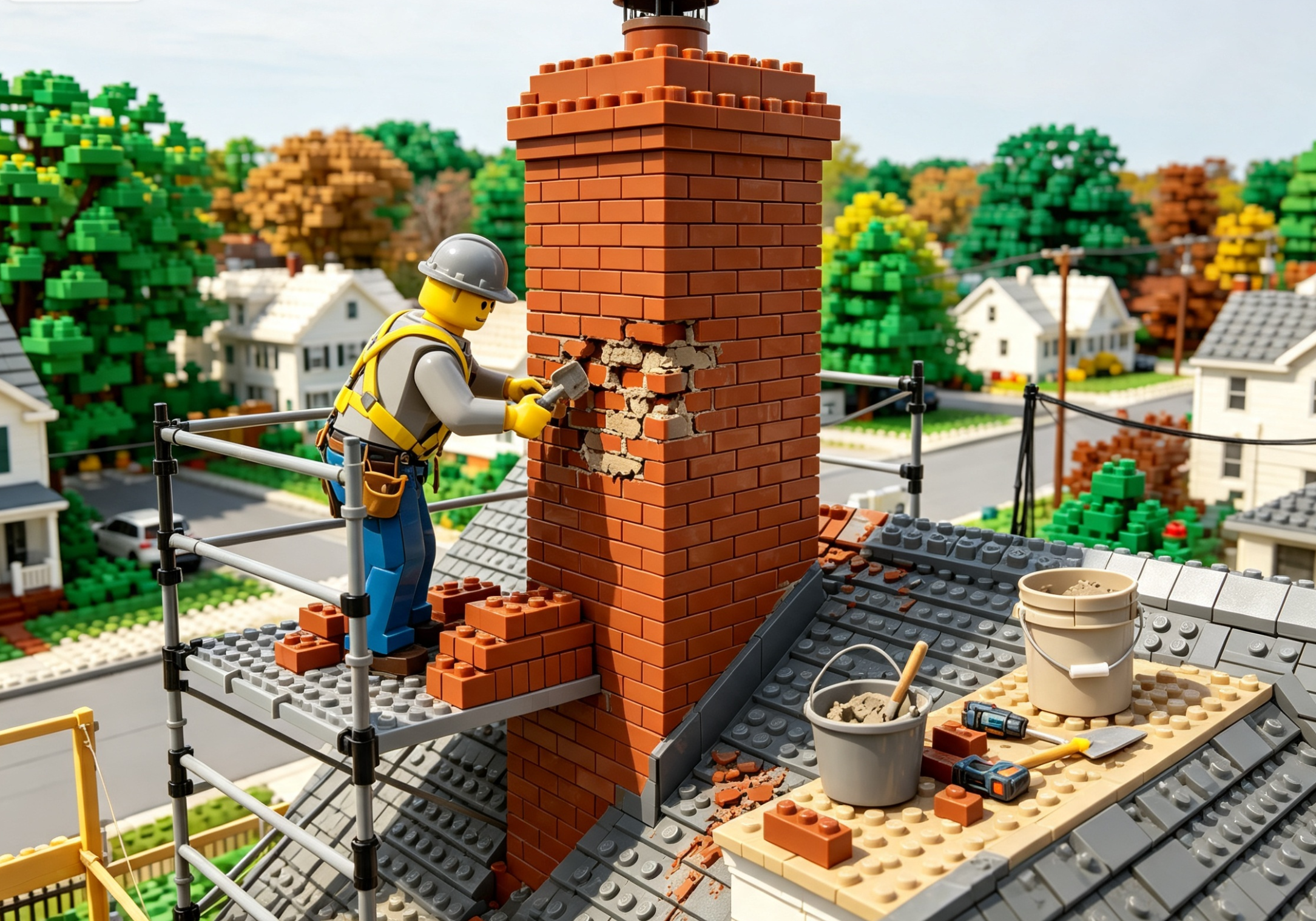
Step 1: Remove deteriorated mortar. Use a cold chisel and hammer, or an angle grinder, to remove old mortar to a depth of at least ¾ inch. This gives the new mortar enough depth to bond securely. Brush the joints clean of all dust and debris.
Step 2: Wet the surface. Dampen the brick and joint area with a spray bottle before applying new mortar. Dry masonry pulls moisture out of fresh mortar too quickly, weakening the bond.
Step 3: Mix mortar to the right consistency. Pre-mixed mortar is convenient for small jobs. For larger repairs, mix type S mortar to a peanut butter consistency — firm enough to hold its shape, wet enough to compress into the joint without crumbling.
Step 4: Pack the joints. Using a pointing trowel, press mortar firmly into the joint. Work in small sections. Fill the joint completely, slightly proud of the brick face.
Step 5: Tool the joint. Before the mortar fully sets (usually 30–60 minutes depending on temperature and humidity), use a jointing tool to shape the joint. A concave joint is the standard for chimneys — it sheds water effectively. A flush joint is acceptable. Avoid raked joints on an exterior chimney; they collect water.
Step 6: Replace damaged bricks. If bricks are cracked or spalled beyond repointing, remove them carefully with a chisel and replace with matching units. Set the new brick in fresh mortar, check it's level and flush with adjacent bricks, and allow adequate curing time — typically 24–48 hours before the chimney is used.
Step 7: Seal if appropriate. A breathable masonry sealer applied after curing can reduce future water absorption. Use a product rated for chimneys — silicone-based sealers that trap moisture inside the wall do more harm than good.
---
Step 5: When to Call a Professional vs. DIY
Should you repair chimney bricks yourself or hire a mason?
This depends on the scope of the damage and your comfort level working at height.
DIY is reasonable when:
- Damage is limited to mortar joints (repointing)
- You're replacing one or two bricks
- The chimney cap has minor surface cracks
- You're comfortable on a roof with proper safety equipment
Call a professional when:
- Bricks are shifting or the chimney is leaning
- The flue liner is damaged
- Water is entering the home through the chimney
- More than 20% of the mortar joints are deteriorated
- You're unsure what you're looking at
For chimney brick repair in Newport News, local masonry contractors typically charge between $150 and $500 for a repointing job on a single chimney, depending on size and access. Full rebuilds — when a chimney has deteriorated to the point of structural failure — can run significantly higher. Getting two or three quotes and asking for references is always worth doing.
---
Step 6: How Brick Hobbyists in Newport News and Beyond Stay Inspired
How does real-world masonry inspire brick-building hobbyists?
This might seem like a left turn, but stay with us.
Many serious brick hobbyists — the kind who spend weekends building 4,000-piece architectural sets or designing their own original models — trace their passion back to something concrete. A cathedral they visited as a child. A wall they helped repair with a parent. The rhythmic logic of coursed masonry, where each unit depends on the ones below it and supports the ones above.
Chimney brick repair in Newport News might not sound like creative inspiration. But for someone who builds brick structures as a hobby, there's genuine overlap: understanding bond patterns, reading mortar lines, appreciating the structural role of headers and stretchers. These are the same principles that make a scale model feel authentically architectural rather than just decorative.
Builders in the US and across Europe have found that studying real masonry — even just spending time looking closely at a chimney, a church facade, or a railway viaduct — sharpens their eye for what makes a brick model convincing. It changes how you approach the next build. You start paying attention to coursing. You notice where the designer has suggested mortar joints. You think about how the real thing would behave if it were full scale.
That connection between real craft and creative hobby is something we genuinely value.
---
BrickHobby — Bringing Brick Building to Life
We hope this guide has been useful, whether you're planning a chimney repair or simply curious about the craft behind real masonry.
At BrickHobby, we design and supply LEGO-compatible brick sets for builders and collectors across the US, Europe, and beyond. Our architectural range includes photogrammetry-scanned landmarks — from the Forbidden City to the Colosseum — engineered stud-by-stud for accuracy and display quality.
Every set ships from our US and EU warehouses, usually within 48 hours. And if you ever lose a piece mid-build, our lifetime brick replacement promise means we'll send it to you free, forever.
We think of BrickHobby as a place where friends from all over the world connect through the shared satisfaction of building something real — one brick at a time. Thank you for spending time with us here\~
Explore our full collection of architectural brick sets at BrickHobby — from starter sets for young builders to collector-grade landmarks with 12,000+ pieces.
---
Take the Next Step — Inside and Outside the House
Real brickwork and brick-building hobbies share the same foundation: patience, precision, and an appreciation for how individual pieces create something larger than themselves.
If you're a Newport News homeowner, we hope this guide gives you a clear path to assessing and repairing your chimney safely. Start with a good inspection, gather the right materials, and don't rush the mortar. If the damage is beyond a straightforward repointing job, bring in a qualified mason. Your chimney will last for decades when it's maintained properly.
And if you're a builder at heart — someone who sees a well-laid brick wall and instinctively wonders how you'd recreate it in miniature — we'd love to have you in our community. Visit BrickHobby and take a look at what we've built together so far. We wish you many satisfying builds ahead\~
---
Frequently Asked Questions
What is the average cost of chimney brick repair in Newport News?
Minor repointing jobs in Newport News typically cost between $150 and $500, depending on chimney size and how accessible the structure is. Replacing multiple bricks or repairing a damaged crown adds to that figure. Full chimney rebuilds — required when structural integrity is compromised — can cost several thousand dollars. Always get multiple quotes from licensed masonry contractors and check reviews before committing.
How often should a chimney be inspected in Newport News?
Once per year is the standard recommendation, ideally in late summer or early autumn before the heating season begins. Newport News homeowners face a mid-Atlantic climate with wet winters and humidity-driven moisture intrusion, which accelerates mortar erosion. Annual inspections catch small problems — like a hairline crack in the crown or a slightly recessed mortar joint — before they develop into water damage or structural failure.
Can I repoint chimney mortar joints myself, or do I need a professional?
Repointing is one of the more DIY-friendly chimney repairs, provided the damage is limited to mortar joints and the bricks themselves are intact. You'll need the right tools (a cold chisel, pointing trowel, and jointing tool), appropriate mortar (type S is recommended for chimneys), and safe access to the roof. If bricks are shifting, the flue liner is cracked, or more than 20% of joints are deteriorated, call a professional mason.
What type of mortar should I use for chimney brick repair?
Type S mortar is the standard recommendation for chimney repairs above the roofline. It offers a good balance of strength and flexibility — strong enough to handle the load, flexible enough to absorb minor structural movement without cracking the bricks. Avoid type M mortar, which is too rigid, and type N, which is better suited to interior or low-stress applications.
How does studying real masonry help brick-building hobbyists?
Real masonry teaches hobbyists to read structural logic — how bricks are coursed, where load is distributed, and how mortar joints affect visual texture and structural stability. Builders who study real chimneys, walls, and facades often produce more convincing architectural models because they understand the principles behind the aesthetics. If you're looking to bring that same attention to detail to your builds, BrickHobby's architectural landmark sets are a great place to start.
Ready to build this yourself?
BrickHobby sells high-quality LEGO-alternative building block sets — the same brick standard, a fraction of the price. Browse our in-stock sets and simply contact our customer service team to place your order; we will confirm availability, pricing and worldwide shipping for you.
Keep reading

Brick News
The Brick LEGO News 2026: Your Complete Guide to Smarter Alternative Builds
Stay ahead of the brick LEGO news 2026 with this guide to trending sets, alternative bricks, and smarter building strategies from BrickHobby.

Brick News
How to Track Brick Supply News LEGO Builders Actually Trust
Learn how to find and evaluate brick supply news for LEGO alternative sets, from reliable sources to step-by-step supplier sourcing tips.

Brick News
How to Build a Brick Tavern Newport News LEGO Style Masterpiece
Learn how to build a brick tavern newport news lego style model with this step-by-step guide, plus tips on pieces, tools, and customization ideas.