How to Build an NFL-Inspired Brick Diorama From a Trending Sports Moment
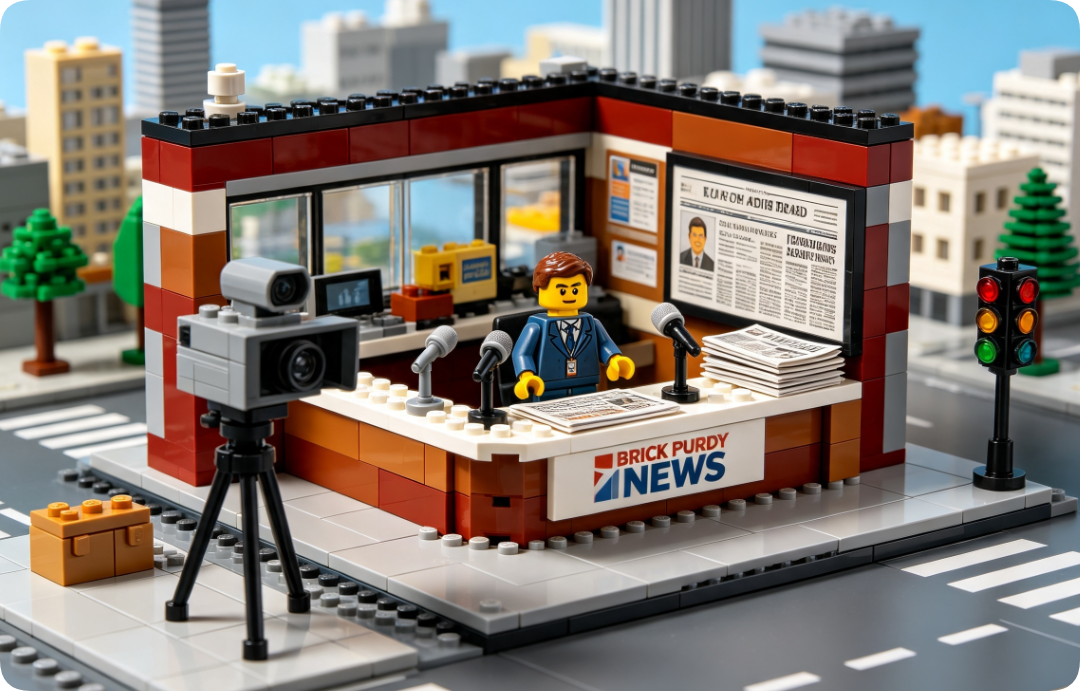
When a quarterback like Brock Purdy dominates the headlines, football fans across the country search for every angle of the story. Following brick purdy news is one thing. Turning that buzz into a display-worthy brick diorama is another — and it's a smart way to blend your love of sports with your building hobby.
This guide walks you through the full process: how to pick the right moment, plan a scene that reads clearly, customize athlete-style minifigures, photograph the finished build, and share it while the topic is still hot. By the end, you'll have a repeatable system for turning any big sports headline into a brick scene worth showing off. Let's snap the first brick into place.
Why Sports News Makes a Perfect Brick Subject
Sports moments are built for recreation. They have drama, motion, and a clear cast of characters. A game-winning throw, a sideline celebration, a coach's fist pump — each one is a frozen story waiting to be rebuilt in plastic.
Here's the key idea: a build tied to a live sports story taps an audience that's already searching, already excited, and already sharing. When something like brick purdy news spikes online, thousands of fans are looking for content that captures the moment. A brick diorama enters that stream with instant relevance.
Three qualities make sports builds punch above their weight:
- Recognition. Fans instantly identify a stadium, a jersey number, or a signature pose. That instant "I know exactly what this is" lowers the barrier to a like or comment.
- Emotion. Sports run on feeling. A well-posed celebration scene carries energy that a static model can't match.
- Timing. Post during a playoff run or a breakout season, and your reach multiplies.
For adult hobbyists, a sports build is a fresh creative challenge beyond the standard instruction booklet. For families, it's a shared project that connects game day with hands-on building. For creators, it's a reliable content engine.
Step 1: Choose the Right Sports Moment to Build
Not every headline makes a good diorama. The first skill is picking a moment that translates into bricks.
Look for a strong central image
Every great sports build starts with one recognizable frame. Think of the images that define a season: a quarterback launching a deep pass, a receiver's diving catch, a kicker's walk-off field goal. When brick purdy news trends around a specific play, that play becomes your blueprint.
Run each candidate moment through this quick filter:
- Is it visual? You need a clear pose or scene, not an abstract stat line.
- Is it recognizable in silhouette? The best builds read without a caption.
- Is the timing still open? Catch the story while interest is climbing, not fading.
Keep it celebratory
Sports fandom rewards energy and positivity. Lean toward triumphant, exciting, or fun moments rather than injuries or controversies. A joyful scene gets shared. A negative one gets scrolled past.
Step 2: Plan the Scene Before You Build
A sports diorama fails when the moment is unclear. Planning fixes that before you waste a single brick.
Nail the single defining image
Sketch the frame everyone remembers. Identify the two or three elements that make it instantly readable — the jersey number, the stadium backdrop, the end zone, the trophy. Commit to nailing those. Everything else is supporting detail.
Pick your scale
Scale shapes your entire approach:
- Minifigure scale — expressive and fast, ideal for a single dramatic pose or a sideline celebration.
- Micro scale — perfect for a full stadium establishing shot with tiny figures.
- Vignette scale — a dense, focused scene on one baseplate that captures a single moment.
For most sports builds, a minifigure-scale vignette hits the sweet spot. It's expressive, quick, and photographs beautifully.
Storyboard the photo first
Decide your final camera angle before you build. This tells you which side needs detail and which can stay bare. You'll save parts, time, and frustration. Knowing you're shooting from field level, for example, means you can leave the back of your stadium open.
Step 3: Customize Your Athlete Minifigures
The figures carry the story. This is where a generic scene becomes a specific, recognizable one.
Build the uniform
Team colors and jersey numbers do the heavy lifting for recognition. Use these techniques:
- Match the color scheme. Choose torsos and legs in the team's primary colors.
- Add the number. A printed or custom tile applied to the torso communicates the player instantly.
- Top it with a helmet. A minifigure helmet element sells the "football player" read at a glance.
Nail the pose
Posing is everything in a sports scene. A figure standing straight looks like a toy. A figure mid-throw looks like a moment.
- Use figures with articulated or angled arms for throwing and catching poses.
- Lean the figure slightly with a clear brick support hidden behind it to suggest motion.
- Pair a "hero" figure with reacting background figures — teammates, defenders, or a roaring crowd.
Add signature details
One small, specific detail turns a generic player into a recognizable one. A wristband, a particular stance, a celebration gesture — these Easter eggs reward fans who look closely. That closer look is what turns a like into a comment.
Stock up on versatile minifigure parts, helmets, and printed tiles so your next sports build starts faster. Browse the full range at BrickHobby to fill the gaps before your next project.
Step 4: Build the Stadium and Field
The setting frames the action. Even a small backdrop transforms a lone figure into a scene.
Lay the field
Start with a green baseplate for the turf. Add yard lines using thin white tiles or plates spaced evenly across the field. End zone color blocking and a goalpost built from bars and clips complete the football read instantly.
Build depth with the crowd
Flat scenes look flat. Add height and layering:
- Foreground: the players and the action at eye level.
- Midground: the sideline, benches, and coaching figures.
- Background: a stadium wall or a printed crowd backdrop rising behind the field.
This front-to-back layering tricks the eye into seeing a real stadium rather than a single flat plane.
Add one storytelling prop
A scoreboard showing the final seconds, a jumbotron, a team banner, or a lone referee with arms raised for a touchdown — one clever prop anchors the story. These small touches are exactly what earn engagement when you post.
Step 5: Photograph the Build Like a Pro
You can build the best sports diorama in the world, but a weak photo kills it. Photography is half the job.
Shoot at field level
Get your camera down to the minifigures' eye level. Shooting from above makes the scene look like a toy on a table. Shooting at figure level makes it look like a real play frozen in plastic. This single change does more for realism than any building technique.
Light with intention
Skip the flat overhead ceiling light. Use a side light — even a single desk lamp — to cast shadows that give the scene depth. For a stadium-under-the-lights feel, add a cool white backlight behind the figures. For a golden-hour game, go warm and directional.
Control the background
A cluttered desk behind your build ruins the illusion. Use a plain wall, a printed sky or crowd backdrop, or a sheet of colored card. Keep the focus locked on the action.
Capture variety
Take wide, medium, and close-up shots. A tight close-up of your hero figure's pose often outperforms the wide establishing shot. More options means better posts.
For more building tutorials, technique breakdowns, and project inspiration, browse the BrickHobby blog. It's a growing resource for builders who want to level up.
Step 6: Share It While the News Is Hot
Timing is everything with sports content. A brilliant build posted a week after the game underperforms a decent build posted at the peak.
Move fast
Aim to finish and post while the story is still climbing. If a signature play happens on Sunday, a same-week post catches the wave. Speed beats perfection here.
Use the exact search phrase
Include the wording fans are already searching. When brick purdy news is trending, use that phrasing in your caption and tags so your build surfaces in those searches. Match the language the internet is already using.
Write a caption that invites interaction
Ask a question. Point out your hidden detail. Invite fans to guess the play or debate the season. Comments boost reach, so give people a reason to type. Try: "Recognized this one? Drop the score in the comments."
Cross-post everywhere
Share the same build across your platforms and in building and sports communities. Different audiences catch different moments, and community feedback often sparks your next idea.
Common Mistakes to Avoid
Learn from the errors that sink most first attempts:
- Building too slowly. Sports news moves fast. A late post is a wasted build.
- Burying the reference. If fans can't identify the player or moment, the point collapses. Make the jersey number and pose obvious.
- Ignoring the photo. A great build with a poor photo gets scrolled past.
- Overbuilding hidden sides. The camera sees one angle. Spend your parts where they show.
- Choosing negative moments. Injuries and controversies backfire. Keep it celebratory.
- Skipping the crowd or field. A floating figure with no setting loses half its impact.
Avoid these six and your sports diorama will hold its own in any feed.
Turning One Build Into a Content Habit
The real power isn't a single viral post. It's a repeatable system you can run every game week.
Keep a sports watchlist. Track rising storylines, breakout players, and playoff runs. When a moment hits your visual-and-recognizable filter, you're ready to build.
Maintain a quick-build sports kit. A pre-sorted box of team-colored torsos, helmets, printed number tiles, green baseplates, and crowd backdrop pieces means you can start within minutes of a big game.
Develop a signature style. The most-followed brick creators have a recognizable look — a consistent scale, lighting setup, or angle. A signature makes your builds identifiable before fans even read the caption.
Engage with the community. Reply to comments, feature other builders, and join seasonal challenges. Retention in a community comes from showing up, not just posting and vanishing.
This approach rewards every kind of builder. Creators grow an audience. Adult hobbyists get a steady stream of fresh, deadline-driven challenges that sharpen speed and technique. Families can build simplified game-day scenes together — a fun way to connect a shared love of football with hands-on STEM skills like spatial planning and structural balance.
Learn more about our approach to building and the community behind it on the BrickHobby about page.
Your Action Plan
Turning trending sports news into brick content is one of the fastest ways to grow in the building hobby while doing something you already love. Here's the recap:
- Pick moments that are visual, recognizable, and celebratory.
- Plan the single defining image before you build.
- Customize athlete figures with team colors, numbers, and dynamic poses.
- Build a field and crowd to frame the action with depth.
- Shoot at field level with intentional lighting.
- Post fast while the story climbs, using the exact search phrase.
- Repeat the system with a watchlist and a quick-build kit.
Spot the moment. Build the scene. Post it fast. Then do it again next game week.
Frequently Asked Questions
How quickly do I need to build and post a sports-news diorama?
Speed matters more than polish. Sports stories peak within days of a big game, so aim to finish and post while interest is still climbing — ideally within the same week. A simpler build posted at the peak of brick purdy news or any trending story will outperform an elaborate one posted after the buzz fades. Keep a pre-sorted parts kit ready so you can start the moment a play goes viral, and prioritize a clean photo over perfect detail.
Which parts should I keep on hand for quick sports builds?
Stock three categories. First, athlete figure parts: team-colored torsos and legs, minifigure helmets, and printed or blank tiles for jersey numbers. Second, field elements: green baseplates, white tiles for yard lines, and bars and clips for goalposts. Third, setting pieces: crowd backdrop plates, a scoreboard build, and team banners. A pre-sorted quick-build box turns a multi-hour scramble into a fast, focused session.
How do I make a minifigure clearly look like a specific football player?
Recognition comes from three cues working together: the team's color scheme, the jersey number on the torso, and a signature pose. A printed number tile is the single most powerful detail for identifying a player. Add a helmet for the football read, then pose the figure mid-action — throwing, catching, or celebrating. One extra signature detail, like a specific stance or wristband, seals the reference for fans who look closely.
Do I need advanced skills to build a good sports scene?
No. Recognition and timing matter far more than technical complexity. A simple minifigure-scale vignette that clearly captures the moment often outperforms an intricate build that reads poorly in a photo. Focus on nailing the defining image, building only the camera-facing side, and shooting a clean, well-lit shot at field level. Your skills will grow with each build, so start simple and refine your signature style over time.
How do I get more engagement when I share my build?
Post while the story is hot and use the exact phrasing fans are searching, such as brick purdy news, in your caption and tags. Write a caption that invites interaction — ask fans to name the play, guess the score, or spot your hidden detail. Shoot multiple angles so you can lead with your strongest image, and cross-post across both building and sports communities. Comments drive reach, so always give viewers a reason to respond.
Ready to build this yourself?
BrickHobby sells high-quality LEGO-alternative building block sets — the same brick standard, a fraction of the price. Browse our in-stock sets and simply contact our customer service team to place your order; we will confirm availability, pricing and worldwide shipping for you.
Keep reading
Brick News
Track Brick and LEGO Company News Like a Pro Builder
Learn how to track brick and lego company news, spot trends early, and choose better Lego alternatives like BrickHobby for your next build.
Brick News
How to Follow JT the Brick Lego News and Find Better Alternatives
Learn how to track JT the Brick Lego news, spot building trends, and choose the best Lego alternatives for your next build with this practical guide.
Brick News
How to Follow Lego Brick Manufacturer News and Find the Best Alternatives
Learn how to track lego brick manufacturer news and evaluate alternative brands like BrickHobby before your next build. A practical guide for collectors.