
How to Vet a Brick Set Like an Investigator: A Buyer's Field Guide
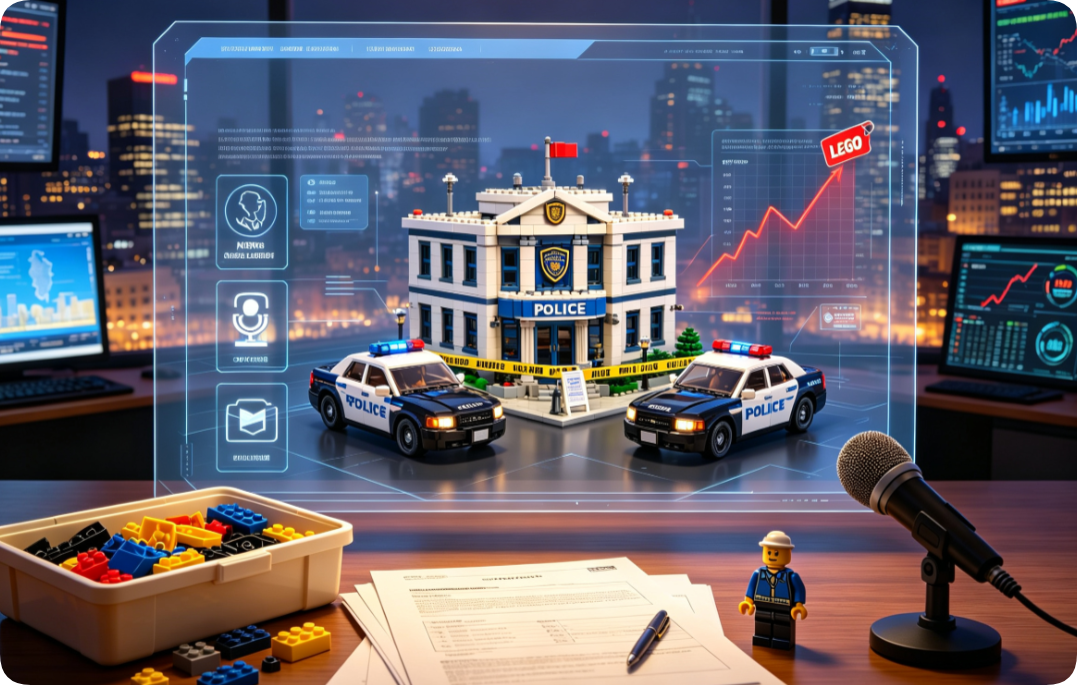
Search "brick nj news today police" and you land in Brick Township, New Jersey — a shore town whose local police blotter, crime alerts, and public-safety updates fill the daily feeds. Different kind of brick. Same lesson for anyone spending real money on building sets: verify before you trust.
Local news readers scan the brick nj news today police reports for one reason — they want the facts before they react. Smart brick-set buyers do the same thing. They check the source, confirm the details, and refuse to take a claim at face value. This guide turns that investigator's mindset into a repeatable buying method.
Here's what you'll get:
- A five-part "verification" framework for judging any set
- Field tests you can run in under two minutes
- Red flags that separate a real set from a throwaway
- A next-steps checklist you can save and reuse
Let's open the case file.
Why the "Investigator Mindset" Beats Impulse Buying
An investigator doesn't accept a headline as truth. Neither should you accept a box that shouts "premium" without proof. The gap between marketing and reality is where wasted money lives.
This matters for every kind of builder. The adult hobbyist wants a smooth weekend build. The parent wants durable bricks that teach real skills. The collector wants a display piece that holds up for a decade. The creator wants parts that behave predictably across projects. One weak set fails all four.
The fix is a checklist, not a gut feeling. Below, you'll evaluate five categories — evidence, materials, fit, documentation, and value — the same way an investigator builds a case: one confirmed fact at a time.
Step 1: Gather the Evidence (Before You Add to Cart)
Investigators start with the record. You start with what other builders already documented.
Read the reviews like case files
Skip the star rating for a second. Read the detailed reviews — the ones that mention how a set performed after assembly, not just how it looked in the box.
What to look for:
- Comments on clutch strength after repeated builds
- Notes on color consistency across bags
- Mentions of missing or duplicate pieces
- Photos from real homes, not staged studio shots
A pattern of the same complaint across many reviews is your strongest signal. One angry outlier means little. Ten builders reporting warped baseplates means everything.
Cross-check the source
Just as you'd trust an official police statement over a random social post, trust verified purchase reviews and established brand pages over anonymous claims. Buy from the official brand site or an authorized retailer. That single habit filters out most counterfeits.
To see how sets are grouped by theme, scale, and complexity before you commit, browse the BrickHobby shop and compare listings side by side.
Step 2: Examine the Materials (The Physical Evidence)
Every case turns on physical evidence. For brick sets, that evidence is the plastic itself.
The ABS test
Quality sets use ABS plastic — the durable material that resists yellowing, holds color, and gives bricks a solid weight. Cheap blends feel hollow and crack under stress.
Run these quick checks:
- Weight test — genuine ABS feels substantial, not flimsy.
- Seam test — run a finger along an edge; rough flash signals cheap molds.
- Flex test — bend a thin plate gently; quality plastic springs back rather than snapping.
- Smell test — a strong chemical odor hints at low-grade material.
Color consistency
Every red brick should be the same red. Batch drift — where pieces from different bags don't match — ruins a display model and signals loose quality control. For collectors especially, this is non-negotiable.
Just as the brick nj news today police reports rely on confirmed details rather than rumor, your buying decision should rest on confirmed material quality rather than a glossy product photo.
Step 3: Confirm the Fit (Establish Compatibility)
An investigator establishes connections. You establish whether bricks actually connect.
The clutch-power interview
Clutch power is the grip between two joined bricks. It's the single most important quality signal. Too loose and your model sags. Too tight and every connection fights you.
Test it in four moves:
- Snap two bricks together — expect a clean click, not a slide.
- Lift the top brick — the bottom should hold on, not drop.
- Separate them — firm resistance, then a clean release with no cracking.
- Repeat five times — the grip should stay identical.
The compatibility line-up
Standard-system bricks use a 4.8mm stud, which lets new sets lock onto your existing collection. Test it directly:
- Connect new bricks to trusted bricks you already own — no wobble allowed.
- Build a small flat area and run a finger across it — seams should feel level.
- Confirm specialty pieces (hinges, gears, angled connectors) match the standard scale.
Compatibility is the whole advantage of a well-made alternative. You get the same building language, across brands and across years, at a friendlier price.
Step 4: Review the Documentation (The Paper Trail)
No case closes without clean records. No build flows without clear instructions.
Signs of a solid manual
Green flags:
- Large, high-contrast step diagrams
- Part-count callouts at each stage
- Sub-assemblies broken into logical sections
- Numbered bags matched to build stages
- Digital or app-based manuals as a bonus
For families using sets as STEM tools, documentation does double duty. A well-sequenced manual teaches spatial reasoning and step-by-step thinking without ever feeling like homework. For the adult builder, it protects the relaxing flow you came for.
If you're new to large models, start with a mid-size set to build confidence. A good manual means you don't need prior experience — just patience and a clear table.
Step 5: Weigh the Value (Follow the Money)
Investigators follow the money. So should you. Sticker price alone tells you almost nothing.
Calculate real value
Run the math:
- Divide price by piece count. Under 8 cents per piece is strong for a detailed set.
- Factor in build time — a dense model gives more hours of enjoyment per dollar.
- Weigh display life — a model you'll show off for years earns its keep.
A worked example:
- Set A: $80, 1,000 pieces = 8¢/piece, 6-hour build
- Set B: $60, 500 pieces = 12¢/piece, 3-hour build
Set A delivers more pieces, more build time, and better value — even at the higher price. A quality alternative often matches a legacy brand's build experience for far less, which is exactly why so many builders switch.
Don't let a low price scare you off, and don't assume a high price guarantees quality. The evidence — not the tag — decides the case.
Common Red Flags to Watch For
Even careful buyers get fooled. Here's your watch list.
- "Compatible" with no proof. The box says it; only a physical fit test confirms it.
- Piece count with no context. A high count means nothing if the bricks are loose or brittle.
- No specs published. A confident brand lists material, stud spec, and part counts openly. Silence is a signal.
- Zero support path. If there's no way to request a missing piece, a single gap can kill a build.
- Suspiciously deep discounts from unknown sellers. The cheapest listing often costs the most in disappointment.
If a set trips two or more of these, close the file and move on.
Matching Your Verdict to Your Builder Type
The verified facts stay the same, but the priorities shift by who you are.
- Adult hobbyists — weight clutch power and instruction flow above all. The build is the reward.
- Families — prioritize durable ABS, age-appropriate complexity, and crystal-clear manuals for STEM value.
- Collectors — lead with color consistency, printed detail, and display-grade material longevity.
- Creators — favor part variety, à la carte availability, and cross-brand compatibility for original designs.
Name your type before you buy. It turns a generic checklist into a personal one.
Your Next-Steps Checklist
Save this. Run it on your next purchase.
- Gather evidence — read detailed reviews, buy from verified sources.
- Examine materials — confirm ABS, consistent color, clean seams.
- Confirm fit — firm clutch, standard studs, no wobble.
- Review documentation — clear diagrams, numbered bags.
- Weigh value — cost per piece plus build hours.
- Scan red flags — walk away if two or more appear.
- Match your type — prioritize the criteria that fit your goal.
Follow all seven and you stop gambling on sets that disappoint. You build a case for every purchase — and win it.
Conclusion: Stay Sharp, Build Better
The daily churn of brick nj news today police headlines has nothing to do with plastic bricks — but it models the exact habit that protects your wallet: verify first, react second. Read the source. Confirm the details. Refuse to trust a claim without evidence.
That mindset serves every builder, whether you're unwinding with a weekend model, teaching a child through a STEM kit, curating a display shelf, or designing something entirely your own. The method is the same. The results speak for themselves.
Ready to apply the framework? Learn how BrickHobby approaches quality, compatibility, and support at BrickHobby, then read builder stories and buying tips over on the BrickHobby blog. Pick one set you're considering, run the seven-step check, and build something worth displaying.
Frequently Asked Questions
Q: What does "brick nj news today police" have to do with buying building sets?
Directly, nothing — the phrase refers to local police and public-safety news in Brick Township, New Jersey. We use it as a hook because news readers and smart shoppers share one habit: they verify before they trust. Applied to brick sets, that means checking reviews, materials, and compatibility before you buy, rather than taking marketing claims at face value.
Q: How can I test a LEGO alternative's quality at home?
Use three quick tests. First, clutch power — snap two bricks together and confirm a firm click, a solid hold, and a clean release. Second, material — check for genuine ABS by weight, clean seams, and a plate that flexes without snapping. Third, compatibility — connect the new bricks to ones you already own and confirm there's no wobble. Pass all three and the set is built to last.
Q: Are alternative brick sets durable enough for kids and STEM learning?
Yes, when you choose quality. Look for genuine ABS plastic and firm, consistent clutch power that survives repeated building. Pair that with clear, numbered instructions that teach sequencing and spatial reasoning through hands-on play. Age-appropriate complexity keeps kids engaged without frustration, turning screen-free time into real skill-building.
Q: Why are quality alternatives often cheaper than premium brands?
Lower prices usually come from leaner marketing and no licensing fees on original designs — not from cheaper materials. Many alternatives use the same ABS plastic and match the clutch power of premium sets, delivering the same experience for significantly less. Always run the cost-per-piece math to confirm real value instead of judging by sticker price.
Q: How do I avoid buying a low-quality knockoff?
Buy from the official brand site or authorized retailers, read detailed verified reviews, and confirm the set uses the standard stud system. Watch for red flags: no published specs, no support path, and deep discounts from unknown sellers. A reputable brand lists its material, stud spec, and part counts openly and stands behind its sets — that transparency is what separates a genuine alternative from a counterfeit.
Ready to build this yourself?
BrickHobby sells high-quality LEGO-alternative building block sets — the same brick standard, a fraction of the price. Browse our in-stock sets and simply contact our customer service team to place your order; we will confirm availability, pricing and worldwide shipping for you.
Keep reading
Brick News
Track Brick and LEGO Company News Like a Pro Builder
Learn how to track brick and lego company news, spot trends early, and choose better Lego alternatives like BrickHobby for your next build.
Brick News
How to Follow JT the Brick Lego News and Find Better Alternatives
Learn how to track JT the Brick Lego news, spot building trends, and choose the best Lego alternatives for your next build with this practical guide.
Brick News
How to Follow Lego Brick Manufacturer News and Find the Best Alternatives
Learn how to track lego brick manufacturer news and evaluate alternative brands like BrickHobby before your next build. A practical guide for collectors.