How to Find the Best Toy Bricks for Kids: A Parent's Buying Guide
Standing in the toy aisle or scrolling through endless online listings, you face a wall of choices. Bright boxes, big claims, wildly different prices. Which set will actually earn its place on your child's shelf, and which one ends up forgotten under the bed by Tuesday?
Finding the best toy bricks for kids isn't about grabbing the flashiest box. It's about matching safety, learning value, and genuine play appeal to your specific child. This guide gives you a parent's roadmap for doing exactly that.
Here's what you'll learn:
- The safety standards that actually matter
- How building sets fuel real STEM development
- Choosing themes that hold a child's attention
- The quality markers that separate lasting sets from landfill toys
- A shopping checklist you can use on any product page
Let's get you buying with confidence.
Why Building Bricks Beat Most Toys
Screens dominate childhood now. A good building set pushes back.
Bricks offer something rare: open-ended, hands-on play that grows with your child. A single set can become a castle today, a spaceship tomorrow, and a bridge next week. That flexibility is what keeps kids returning long after batteries die on the noisy plastic gadget you regretted buying.
Building also delivers quiet, focused calm. You'll notice it. A child hunched over a build sits in a state of deep concentration that few other activities produce. That focus is a skill, and it's one worth nurturing early.
Three things set quality building bricks apart from throwaway toys:
- Longevity — One collection serves years of play
- Open-ended value — No single "right" way to play
- Developmental payoff — Real skills form through the fun
Now let's break down how to choose well.
Start With Safety: The Non-Negotiables
Before anything else, safety sets the floor. This matters most for children under six, but it's worth checking at every age.
Certification Marks to Look For
Reputable sets carry proof of compliance. Don't skip this step.
- CE marking — Required for toys sold in Europe. It signals the product meets EU safety directives.
- ASTM F963 — The US standard for toy safety, covering physical, mechanical, and chemical requirements.
- CPSC compliance — Confirms the toy meets US Consumer Product Safety Commission rules.
- EN 71 — The European toy safety standard covering flammability, chemicals, and small parts.
If a listing hides these details or a seller can't produce them, treat that as a red flag. Trustworthy brands publish compliance information openly.
The Small-Parts Rule
For children under three, choking hazards are the top concern. Standard-size bricks are too small for this age group.
The test: If a piece fits inside a toilet paper tube, it's a choking risk for a toddler. Size up to oversized blocks until your child is safely past this stage, usually around age three.
Material Safety
Cheap plastic can carry real risks. Look for:
- Virgin ABS plastic — Durable, non-toxic, holds no odor
- BPA-free and phthalate-free labeling
- Smooth, clean edges with no sharp molding flaws
- Colorfast dyes that won't leach or fade
Recycled or blended plastics sometimes cut corners on safety testing. When it comes to something your child handles for hours, pay for the good material.
Match the Bricks to Real Development
Building sets are one of the most effective STEM tools ever disguised as fun. The learning scales with your child's age.
Ages 3–5: Foundations of Play
At this stage, imagination leads. Kids build worlds, not models.
Medium-sized bricks in bright colors work best. Skip complex instructions entirely. A generous bucket of mixed pieces lets your preschooler invent freely, and that open building fuels early creativity.
Skills forming here:
- Spatial reasoning
- Color and shape recognition
- Storytelling and symbolic play
- Fine motor coordination
Ages 6–9: The Instruction Era
Around six, most kids gain the patience and finger control for standard bricks and step-by-step builds.
This is where themed sets shine. A fire station or a race car with numbered bags turns a daunting pile into achievable chunks. Completing a model start to finish teaches sequencing and delivers a real hit of pride.
Skills forming here:
- Following multi-step instructions
- Planning and sequencing
- Patience and sustained focus
- Early engineering logic
Ages 10–14: Serious Building
Tweens can handle real complexity: gears, moving parts, and multi-day projects. Piece counts climb, and many kids start modifying sets or inventing their own designs.
Encourage that. A child who ignores the instructions to build something original is showing genuine creative confidence.
Skills forming here:
- Mechanical reasoning
- Long-term project management
- Independent problem-solving
- Original design thinking
For a deeper breakdown of how skills develop across each stage, the BrickHobby blog shares real builder projects and parent-tested guides.
Choose Themes That Actually Hold Attention
The right theme is the difference between a set built once and a set rebuilt fifty times. Match the theme to what your child already loves.
Read Your Child's Interests
Watch what already captures them:
- Loves vehicles? Cars, trucks, planes, and construction rigs.
- Into fantasy? Castles, dragons, and medieval scenes.
- Space obsessed? Rockets, rovers, and lunar bases.
- Animal lover? Zoos, farms, and dinosaur builds.
- City builder? Fire stations, shops, and modular streets.
A theme that connects to an existing passion gets built again and again. A generic set often gets built once and abandoned.
The Expandability Factor
Smart parents think beyond one box. Look for themes that grow into a collection.
A city set that connects to more city sets keeps play alive for years. Each new box adds to a bigger world rather than sitting alone. This expandability also makes gift-giving easy for grandparents and relatives who want to contribute to something your child already loves.
Balance Guided Builds and Free Play
The best collections mix both:
- Guided sets teach following instructions and reward completion
- Free bricks fuel open-ended imagination and original creation
Offer both, and your child develops discipline and creativity side by side. You can browse themed sets sorted by interest and age in the BrickHobby shop.
Quality Markers That Predict Longevity
Here's where many parents get burned. Two sets can look identical in photos yet perform worlds apart on the table. These markers tell you which is which.
Clutch Power
Clutch power is the grip between two connected bricks. It's the single most important quality marker.
Too loose, and models sag or fall apart, frustrating your child to tears. Too tight, and small hands can't separate pieces. The sweet spot holds firm under play but releases with a deliberate pull.
Weak clutch power is the number one reason a building set ends up abandoned. A wall that keeps collapsing kills the joy fast.
Color Consistency
Grays should match grays across every bag. Whites shouldn't yellow. When colors drift between batches, a proud build looks patchy and off.
Quality brands solve this with tight manufacturing control. Cheaper sets often ship mismatched pieces that spoil the finished look.
Compatibility
This one saves you money for years. Bricks built to standard dimensions click into the pieces your child already owns.
That compatibility means one growing collection instead of separate, incompatible piles. A new set expands the possibilities of everything you've bought before.
Instruction Clarity
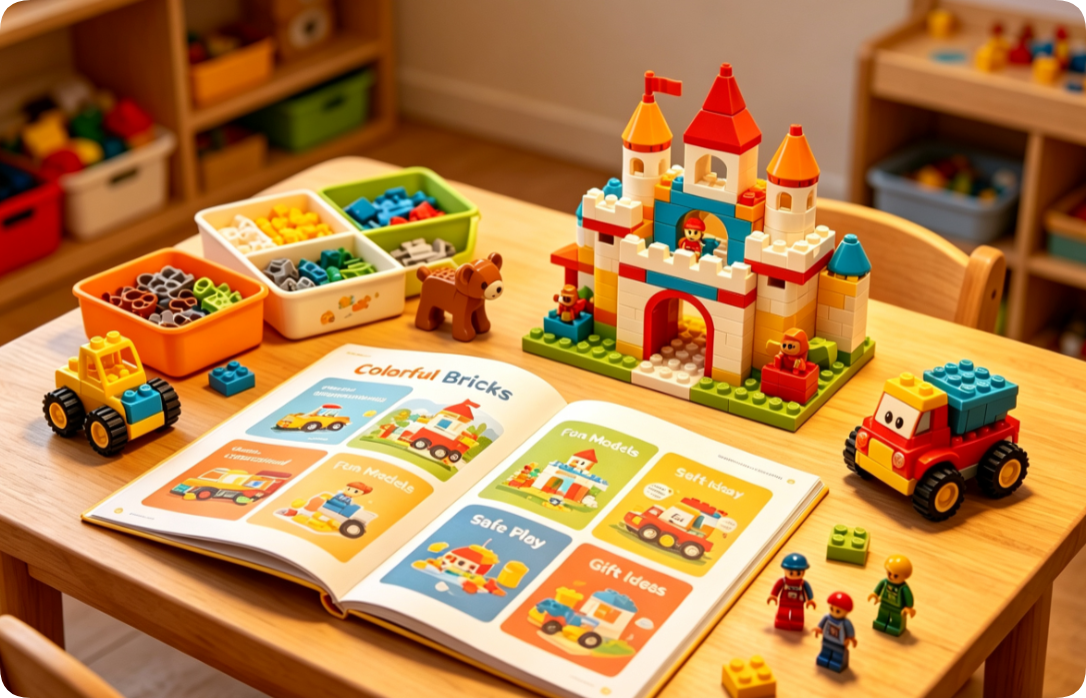
For kids, clear instructions make or break the experience. Look for:
- Numbered bags that break the build into stages
- Large, clear diagrams
- Logical step sequencing
- A visual parts key
Confusing instructions frustrate young builders and often end a build halfway. Reviews from other parents usually flag this fast.
Quick quality reference:
| Marker | Good Sign | Warning Sign |
|---|---|---|
| Clutch power | Firm hold, clean release | Loose or overly stiff |
| Color | Matches across bags | Shifting grays, yellowing |
| Compatibility | Fits existing bricks | Odd-sized, incompatible |
| Instructions | Numbered, clear diagrams | Vague, unnumbered |
| Material | Virgin ABS stated | No material listed |
Value Beyond the Sticker Price
The cheapest box rarely delivers the best value. Look at the full picture.
Price per piece. Divide the price by the piece count. A higher count at a fair price usually means better value, as long as quality holds up.
Reuse value. Quality ABS bricks survive dozens of teardowns and rebuilds. Spread across years of play, the real cost per hour becomes tiny. A flimsy set that cracks after two builds is expensive at any price.
Growth value. A compatible collection keeps expanding rather than being replaced. That single quality decision saves money for a decade.
Finding the best toy bricks for kids means weighing lasting value, not just the number on the tag. A slightly pricier set that gets rebuilt for years beats a bargain box abandoned in a week.
Your Parent's Shopping Checklist
Run this quick check before you buy anything. It works for a gift, a birthday, or a rainy-day project.
- Safety confirmed? CE, ASTM, or CPSC marks present.
- Age-appropriate? Piece size matches your child's stage.
- Material stated? Look for virgin ABS explicitly.
- Theme matched? Connects to an existing interest.
- Quality verified? Strong clutch power in the reviews.
- Compatible? Fits bricks you already own.
- Instructions clear? Numbered bags and clean diagrams.
Pass five or more, and you're on solid ground. Fall short, and it's worth looking elsewhere.
Common Buying Mistakes to Avoid
Save yourself the wasted money and the disappointed face.
- Buying too far ahead. A set five years beyond your child's stage frustrates rather than inspires. Challenge should stretch, not crush.
- Choosing by price alone. The rock-bottom option often uses brittle plastic and weak grip. Value means quality per dollar.
- Ignoring your child's interests. A stunning set in a theme they don't care about stays in the box. Match the passion first.
- Skipping the safety check. Never assume a listing meets standards. Confirm the marks yourself.
- Overlooking compatibility. Incompatible bricks trap you in isolated collections. Standard-fit pieces grow together.
Building a Collection That Grows
The smartest approach treats bricks as an investment, not a single purchase.
Start with one quality set matched to your child's current stage and interest. Choose a brand built to standard compatibility so every future box adds to the same growing world. A five-year-old's mixed bucket becomes raw material for a nine-year-old's guided build, then feeds a teen's original creation. One well-chosen collection can serve an entire childhood.
That's why the first decision matters so much. Quality, compatibility, and safety chosen early pay off for years. BrickHobby designs every set to full compatibility standards with virgin ABS and clear, kid-friendly instructions, so pieces click into any collection and survive countless rebuilds. See how sets are graded by age and interest at BrickHobby.
Choosing the best toy bricks for kids comes down to a simple sequence: confirm safety, match development, pick a theme they love, and verify quality. Get those four right, and every box delivers what it should — focus, learning, and the quiet pride of a finished build your child can't wait to knock down and build again.
Frequently Asked Questions
What age is best to start a child with toy bricks?
Children can start with oversized blocks as early as 18 months, since larger pieces remove choking risks. Most kids move to medium bricks around age three and standard-size bricks around age six, once fine motor control and patience have developed. Always match piece size to your child's stage and watch for signs of readiness, like steady handling and longer focus.
Are alternative building bricks safe and compatible with major brands?
Quality alternative bricks made from virgin ABS meet the same safety standards, so look for CE, ASTM, or CPSC marks on any set. The best toy bricks for kids are also built to standard dimensions and clutch tolerances, meaning they cross-fit seamlessly with pieces your child already owns. This keeps one collection growing rather than splitting into incompatible piles.
How do I know if a set is too advanced for my child?
Watch for frustration and abandonment. If the build stalls repeatedly, the pieces feel fiddly, or the instructions overwhelm, the set is likely a stage too far. The ideal challenge sits just one step above your child's current comfort level. When unsure, choose a slightly simpler set and let early success build momentum toward harder projects.
Do building sets really help with learning?
Yes, and the benefits grow with age. Younger children absorb spatial reasoning, color recognition, and fine motor skills, while older kids develop sequencing, mechanical logic, and problem-solving. The learning happens naturally through hands-on play, which is why educators and parents value building sets as one of the most effective screen-free STEM tools available.
How much should I spend on a good set for my child?
Focus on value rather than the sticker price. Divide the price by the piece count and factor in reuse value, since quality ABS bricks survive years of rebuilds. A slightly pricier set that gets built repeatedly beats a cheap box that cracks after one use. For a first quality set, a mid-range themed build matched to your child's interest is usually the smartest starting point.
Ready to build this yourself?
BrickHobby sells high-quality LEGO-alternative building block sets — the same brick standard, a fraction of the price. Browse our in-stock sets and simply contact our customer service team to place your order; we will confirm availability, pricing and worldwide shipping for you.
Keep reading
Brick News
Track Brick and LEGO Company News Like a Pro Builder
Learn how to track brick and lego company news, spot trends early, and choose better Lego alternatives like BrickHobby for your next build.
Brick News
How to Follow JT the Brick Lego News and Find Better Alternatives
Learn how to track JT the Brick Lego news, spot building trends, and choose the best Lego alternatives for your next build with this practical guide.
Brick News
How to Follow Lego Brick Manufacturer News and Find the Best Alternatives
Learn how to track lego brick manufacturer news and evaluate alternative brands like BrickHobby before your next build. A practical guide for collectors.