
How to Discover and Evaluate Brick Concept News to Inspire Your Next Original Build
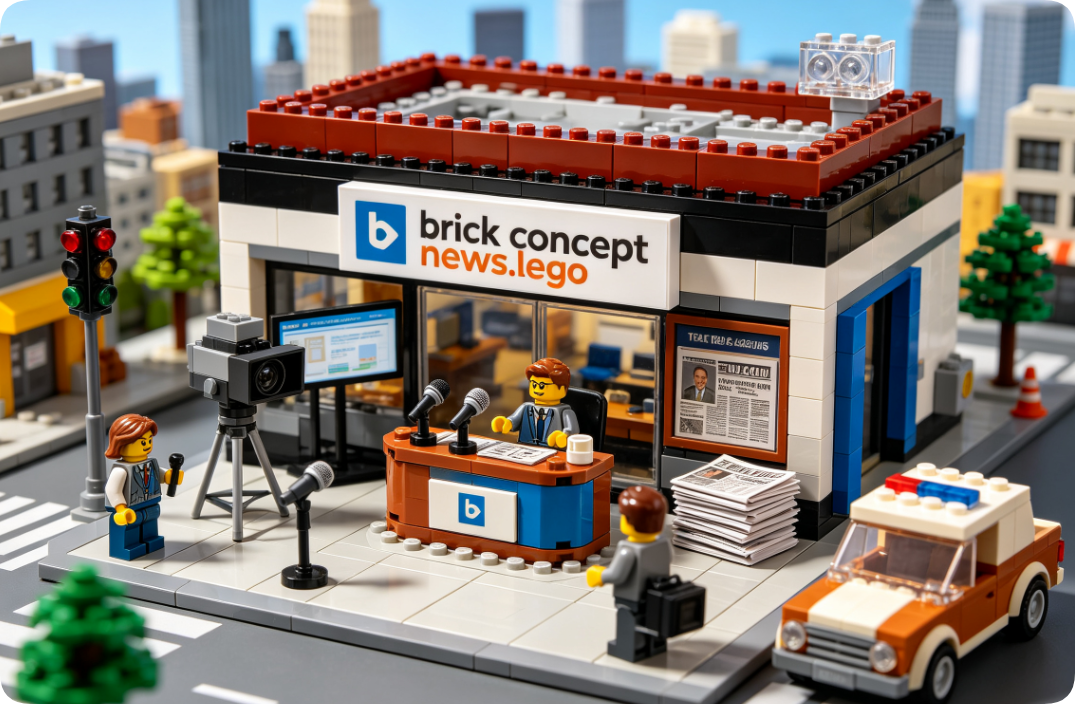
Every original build starts with a spark. Sometimes it's a photo of a strange machine. Sometimes it's a design technique you've never seen. And sometimes it comes from watching where the whole hobby is heading — the fresh ideas, prototypes, and design experiments bubbling up across the building world.
That's what this guide is about. Not tracking prices or restocks, but mining the flow of design ideas — what we'll call brick concept news — to fuel your own creative, one-of-a-kind models. You'll learn where new build concepts emerge, how to judge which ones are worth your time, and how to turn a raw idea into a finished original build you're proud to share.
This is written for builders who design, not just assemble. If you're the kind of person who looks at a boxed set and immediately thinks "I could push this further," you're in the right place.
What "Brick Concept News" Actually Means
Let's define the term before we chase it.
Most news in the hobby is transactional: launches, sales, stock. Brick concept news is different. It's the stream of ideas — new construction techniques, emerging design themes, experimental part uses, and prototype reveals that show where creative building is going next.
Think of it in four buckets:
- Technique concepts — novel connection methods, new SNOT (Studs Not On Top) applications, curve-building tricks, and structural innovations.
- Theme concepts — rising aesthetic movements like brutalist architecture, biopunk, solarpunk, or micro-scale cityscapes.
- Part concepts — clever reuse of an existing element, or a new specialty piece that unlocks fresh geometry.
- Design philosophy — shifts in how builders approach realism, modularity, motion, or storytelling.
Prices tell you what to buy. Concept news tells you what to make. For a designer, that second category is far more valuable.
Takeaway: Concept news is idea fuel, not shopping intel. Learn to separate the two.
Why Concept News Sharpens Your Original Builds
Original design doesn't happen in a vacuum. Even the most inventive builders remix influences.
When you follow the flow of new concepts, three things happen to your work:
- Your technique library grows. Every new method you spot is a tool you can deploy later. A wall-building trick you save today becomes the solution to a problem you'll hit next month.
- Your themes stay current. Trends in the design community move fast. Knowing what's rising — and what's overdone — helps your builds feel fresh rather than dated.
- Your problem-solving speeds up. Seeing how others solved a curve, a hinge, or a load-bearing joint gives you a head start on your own puzzles.
For adult hobbyists treating building as a craft, this is genuine skill development. For creators who share original work online, it's the difference between echoing what everyone else builds and setting the trend yourself.
Takeaway: Concept news compounds. Every idea you bank makes your next build better.
Step 1: Map Where Concepts Emerge
Ideas don't announce themselves. You have to know where to look.
The best design concepts surface in specific places long before they reach mainstream sets. Build your map around these sources.
Community-Led Sources
- Builder showcases and forums — where hobbyists post original creations (MOCs) and explain their techniques. This is ground zero for technique concepts.
- Design challenges and contests — themed competitions push builders to invent solutions under constraints, producing bursts of innovation.
- Social platforms and image boards — fast-moving feeds where new aesthetics spread and cross-pollinate.
Editorial and Curated Sources
- Specialist blogs — the outlets that don't just report launches but analyze why a build works. Curated editorial coverage saves hours by filtering signal from noise. The BrickHobby blog is one place that translates emerging design ideas into practical builder guidance.
- Interviews and build breakdowns — long-form pieces where designers walk through their process reveal thinking you can't get from a photo alone.
Prototype and Preview Sources
- Fan design platforms — where community concepts get voted on and sometimes produced. These are a live feed of what builders wish existed.
- Convention coverage — events surface experimental builds months before ideas spread widely.
Aim for a mix. Community sources give you raw invention; editorial sources give you interpretation; prototype sources show you the direction of travel.
Takeaway: Build a source map across community, editorial, and prototype channels. Raw ideas plus context equals usable inspiration.
Step 2: Capture Ideas Before They Vanish
Inspiration is useless if you forget it. The builders who consistently produce original work all share one habit: they capture relentlessly.
Build an Idea Vault
Create a simple, searchable place to store concepts. A folder of screenshots, a notes app, a physical sketchbook — the tool matters less than the habit. When you spot something worth remembering, save it with three quick tags:
- What it is (technique, theme, part use, philosophy)
- Why it caught you (the specific problem it solves or feeling it creates)
- Where you might use it (a future build, a color scheme, a scale)
Sketch the Principle, Not the Copy
Don't just save someone's finished model. Capture the underlying principle. If a builder created a convincing stone texture using mixed grille plates, note the technique — not the specific model. Principles transfer. Copies don't.
Review Your Vault Regularly
Once a month, scroll back through your captured ideas. Patterns will emerge. You'll notice you keep saving the same theme, or the same type of joint. That pattern is your creative direction telling you what to build next.
Reader checkpoint: If you can't remember three concepts you saved this month, your capture habit needs work. Make saving as frictionless as possible.
Step 3: Evaluate Which Concepts Are Worth Your Time
Not every idea deserves a build. This is where most enthusiasts waste energy — chasing every shiny concept instead of choosing wisely.
Run each promising idea through a simple filter before committing hours to it.
The Four-Question Concept Filter
- Is it feasible with parts I can get? A concept that relies on a rare or discontinued element is a dead end. Confirm the parts exist and are affordable before you plan around them.
- Does it fit my skill level — or stretch it usefully? The best concepts sit just beyond your current ability. Too easy and you learn nothing; impossibly hard and you'll abandon it.
- Does it serve a build I actually want to make? A brilliant technique with no home is just trivia. Match concepts to real projects.
- Is it fresh, or already everywhere? A rising concept has room for your interpretation. A saturated one means your build will blend into hundreds of others.
Weigh Signal Against Hype
Some concepts spread because they're genuinely innovative. Others spread because one popular builder used them. Ask whether a technique keeps appearing across different builders solving different problems. That's the mark of a real, durable concept — not a passing fad.
Following brick concept news well means being selective. The goal isn't to build everything you see. It's to spot the few ideas that will genuinely elevate your work.
Takeaway: Filter every concept through feasibility, skill fit, project fit, and freshness before you invest time.
Step 4: Translate a Concept Into an Original Build
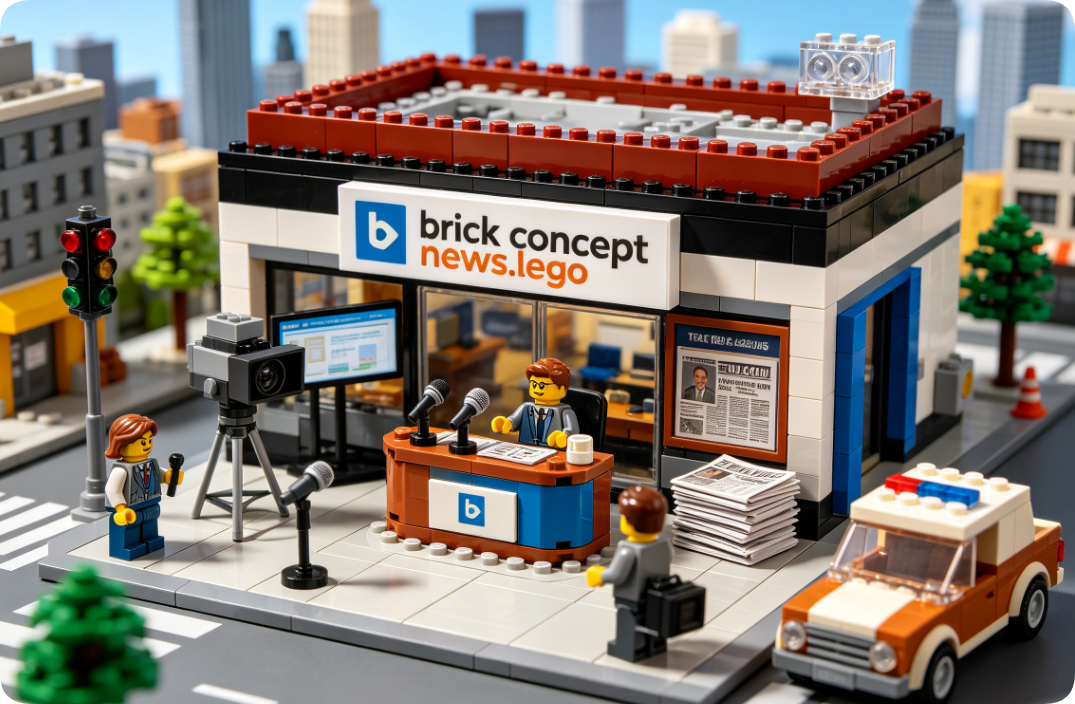
Here's where inspiration becomes creation. A saved concept is raw material — your job is to transform it into something unmistakably yours.
Combine, Don't Copy
Originality comes from combination. Take a technique from one source, a theme from another, and a scale from a third. When you merge three influences, the result stops being derivative and starts being yours. A brutalist texture applied to a solarpunk greenhouse at micro scale is a build nobody else has made — even though each ingredient came from somewhere.
Prototype in Cheap Bricks First
Before committing your best parts, mock up the concept in whatever bulk bricks you have on hand. This "gray-box" method — borrowed from architecture and game design — lets you test proportions and connections without pressure. Get the idea working, then refine colors and details.
Push the Concept Further
Don't stop at reproducing what inspired you. Ask: "What's the next step this builder didn't take?" If someone built a two-story modular shop, could you make it three, with a working elevator shaft? Extending a concept is how you contribute something new rather than echoing what already exists.
Document Your Process
As you build, photograph your key connections and note what worked. This does two things: it builds your personal technique library, and it gives you material to share with the community later. Your process is often more valuable to other builders than the finished model itself.
To match a concept with the right parts and specialty elements, browse the available range of sets and pieces and pull what your design demands.
Takeaway: Combine multiple influences, prototype cheaply, push past the source, and document as you go.
Step 5: Share Your Build and Feed the Cycle
The concept cycle is a loop. You take ideas from the community, and you give back by sharing what you make.
Publish With Context
When you post an original build, don't just show the photos. Explain the concept behind it — the technique you used, the theme you chose, the problem you solved. Builders value the how as much as the what. A well-documented build earns far more engagement than a beautiful photo with no explanation.
Invite Feedback and Iteration
Ask specific questions when you share: "How would you strengthen this joint?" or "What color would you try here?" Targeted questions spark real discussion and often surface improvements you'd never have found alone.
Enter Challenges and Collaborations
Community design challenges are among the fastest ways to grow. Working under a theme and deadline forces invention, and comparing your solution to others' teaches you volumes. Collaborations — where several builders contribute modules to one shared project — expose you to techniques you'd never try on your own.
By sharing your original work, you become a source of brick concept news for the next builder. That's how the whole hobby moves forward. To connect with the wider building community or ask about upcoming challenges, reach out through the BrickHobby team.
Takeaway: Share with context, invite feedback, and join challenges. Contributing back accelerates your own growth.
Common Mistakes to Avoid
Even experienced designers stumble here. Watch for these.
Hoarding ideas but never building. An idea vault full of concepts you never attempt is just a museum. Set a rule: for every ten concepts you save, build at least one.
Copying instead of combining. Reproducing someone else's model teaches technique but produces nothing original. Always add your own twist, scale shift, or theme.
Chasing every trend. Following too many concept threads scatters your focus. Pick a creative direction and go deep rather than skimming everything.
Ignoring feasibility. Falling in love with a concept that needs impossible parts wastes planning time. Check part availability early.
Building in isolation. Skipping the community means missing feedback, challenges, and the collaborative spark that improves every builder. Share your work.
Neglecting documentation. Failing to record your techniques means relearning them later. Capture your process as you build.
A Simple Framework: The SPARK Method
Use this acronym to keep your concept-to-build process sharp.
- S — Scout a balanced mix of community, editorial, and prototype sources.
- P — Preserve ideas in a tagged, searchable vault.
- A — Assess each concept with the four-question filter.
- R — Remix multiple influences into an original build.
- K — Keep the loop alive by sharing your work back to the community.
Run SPARK consistently, and following brick concept news stops being passive scrolling. It becomes an engine that reliably feeds your next original creation.
Your Quick-Start Checklist
Do these this week to get the system running:
- [ ] Identify the four concept types you care about most
- [ ] Pick six sources across community, editorial, and prototype channels
- [ ] Set up an idea vault (folder, notes app, or sketchbook)
- [ ] Save five concepts, each tagged with what/why/where
- [ ] Run one concept through the four-question filter
- [ ] Prototype that concept in cheap bricks
- [ ] Share one original build with full context
Bringing It All Together
Original building is a conversation between what you observe and what you invent. When you scout the right sources, capture ideas before they slip away, filter concepts wisely, and remix influences into something new, you turn the endless stream of design news into a genuine creative advantage. You stop echoing what everyone else builds — and start setting the direction yourself.
Your next step is simple. Pick your six sources, start your idea vault today, and save the first concept that stops your scroll. Prototype it this weekend. Then share what you make, and feed the cycle for the next builder. Curious how these ideas connect to a broader design philosophy? Explore the resources on the main BrickHobby site to keep your creative pipeline full.
Frequently Asked Questions
What exactly counts as brick concept news, and how is it different from regular hobby news?
Brick concept news covers the flow of design ideas rather than commercial updates. It includes new construction techniques, emerging aesthetic themes, clever part reuse, and shifts in design philosophy. Regular hobby news tells you what to buy and when — launches, sales, and stock levels. Concept news tells you what to make. For builders who design original models, the concept stream is far more valuable, because it directly fuels creativity, expands your technique library, and keeps your work feeling current instead of derivative.
Where can I find the best brick concept news as an original builder?
Build a source map across three channel types. Community sources — builder showcases, forums, and design challenges — are where raw invention appears first. Editorial sources, like specialist blogs and build breakdowns, interpret why a technique works and save you hours of filtering. Prototype and preview sources, such as fan design platforms and convention coverage, reveal where the hobby is heading next. Aim for around six sources total, balanced across all three types, so you catch both original ideas and the context to understand them.
How do I decide which concepts are worth building?
Run each idea through a four-question filter. First, is it feasible with parts you can actually get and afford? Second, does it fit your skill level or stretch it in a useful way? Third, does it serve a build you genuinely want to make? Fourth, is it fresh enough that your interpretation will stand out? Also weigh signal against hype — a durable concept keeps appearing across different builders solving different problems, while a fad usually traces back to one popular creator. Be selective; the goal is quality inspiration, not building everything you see.
How do I turn a concept I found into an original build rather than a copy?
Originality comes from combination. Take a technique from one source, a theme from another, and a scale from a third, then merge them into something no one else has made. Prototype the idea in cheap bulk bricks first to test proportions before committing your best parts. Then push the concept further — ask what next step the original builder didn't take, and build that. Finally, document your process as you go. Combining, extending, and recording are what transform borrowed inspiration into work that's unmistakably yours.
How can I contribute to the concept cycle and grow as a builder?
Share your original builds with full context — explain the technique, theme, and problems you solved, not just the finished photos. Builders value the how as much as the result, and documented builds earn far more engagement. Invite specific feedback by asking targeted questions, and enter community design challenges, which force invention under constraints and teach you fast. Collaborations expose you to techniques you'd never try alone. By sharing what you make, you become a source of brick concept news for the next builder, keeping the whole creative loop moving forward.
Ready to build this yourself?
BrickHobby sells high-quality LEGO-alternative building block sets — the same brick standard, a fraction of the price. Browse our in-stock sets and simply contact our customer service team to place your order; we will confirm availability, pricing and worldwide shipping for you.
Keep reading

Brick News
Track Brick and LEGO Company News Like a Pro Builder
Learn how to track brick and lego company news, spot trends early, and choose better Lego alternatives like BrickHobby for your next build.

Brick News
How to Follow JT the Brick Lego News and Find Better Alternatives
Learn how to track JT the Brick Lego news, spot building trends, and choose the best Lego alternatives for your next build with this practical guide.
Brick News
How to Follow Lego Brick Manufacturer News and Find the Best Alternatives
Learn how to track lego brick manufacturer news and evaluate alternative brands like BrickHobby before your next build. A practical guide for collectors.