
How to Turn Real-World Venue Architecture into Your Next Brick Build

Every great build starts with an idea. The problem? Ideas run dry. You finish a set, admire it for a week, then stare at your parts bins wondering what to build next. The fix is simpler than you think: look at the buildings around you.
Real-world architecture is an endless well of inspiration. Stadiums, fieldhouses, concert halls, and campus landmarks all carry design lessons you can translate directly into brick. This guide shows you how to spot inspiration in the wild, follow venue and architecture news, and turn what you find into a buildable project—one stud at a time.
By the end, you'll have a repeatable process for staying creatively charged, plus practical tips for sourcing the pieces you need. Let's build.
Why Real-World Venues Make Great Brick Projects
Architecture solves problems. Load distribution, sightlines, crowd flow, roof spans—every venue is a set of engineering answers made visible. When you recreate one in brick, you're reverse-engineering those answers. That's where the real learning happens.
For adult builders in engineering, IT, and design fields, this is the appeal. A stadium's curved roof teaches you cantilevering. A fieldhouse's open interior teaches you how to span wide gaps without support columns. These are genuine structural principles, scaled down to your desk.
For families, venue builds double as STEM lessons. Kids see how ramps, arches, and trusses work by building them. Abstract math becomes a tangible model they can hold.
Quick takeaway: Real venues give you built-in engineering challenges. Recreating one sharpens both your skills and your understanding of how structures stand up.
Step 1: Find Your Architectural Inspiration
Inspiration is everywhere once you start looking. The trick is knowing where to hunt.
Follow Venue and Architecture News
Local venues are constantly changing—renovations, new seating, upgraded roofs, expansions. Following that news gives you fresh reference material and design ideas.
Take brick breeden fieldhouse news as an example. The Brick Breeden Fieldhouse at Montana State University is a multi-purpose arena that hosts concerts, rodeos, career fairs, and sporting events. It has undergone renovations over the years, including running-surface upgrades, new seating, and improved sound systems. Each change is a snapshot of how a real venue adapts—and a ready-made reference for a build.
Follow these sources for a steady stream of ideas:
- Local newspapers and campus news for renovation announcements and event coverage
- Venue social media pages for interior and exterior photos
- Architecture and design blogs for structural breakdowns
- Event listings that show a venue transformed for different uses
Look at Everyday Structures
You don't need a famous landmark. The train station on your commute, the arena downtown, the library with the dramatic roofline—all of it works. Snap photos whenever a building catches your eye and start a reference folder.
Pro tip: Capture the same structure from multiple angles. You'll need front, side, and detail shots when you start building.
Step 2: Analyze the Structure Like a Builder
Once you've picked a venue, study it before you touch a single brick. Break it into its core components.
Identify the Major Masses
Every building is a collection of shapes. A fieldhouse is essentially a large box with a curved or peaked roof. A stadium is a bowl. Simplify what you see into basic forms first.
Ask yourself:
- What's the overall footprint—rectangle, oval, or irregular?
- How many major sections are there?
- What's the tallest point, and what supports it?
Study the Roof
Roofs are the hardest and most rewarding part of any venue build. Fieldhouses and arenas span huge interior spaces without columns, which means the roof does a lot of structural work.
Look at how the roof meets the walls. Is it a flat truss, a barrel vault, or a domed shell? Following brick breeden fieldhouse news and similar coverage often reveals interior shots that show exactly how these roofs are framed—priceless reference for recreating them in brick.
Note the Details
Details sell the build. Entrance canopies, window bands, signage, and seating tiers turn a generic box into a recognizable venue. List the details that make your chosen structure unique.
Key takeaway: Break any building into masses, roof, and details. This three-part analysis turns an intimidating structure into three manageable sub-projects.
Step 3: Plan Your Build at the Right Scale
Scale decides everything—piece count, footprint, and how much detail you can include. Choose it deliberately.
Micro Scale
Micro builds use small pieces to suggest a structure rather than detail it fully. A whole fieldhouse might fit in your palm. This scale is fast, cheap on parts, and great for capturing a silhouette.
Standard Scale
Standard scale gives you room for architectural detail—individual windows, textured walls, and recognizable entrances. Expect a larger footprint and a higher piece count.
Minifigure Scale
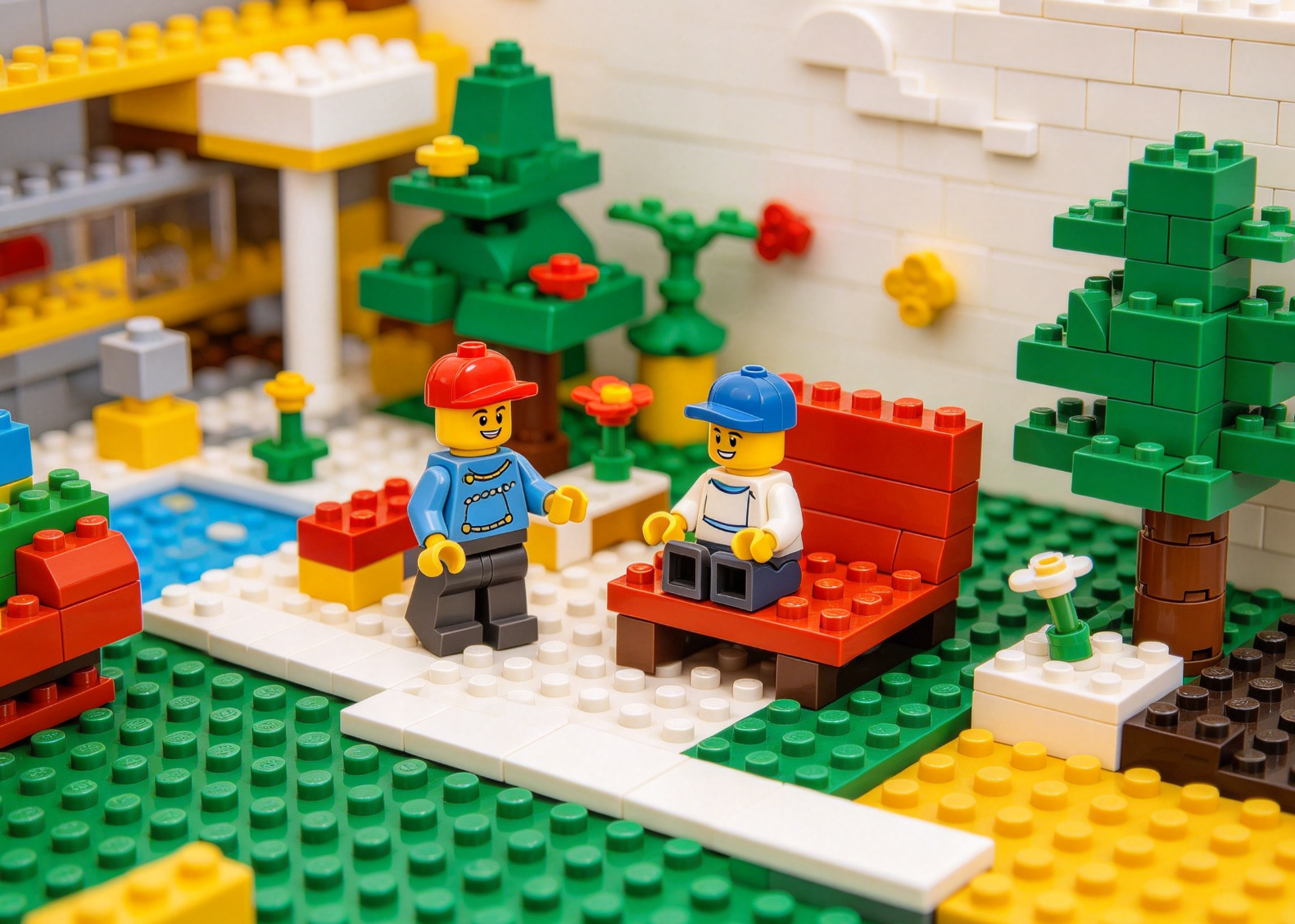
Building at minifigure scale means your venue can hold characters, seating, and interior scenes. This is the most ambitious route, ideal for display pieces and community showcases.
Match your scale to your goal. Want a quick weekend project? Go micro. Building a centerpiece for your shelf? Go standard or minifigure scale.
Pro tip: Sketch your footprint on graph paper first, letting each square equal one stud. This catches sizing problems before you commit pieces.

Step 4: Source the Right Pieces
A venue build lives or dies on having the right parts. Curved roofs need slopes and arches. Glass facades need transparent tiles. Large spans need sturdy baseplates and beams.
Start by inventorying what your project needs against what you own. Make a shopping list for the gaps. When you're ready to fill it, browse the full range at the BrickHobby shop to find slopes, transparent elements, and structural pieces suited to architectural builds.
Match Materials to Your Vision
Quality matters for large structures. Load-bearing sections need firm clutch power so your build holds its shape over time. Look for these when choosing pieces:
- Strong clutch for structural sections that carry weight
- Consistent color so your walls and roof read as one surface
- Specialty parts—arches, curved slopes, transparent panels—for signature details
Build a Parts Reserve
Keep a bin of spare slopes, tiles, and small elements. Architectural builds constantly need "just one more" of a specific piece. A stocked reserve keeps your momentum going.
Common mistake: Starting a large build without enough of one key piece. Count your critical parts before you begin, not halfway through.
Step 5: Build in Modular Sections
Large venue builds overwhelm anyone who tries to build them all at once. The solution is modular construction—the same approach real architects use.
Break the Build into Modules
Split your venue into independent sections:
- The base and floor
- The walls, built as separate panels
- The roof, assembled as its own unit
- Detail add-ons like entrances and signage
Build each module separately, then join them. This lets you test fit, fix problems in isolation, and rearrange without dismantling everything.
Start with the Base
A stable foundation carries the whole build. Lock your baseplates together with overlapping plates so the structure won't flex or split under the weight of the roof.
Tackle the Roof Last
Because the roof spans the widest area, build it as a removable module. This keeps the interior accessible and makes transport far easier if you plan to display or share your build.
Key takeaway: Modular building turns one giant project into several small, satisfying wins. It also mirrors how professional venues are actually engineered.
Step 6: Add Detail and Realism
Details separate a good venue model from a great one. This is where your reference photos earn their keep.
Recreate Signature Features
Every venue has a defining element—a distinctive entrance, a signature roofline, a bold sign. Prioritize recreating that feature. It's what makes your build instantly recognizable.
Use Texture and Color
Real buildings aren't flat. Mix tiles, plates, and textured pieces to suggest brick, concrete, and glass. Subtle color variation adds depth and stops walls from looking like solid blocks.
Add Life
Populate your venue with the activity it hosts. A fieldhouse might have a concert stage one day and a rodeo arena the next—the same versatility described in brick breeden fieldhouse news coverage. Build interchangeable interior modules so your model can transform, just like the real venue does.
Pro tip: Photograph your finished build at eye level with any figures you've added. Low angles make models look massive and cinematic.
Step 7: Share Your Build and Keep the Cycle Going
A finished build is worth sharing. The building community thrives on original architectural projects, and venue recreations spark great conversation.
- Post progress shots and the finished model
- Explain your reference source and design choices
- Ask for feedback on structure and detail
- Invite others to build their own local landmarks
Sharing does more than earn likes. Community feedback sharpens your technique, and seeing others' builds refills your own inspiration well. It closes the loop: you draw inspiration in, build something, share it, and inspire the next builder.
Curious about the team behind these sets and the philosophy driving our designs? Learn more about BrickHobby and what shapes each collection.
Key takeaway: Sharing turns a solo hobby into a community practice. Your build inspires others, and their responses inspire your next project.
Turning News into a Never-Ending Idea Pipeline
The real power of this method is that it never runs out. Venues change constantly, news coverage documents those changes, and every update is a fresh prompt.
Set up a simple system:
- Follow a handful of venue and architecture news sources.
- Save interesting structures and renovations to a reference folder.
- Sketch rough build plans when inspiration strikes.
- Build the projects that excite you most.
- Share the results and gather new ideas from the community.
Run this loop and you'll never face a blank parts bin again. Coverage like brick breeden fieldhouse news—renovations, event transformations, seasonal setups—becomes a steady feed of build prompts rather than just headlines.
For more techniques, project breakdowns, and building inspiration, the BrickHobby blog is packed with ideas to fuel your next architectural project.
Common Mistakes to Avoid
Even seasoned builders trip up on venue projects. Watch for these:
- Skipping the analysis phase and jumping straight to bricks. Study the structure first.
- Choosing the wrong scale for your goal, leaving you with too little detail or too big a footprint.
- Underestimating piece needs, especially for roofs and repeating wall sections.
- Building all at once instead of in modules, making mistakes hard to fix.
- Ignoring the roof's structural demands, which causes sagging on wide spans.
Avoid these five and your venue builds will come together far more smoothly.
Start Your Next Build Today
Real-world architecture is the most reliable inspiration source a builder can have. Venues change, news documents those changes, and each update hands you a ready-made project. Follow the coverage, analyze the structure, plan your scale, source the right pieces, and build in modules.
Do that, and creative dry spells become a thing of the past. Your hobby stops depending on new set releases and starts feeding itself. Pick one venue that catches your eye this week, break it into three parts, and start building.
Ready to gather your pieces and begin? Explore the full range of building sets and elements at BrickHobby and turn your next architectural inspiration into a finished model.
Frequently Asked Questions
How do I use venue news like Brick Breeden Fieldhouse news for building ideas?
Follow local newspapers, campus updates, and venue social media pages that cover renovations and events. Coverage such as brick breeden fieldhouse news often includes interior and exterior photos, roof details, and shots of the venue set up for concerts, rodeos, or sporting events. Save these images to a reference folder, then use them as blueprints for scale, structure, and signature details in your build.
What scale should I use to build a fieldhouse or stadium model?
It depends on your goal. Micro scale captures the silhouette quickly with few pieces and a small footprint. Standard scale gives you room for architectural detail like windows and entrances. Minifigure scale lets you add interior seating and characters, making it ideal for display and community showcases. Sketch your footprint on graph paper first to confirm the size works before you start.
How do I build a wide roof without it sagging?
Wide venue roofs span large interior spaces, so they need real structural support. Build the roof as its own modular unit using strong clutch pieces, and reinforce it with overlapping plates or a truss-style framework underneath. Keeping the roof removable also makes the interior accessible and the model easier to transport. Study how the real venue frames its roof for the most accurate approach.
Are these building blocks compatible with other major brands?
Yes. Quality building blocks use the standard 8mm stud grid, so they clutch onto mainstream bricks and let you combine sets freely. This is especially useful for large architectural projects, where you'll often need extra slopes, transparent panels, and structural pieces from multiple sources to complete a detailed venue build.
How can I share my venue build with other builders?
Post your finished model and progress shots to online building communities and social platforms. Explain your reference source, your design choices, and any structural challenges you solved. Photographing at eye level makes your build look larger and more dramatic. Sharing invites feedback that sharpens your skills and often inspires others to recreate their own local landmarks.
Ready to build this yourself?
BrickHobby sells high-quality LEGO-alternative building block sets — the same brick standard, a fraction of the price. Browse our in-stock sets and simply contact our customer service team to place your order; we will confirm availability, pricing and worldwide shipping for you.
Keep reading

Brick News
Track Brick and LEGO Company News Like a Pro Builder
Learn how to track brick and lego company news, spot trends early, and choose better Lego alternatives like BrickHobby for your next build.

Brick News
How to Follow JT the Brick Lego News and Find Better Alternatives
Learn how to track JT the Brick Lego news, spot building trends, and choose the best Lego alternatives for your next build with this practical guide.
Brick News
How to Follow Lego Brick Manufacturer News and Find the Best Alternatives
Learn how to track lego brick manufacturer news and evaluate alternative brands like BrickHobby before your next build. A practical guide for collectors.